EN

Since 2019

The amma story
How one family’s questions became a pregnancy and parenting app: the years, the turning points and the funding behind them.

Every company has a first user. For amma, it was its founder’s family.
When Eugene Zhiharev and his wife were expecting their first child, they attended antenatal classes together. It was there that Eugene realised how little genuinely useful information about pregnancy was freely available, and how much of what he found online was incomplete or unreliable.

“I decided to create amma to reduce the stress and anxiety experienced by expectant parents, not just women,” he recalled later.

Eugene registered the company on 27 February 2019. His daughter was born just two weeks later, on 11 March of the same year. The company and the child came into the world almost at the same time. From the beginning, amma was connected not to an abstract audience, but to one particular family trying to understand pregnancy and prepare for the birth of a child.

Seven years

2026: Seven years, 30 million downloads and a community across Latin America

By 2026, amma had four offices, users in 193 countries and a community reaching women across Latin America.

In February, amma turned seven. The company now has four offices, its content is available in 20 languages and the app has passed 30 million downloads worldwide. The product has grown with the families who use it, from the first pregnancy questions to the years after a child is born.

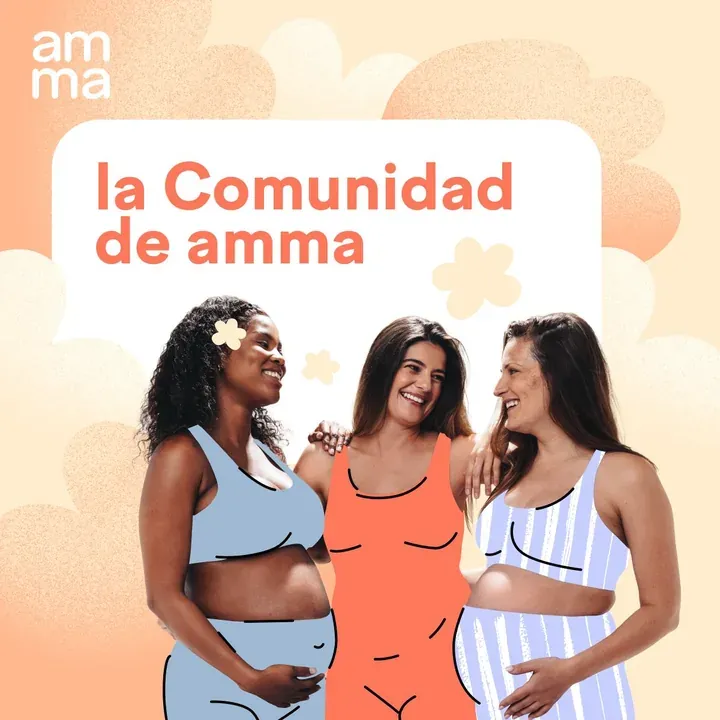
The Mexican community has also expanded across Latin America. Women can now connect with one another in countries throughout the region, ask questions, share their experiences and find emotional and practical support during pregnancy and early parenthood. For many users, especially those with limited access to local support, the community is a way to feel less alone and get help from people going through similar experiences.

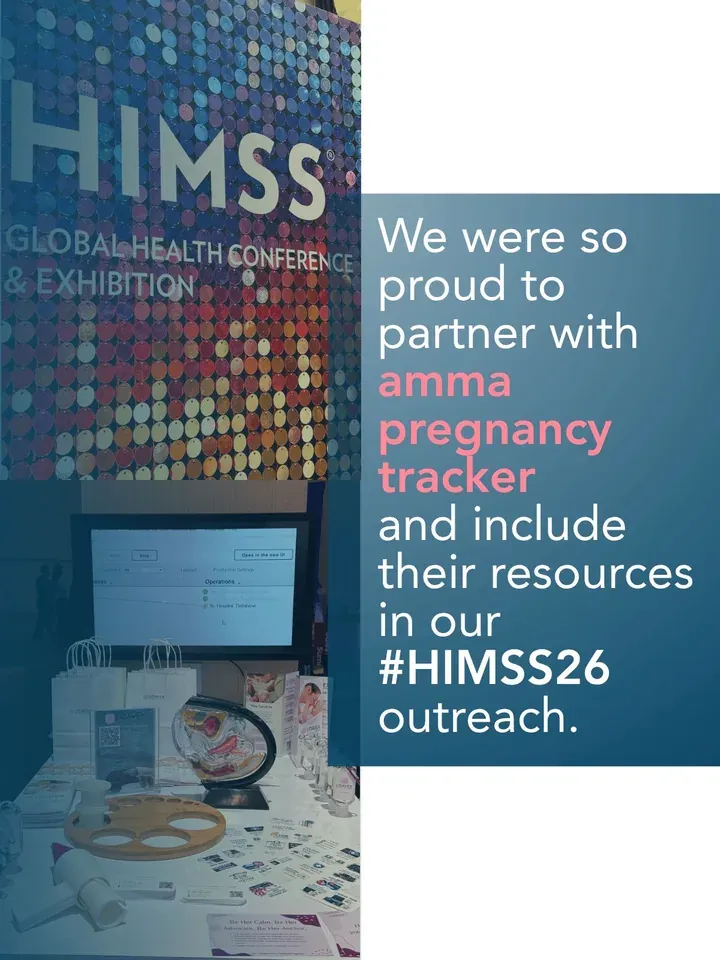
Partnerships have widened as well. In March, amma appeared at HIMSS 2026 through Lidavex’s booth. Lidavex presented its pregnancy tests together with amma as the next step for women after a positive test: a way to move from the result itself to reliable information, guidance and ongoing support. The partnership list also grew to several apps, including Pregmate, Sprouty and Mimika. Together, these partnerships connect amma with women at different stages of the journey, from trying to conceive and taking a pregnancy test to pregnancy, childbirth and the first years of a child’s life.

“Seven years in, we’re bigger, more international and more complex but still close to the original idea: making pregnancy less confusing and less lonely.”
— amma, on its seventh anniversary
Kyrgyzstan

2025: amma expands its community and launches in Kyrgyzstan

The year amma took its community into new markets, adapted the app for Kyrgyz women and strengthened the systems behind it.

In 2025, amma expanded its community beyond Spain. It became available in Mexico, Brazil, France and Sweden, giving women in five countries a place to ask questions, share experiences and support one another during pregnancy and early parenthood.

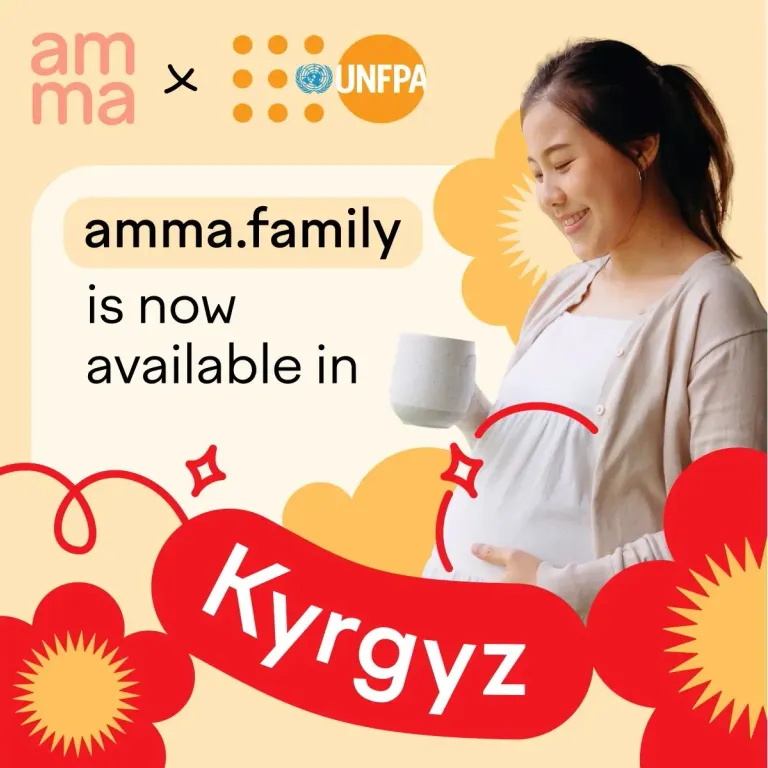
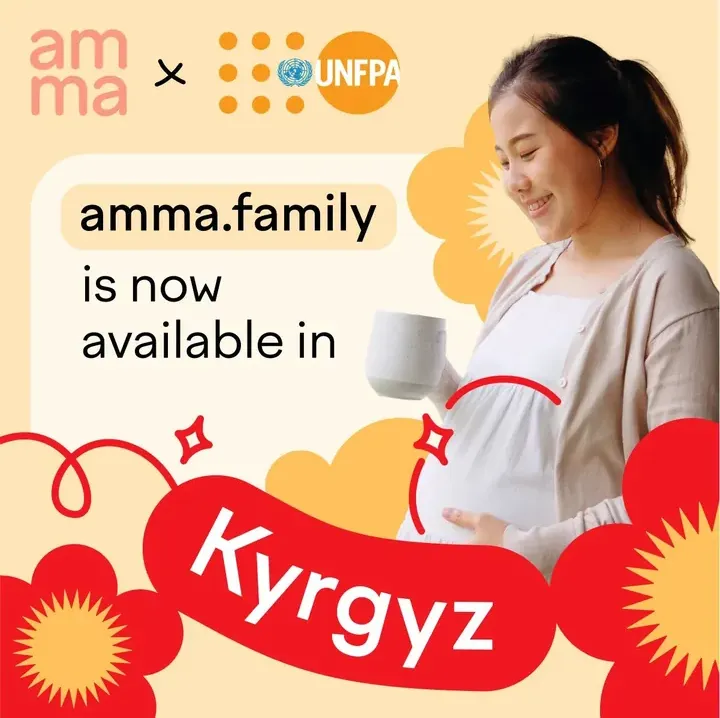
The product also reached a new audience in Kyrgyzstan. In April, amma presented a Kyrgyz-language version of the app in Bishkek and Osh, together with UNFPA, the Ministry of Health of the Kyrgyz Republic and local partner organisations.

The launch involved more than translating the interface. The app was adapted to the local cultural, linguistic and legal context and included more than 460 evidence-based articles and materials for women in Kyrgyzstan. The free version covered the period from the first weeks of pregnancy through childbirth and the postpartum period, with a pregnancy calendar, reminders, health information and legal guidance.

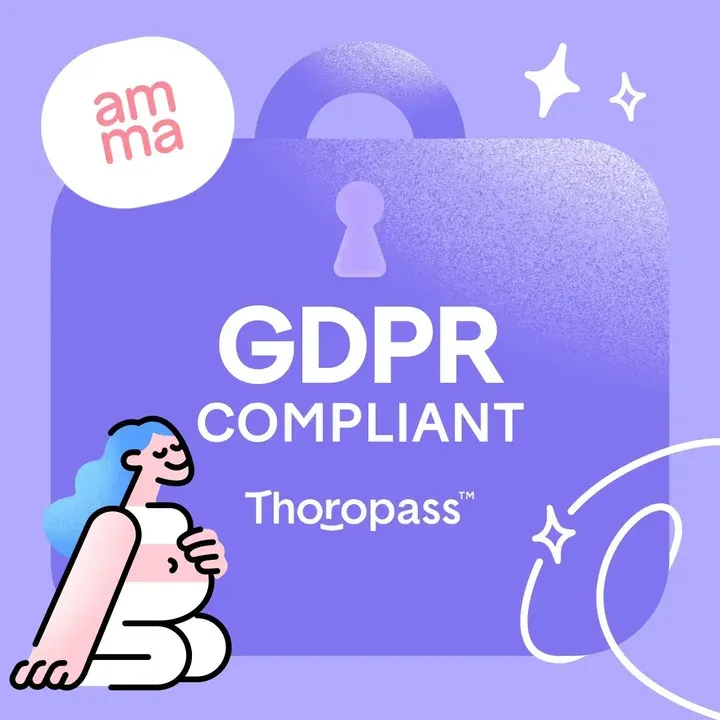
Security and privacy remained a central part of the product. amma completed its SOC 2 Type II audit in the first quarter, following SOC 2 Type I and an external GDPR assessment in 2024.

SOC 2 Type II examined whether amma’s security controls continued to work reliably over time, rather than simply confirming that the necessary systems existed at one point. Together with GDPR compliance, it showed that data protection was supported by established policies, procedures and ongoing controls.

For amma, the year connected two parts of the same work: making the product useful in different local contexts and making it trustworthy enough for families to rely on.

Listed
Forbes Health, 10 Best Pregnancy Apps of 2025
Brazil

2024: Brazil opens, data security is established, and amma contributes to UNFPA research

The year amma expanded into Brazil, formalised its approach to data protection and became part of a wider conversation about women’s experiences in maternity care.

Brazil opened as a new market and quickly reached second place by downloads. Under Diana Tlapale’s leadership, the LATAM region grew by 250% year on year during her first year as Head of LATAM.

At the same time, amma began putting more formal systems around the way it handled sensitive user data. Pregnancy and reproductive health apps work with information that is deeply personal, so privacy and security could not be treated as technical details left in the background.

In 2024, amma completed its SOC 2 Type I audit and confirmed its GDPR compliance through an external assessment by Thoropass. The work covered the policies, procedures and controls used to protect user data and support the main GDPR principles, including transparency, purpose limitation, data minimisation, accuracy, storage limitation, confidentiality and accountability.

SOC 2 Type I confirmed that the necessary systems and controls were in place at a particular point in time. The next stage was SOC 2 Type II, which examined whether those controls continued to work reliably over time. amma completed that audit in the first quarter of 2025.

The product team was also expanding amma beyond pregnancy. In September, the company launched its first user community. It was run by the product team in Spain and moderated in Spanish. During its first quarter, the number of active members doubled month over month.

Around the same time, amma became involved in UNFPA’s regional research on respectful maternity care in Eastern Europe and Central Asia. The app helped collect data for the study, which looked at women’s experiences of childbirth and their understanding of their rights during maternity care.

The study also made amma part of a broader effort involving researchers, public institutions and digital health platforms. Its contribution was not limited to distributing information. The company helped bring women’s real experiences into the discussion about maternity care, patients’ rights and medical ethics.

Listed
SOSV Human Health 100
Series A

2023: A $6M Series A and a stronger position in Mexico

The year amma secured its largest investment yet, expanded its commercial partnerships and started building for the period after birth.

In 2023, amma raised a $6 million Series A led by Zubr Capital Investment Company, at a $60 million post-money valuation. That was ten times the company’s approximate $6 million valuation at seed. Zubr’s involvement went beyond the investment itself, covering areas such as strategy, financial planning, market entry and brand development.

The round followed several years of expansion in Latin America. By the end of 2023, amma ranked first in downloads among pregnancy apps in Mexico, according to AppMagic’s country-level app rankings. The company had entered the Mexican market in 2020 and built a strong local position as its user base grew.

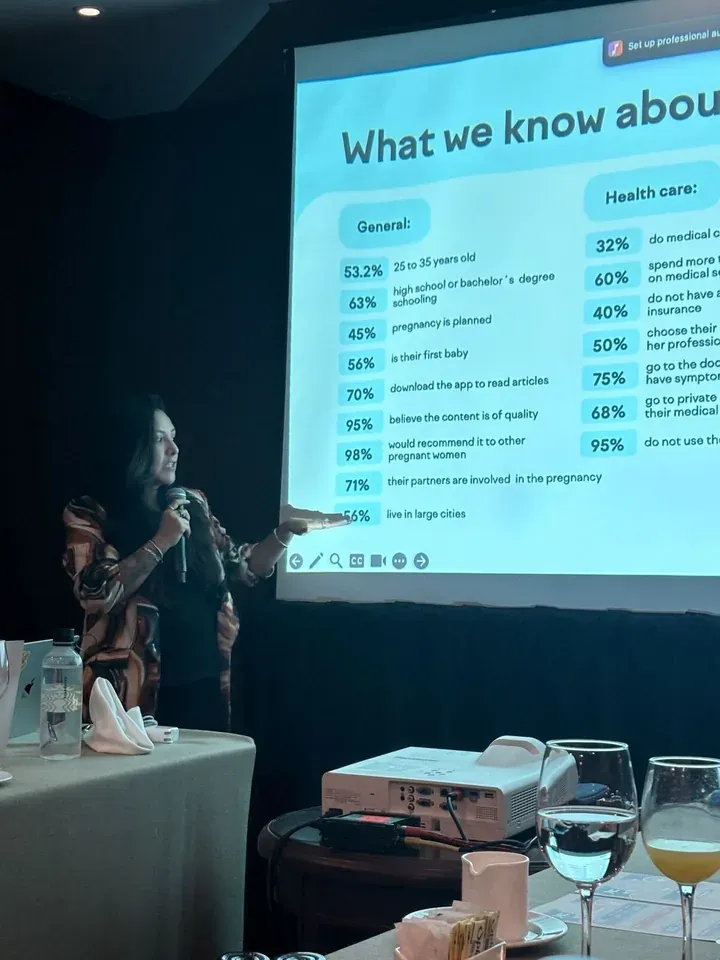
The UNFPA partnership was also expanding. In February, the partners announced that their co-created content had passed 5.1 million reads worldwide. By then, amma had around 10 million annual downloads and more than 1.5 million monthly active users.

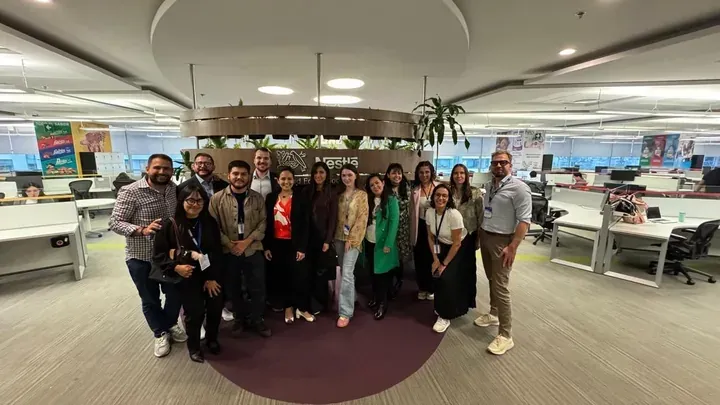
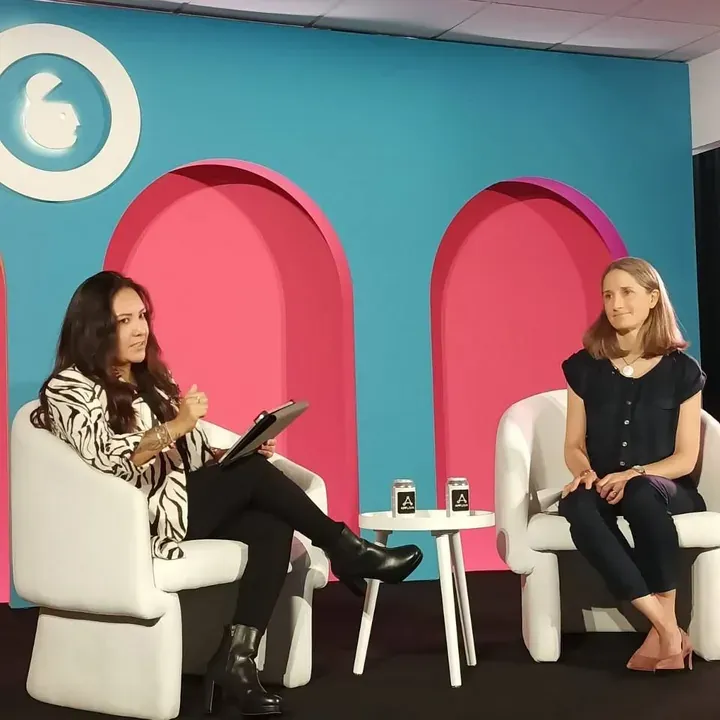
The commercial side of the business was growing alongside the user base. At Advertising Week, amma’s Diana Tlapale appeared on stage with Aude Rey from Nestlé LATAM. By that point, the two companies were working together across 14 countries.

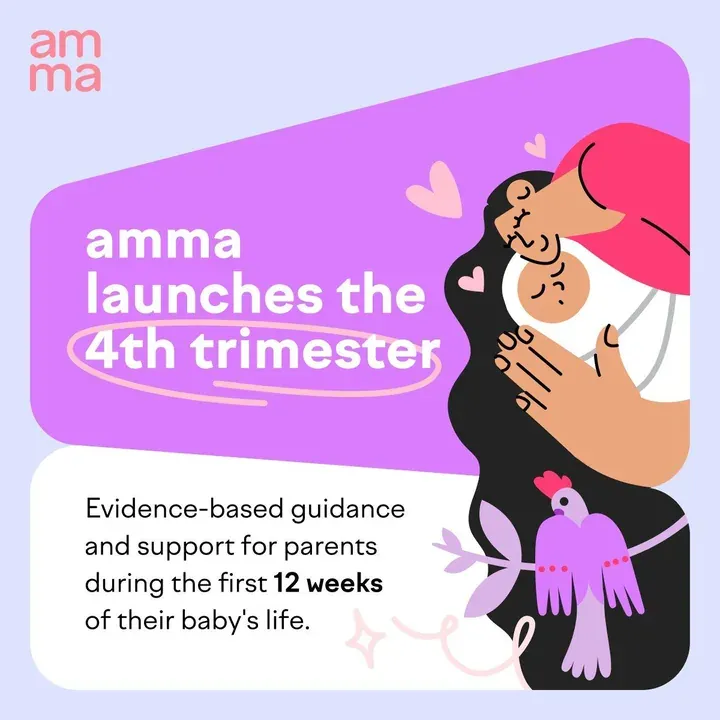
amma was also beginning to support families beyond pregnancy. In October, the company launched a fourth-trimester tracker covering the first twelve weeks after a baby’s birth. Internal data from 2023 showed that 80% of users continued using amma after giving birth, while more than 3,000 users were reaching childbirth through the app every day.

The new section reached 45% seven-day retention without a dedicated marketing campaign. It was an early sign that amma could remain useful after pregnancy, not just during it.

Gold
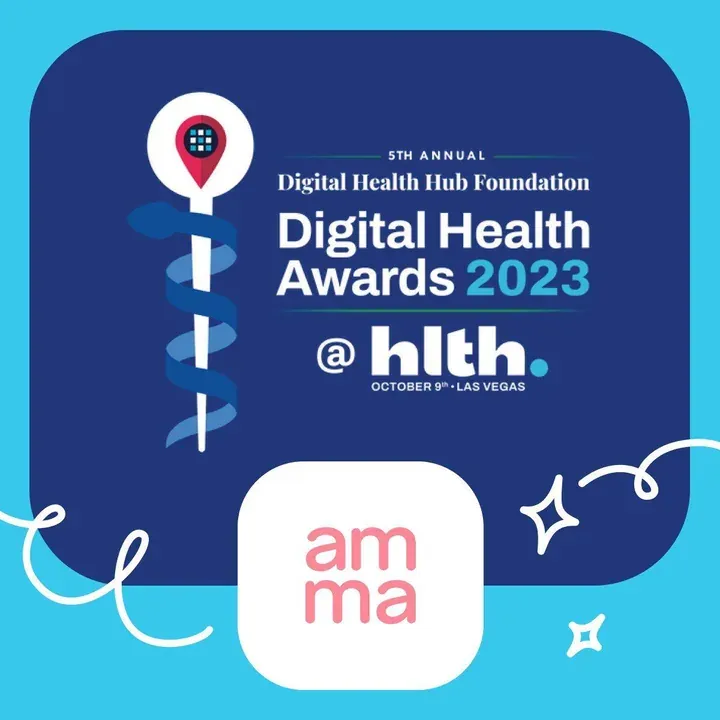
Digital Health Awards, Mobile Application

From LinkedIn

Show 15 more
Key momentUNFPA

2022: amma starts working with UNFPA and expands in Latin America

The partnership brought UNFPA’s expertise into amma’s content and helped make reliable reproductive health information available to families in more languages.

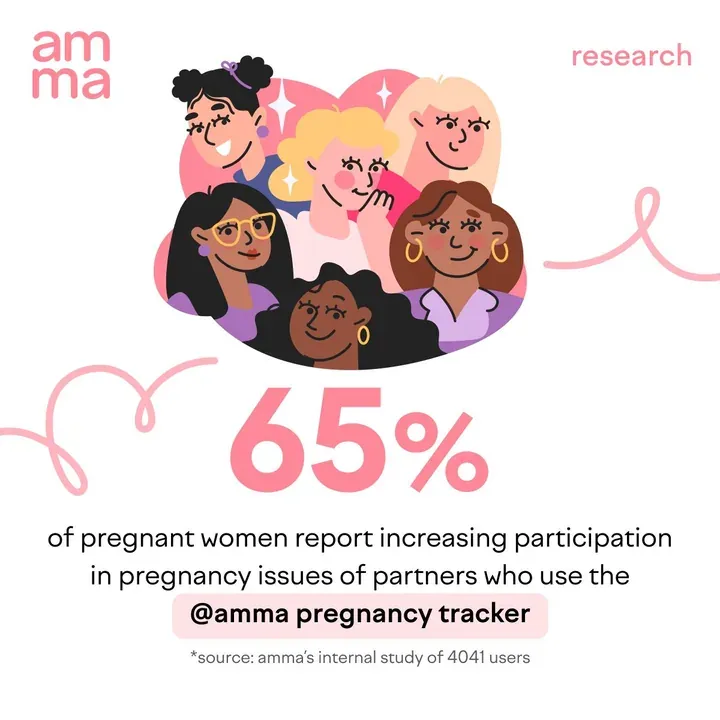
The Latin American expansion that began in Mexico in 2020 continued. In parallel, amma published a survey of 19,746 pregnant women from 171 countries on their partners’ involvement in pregnancy: 82% wanted their partners to be more involved than they were. Father engagement has been a product line at amma ever since, and men make up 12–18% of amma’s users.

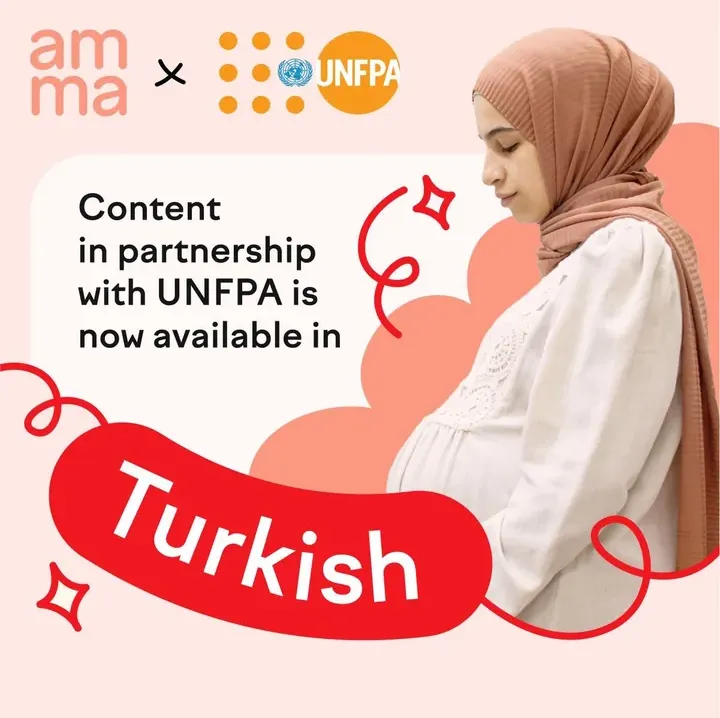
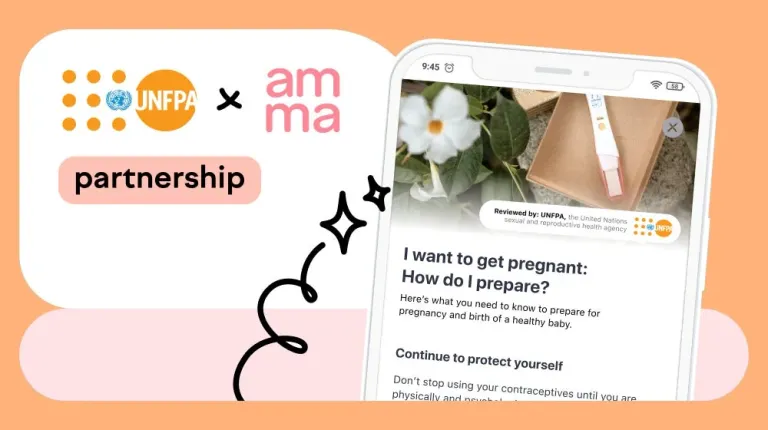
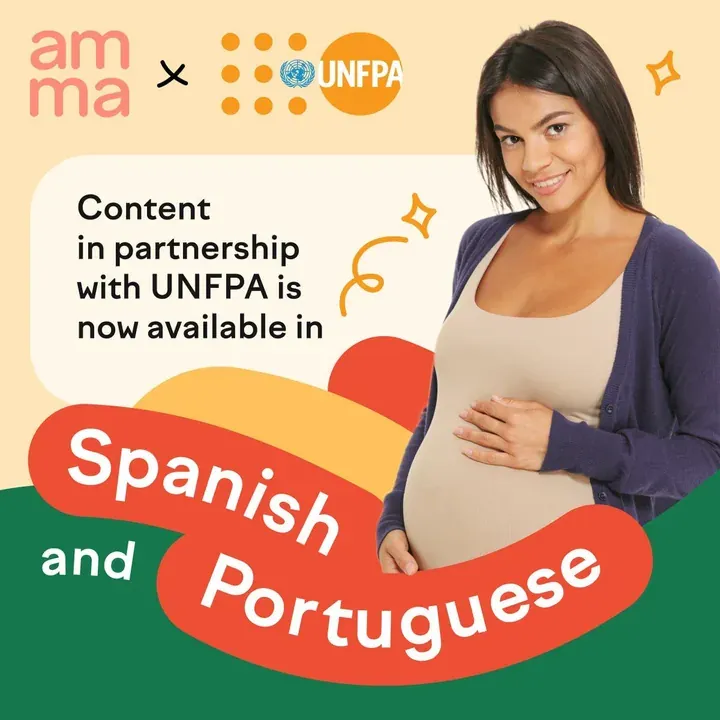
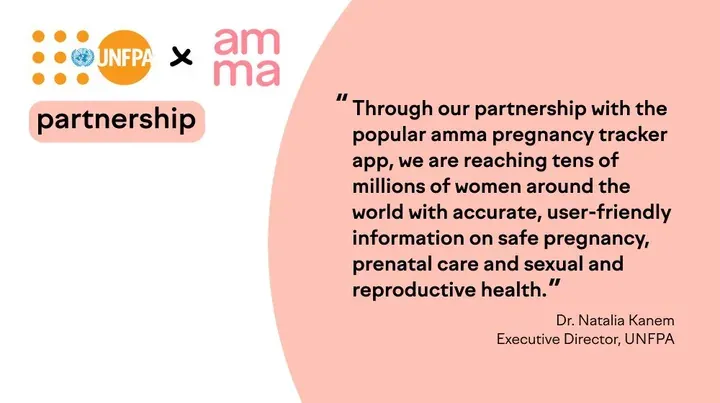
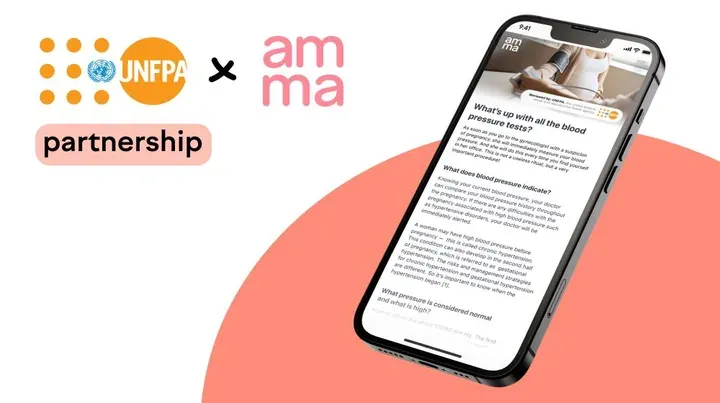
In the same period, amma began working with the United Nations Population Fund (UNFPA), the United Nations agency for sexual and reproductive health. Together, the organisations created content for the amma pregnancy tracker based on current scientific and medical research.

The partnership covered the questions women and their families face before, during and after pregnancy. The topics included family planning, women’s health, breastfeeding, gender equality, pregnancy complications and the impact of COVID-19 on pregnancy. The teams also worked on materials about preparing for pregnancy, women’s rights in childbirth, physiological childbirth and child vaccination.

The content was created to give women and their families clear answers to common questions about pregnancy and reproductive health. It was available to amma users for free.

The collaboration expanded across six languages. UNFPA-supported materials were created in English, Spanish, Portuguese and Turkish. For the special version of amma developed for Kyrgyzstan, the content was adapted into Kyrgyz and Russian with support from UNFPA and local partners.

amma and UNFPA also agreed to conduct joint research into families’ attitudes towards sexual and reproductive health in different regions. The partnership became an important part of amma’s work: combining evidence-based medical information with practical guidance that families could use in everyday life.

Product
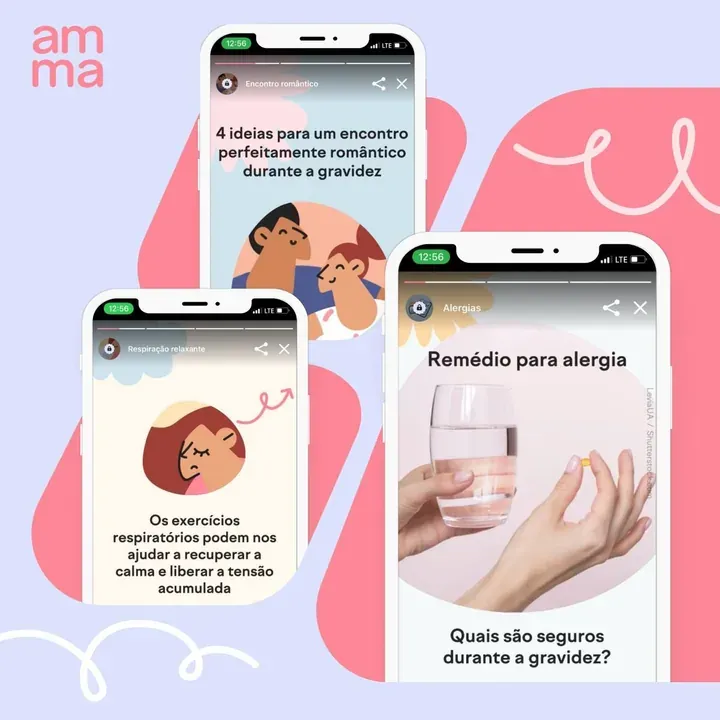
In-app Stories, built with Storyly: reach up 174% by June 2022
Pre-Series A

2021: The year amma raised $2 million and found its direction

amma was no longer just growing quickly. It was beginning to define what kind of company it wanted to become.

In March, SOSV announced an investment in amma through its ChinaAccelerator programme. In May, the team presented at the programme’s 19th demo day. On 30 September, amma closed a $2 million round at a $28 million post-money valuation. The funding was intended to support local teams in Latin America and Southeast Asia.

SPC-vc, A.Partners, the Joint Journey investment office and AngelsDeck joined the round alongside individual angel investors.

The business case was straightforward. A pregnancy app usually remains relevant to a user for around seven months. By connecting cycle tracking, pregnancy and baby care in one product ecosystem, amma could stay useful for up to five years. It also gave the company access to a potential audience of 1.1 billion people.

This way of thinking shaped amma’s product strategy in the years that followed.

A focus on medical expertise was taking shape in the content function. amma worked with medical and academic institutions in different markets, including the University of São Paulo in Brazil, the OT&P clinic in Hong Kong, Doc.com in Mexico and SteadyMD in the United States. These partnerships helped the team develop content that was grounded in medical expertise rather than unsupported health claims.

Winner
Health Tech Digital Awards, Best Woman’s Health Technology Solution
Silver
Digital Health Awards, Mobile Digital Health Resources
3rd place
Go Global Awards, HealthTech
Finalist
Content Marketing Awards, Best Use of Content Curation
Quarterfinalist
UCSF Health Awards, Consumer Wellness
  • 1.5MMonthly active users
  • 10MNew users a year
Ten times

2020: Revenue grew tenfold, and content became a real function

A year of rapid growth: a much larger audience, the accelerator that opened Asia, and the beginnings of amma’s editorial system.

By the end of 2020, amma’s monthly revenue had risen from around $25,000 to $253,000. Monthly active users passed 1.5 million, and the app was receiving roughly 600,000 downloads a month. User acquisition cost remained close to five cents across markets. amma was among the top three health apps in Mexico, Argentina, Chile and Peru, and ranked in the top five in Malaysia, Greece and Ecuador.

That was also the year content became a proper function rather than something handled alongside other product work. Olga Zamyatina joined as Chief Content Officer and built the editorial system around a clear principle: information about pregnancy and reproductive health had to be accurate, useful and understandable.

The editorial policy was built around the hierarchy of medical evidence. The team prioritised meta-analyses, clinical reviews, clinical guidelines and randomised controlled trials, using the strongest available evidence for each topic. Medical content was reviewed by practising obstetricians and gynaecologists, and sources were made visible to readers.

The aim was not simply to make amma look credible. It was to give women clear, practical information based on reliable evidence, while recognising that medical content should support, not replace, a consultation with a doctor.

At the end of the year, amma signed a SAFE with the US venture fund SOSV and joined its ChinaAccelerator programme. This brought the company into a wider international investor network.

Winner
Wellness & Lifestyle Awards, Hong Kong 2020
Year one

2019: A small office in Hong Kong, and one deliberate decision

amma was registered in Hong Kong on 27 February 2019, two weeks before Eugene Zhiharev’s daughter was born. The idea had grown out of the nine months before that. His wife was pregnant, and questions kept coming up. The answers were often scattered, contradictory, or unavailable until the next appointment with a doctor. There was no launch event and no big announcement.

That first year also established amma’s business model. After speaking with users, the team decided to keep the core content free rather than put it behind a paywall. Many of the women amma wanted to reach could not reliably afford another monthly subscription. At the same time, their needs and attention were valuable to FMCG and pharmaceutical brands. The model was simple: free, evidence-based content supported by brand partnerships.

Angel investors in Hong Kong, Israel and Korea, then Prytek in December, brought the seed round to about $1.6 million.

  • ~$1.6MSeed round
  • ~$6MValuation at seed
  • $25KMonthly revenue
“When my wife was pregnant with our first child, I went to pregnancy courses. After that experience I found the information presented on the web was sparse and often unreliable. So I created amma pregnancy tracker with a strong focus on reducing the stress and anxiety of expecting families, not only women.”
— Eugene Zhiharev, Founder & CEO

Funding

amma’s funding rounds, with round totals and valuations
YearRoundRaisedValuationInvestors
2023Series A$6M$60M post-moneyLed by Zubr Capital
2021Pre-Series A$2M$28M post-moneySPC-vc, A.Partners, Joint Journey, AngelsDeck Global Ventures and angel investors
2021AcceleratorNot disclosedNot disclosedSOSV (ChinaAccelerator)
2019Seed~$1.6M~$6MAngel investors in Hong Kong, Israel and Korea, then Prytek

Investors

  • Zubr Capital
  • Prytek
  • Orbit Ventures
  • SOSV
  • SPC-vc
  • A.Partners
  • Joint Journey
  • AngelsDeck Global Ventures
  • Verras Capital LP