EN
try amma today
How can my face “look pregnant”?
Pregnancy

How can my face “look pregnant”?

2 min readWeek 27
Key takeaways
2 min
  • Expect facial puffiness during pregnancy as body fluids increase by 1.5-2 gallons, causing natural swelling that typically resolves postpartum.
  • Protect against melasma by using sunscreen daily, as pregnancy hormones make skin more sensitive to UV rays causing dark patches.
  • Monitor severe facial swelling with eye bags that doesn't improve during the day, as this may indicate preeclampsia requiring medical attention.
  • Manage spider veins around eyes and face by understanding they're caused by hormonal changes and usually disappear after childbirth.
  • Reduce morning puffiness by maintaining regular sleep schedules, limiting nighttime fluids, and applying ice to swollen areas.

Faces can "look pregnant" due to three main changes: increased puffiness from extra body fluids, dark spots (melasma) caused by hormone-sensitive skin, and spider veins from fragile blood vessels. These facial changes are normal pregnancy symptoms.

amma app

Track week 27 in the amma app

Personalized daily updates for your pregnancy

Rated 4.8· 417,594 reviews
Download App

“I knew it! It’s written all over your face!” It’s not unusual to hear that from a close friend or family member when you announce that you are pregnant. They may feel they have bragging rights for being the family psychic, but were they really able to tell? They may have picked up on one of these facial signs of pregnancy.

1. Puffiness

During pregnancy, body fluids increase by 1.5 to 2 gallons! So it’s no wonder you look a bit swollen [1]. Swelling of the face can also be caused by nasal congestion (a common issue in pregnant women) [2]. But if the swelling is severe, does not go away during the day, and you notice bags under your eyes, you should talk to your doctor to exclude kidney disease or preeclampsia.

As long as there are no health conditions, follow these rules [2]:

  • get up and go to bed on a regular schedule

  • avoid drinking too much fluids at night

  • rub an ice cube over puffy areas to reduce swelling.  

2. Dark spots and patches

It’s common to develop new dark patches around your eyes, lips, and nose when pregnant. Hormones make your skin more sensitive than usual to the sun, and those ultraviolet rays may trigger a darker, uneven pigmentation [3]. Melasma, as it’s known, is difficult to treat, so prevention is key. In an experiment involving 200 pregnant Moroccan women, only 2.5 percent developed melasma when using sunscreen (versus a control average of 53 percent) [4]. Sunscreen use is considered a safe and smart practice during pregnancy and always. 

3. Spider veins

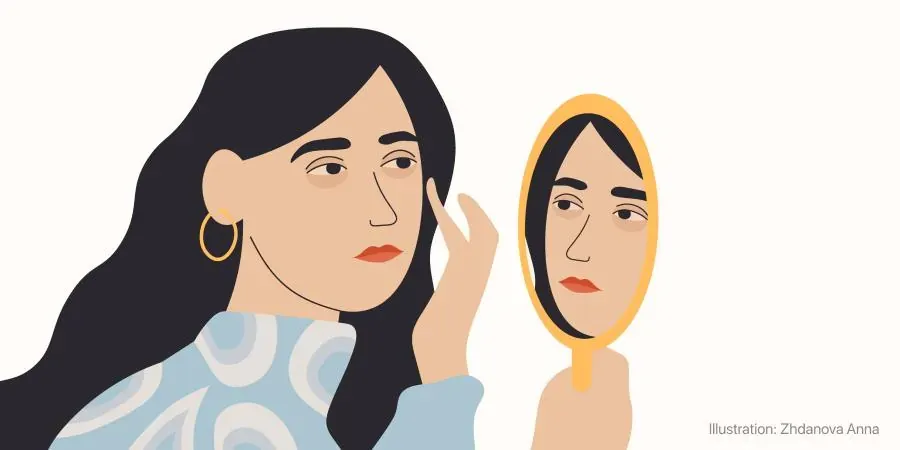
Hormonal changes can make blood vessels more fragile, and suddenly, tiny bluish veins appear on the skin. The skin under the eyes tends to be the most affected [5], contributing to under-eye circles and what can be interpreted as an overall look of tiredness. Capillary “stars” can also appear on the neck, arms, and décolleté area. The issue usually resolves after childbirth when the level of sex hormones returns to normal [6].

Not sure how far along you are?

Convert weeks to months, estimate your due date, and follow week-by-week progress.

Open pregnancy calculators
Frequently asked questions

Facial puffiness occurs because your body retains 1.5-2 extra gallons of fluid during pregnancy. This natural swelling is normal and typically resolves after delivery.

Dark facial spots, called melasma, develop when pregnancy hormones make skin more sensitive to UV rays. Using sunscreen daily can prevent up to 97% of cases according to research.

Yes, spider veins are common during pregnancy due to hormonal changes that make blood vessels more fragile. They typically disappear when hormone levels normalize after childbirth.

Contact your doctor if facial swelling is severe, doesn't improve during the day, or includes persistent bags under your eyes. These could indicate preeclampsia or kidney issues.

Maintain regular sleep schedules, avoid excessive fluids before bed, and gently rub ice cubes on puffy areas. These simple steps help minimize natural pregnancy swelling.

Medical Disclaimer

This article is for informational purposes only and is not a substitute for professional medical advice, diagnosis, or treatment. Always seek the advice of your physician or qualified health provider with any questions you may have regarding a medical condition.

Meet our medical experts

Medically reviewed content

Reviewed by healthcare professionals · Updated March 25, 2025

You might also like

What do doctors look for in the first month?Pregnancy 2 min

What do doctors look for in the first month?

Discover what doctors check during your baby's first month after a healthy pregnancy. From heel prick tests to hearing screenings - essential health checks explained.

partnerpostpartum-symptomsdoctor-visits
How safe is flying when you’re pregnant?Pregnancy 1 min

How safe is flying when you’re pregnant?

Learn when it's safe to fly during pregnancy and essential precautions for a healthy pregnancy. Get expert tips on air travel restrictions and safety measures.

complicationsleisure-and-fun
That cute baby facePregnancy 2 min

That cute baby face

Discover baby names inspiration while learning about your 37-week baby's cute facial features and movements. Complete fetal development guide for expecting parents.

baby-caresymptoms
8 things to look for in a safe baby toyNew Parent 1 min

8 things to look for in a safe baby toy

Discover 8 essential safety tips for choosing baby toys. Learn how to avoid choking hazards, check for toxic materials, and keep your little one safe during playtime.

baby-careshopping
Hold off on home repairs while your partner is pregnantPregnancy 2 min

Hold off on home repairs while your partner is pregnant

Discover why postponing home repairs protects your healthy pregnancy. Learn about toxic chemicals in paint, flooring & construction materials that harm baby development. Get safe renovation tips now.

partnerlife-y-home
Can a nursing mother eat chocolate and oranges?Pregnancy 2 min

Can a nursing mother eat chocolate and oranges?

Discover if breastfeeding mothers can safely enjoy chocolate and oranges. Learn about safe portions, potential effects on baby, and when to watch for reactions. Get expert guidance now!

nutrition
amma app

Download amma

#1 Pregnancy App

Open in App

Track your pregnancy on the go

Rated 4.8417,594 reviews