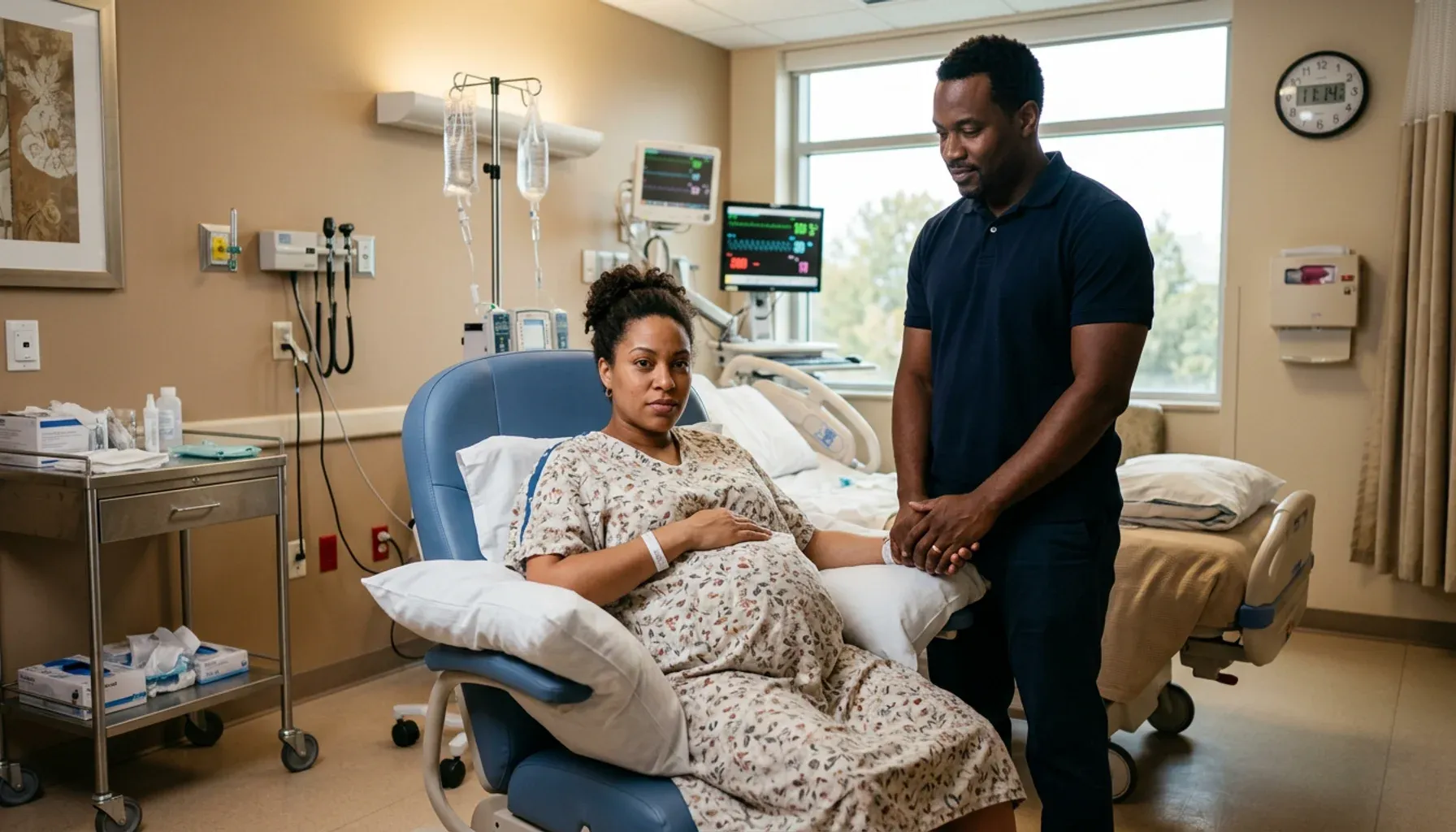
Almost ready to be born
At this point, you will continue to feel the baby stretching, fidgeting, and turning. The type of movement may change now that your baby has grown so large [1], but they should keep moving right up to and during labor.
 Your baby is now almost ready to come into the world! Their strong lungs are probably ready to take their first breath, but between now and the actual birth they will be “exercising” them. Your baby’s lungs expand and contract with the diaphragm and intercostal muscles, practicing for when they take real breaths. At this time, there is no amniotic fluid in the lungs [2]. By now, the digestive system is also ready to support the baby’s body by absorbing nutrients, starting with breast milk.
It’s rare for a baby to be born on their exact due date, so it’s good to be prepared in good time for when you go into labor [3]. If signs of labor start before 37 weeks, call your doctor or maternity unit right away, because the baby would still be premature.
This week, the baby’s hearing has sharpened, while their brain and nervous system continue to develop fully in preparation for birth. They also start to shed any remaining lanugo, which can occasionally be swallowed and digested. This will form the baby’s first stool, also known as meconium, which passes after birth [4].
If you are expecting twins
The process of childbirth can begin at any time now. Your doctor will talk to you about how your babies may be born: if the baby nearest your cervix is head down and there are no other complications, you should be able to plan a vaginal birth if you choose, whatever the position of the second baby. If the baby nearest your cervix is bottom down (breech), a cesarean birth is usually recommended.
What we can see on an ultrasound
In this image, the baby is lying on their back, their profile clearly outlining the forehead, nose, and chin. The right hand is also visible.

head
hand