EN
The baby can hear mom’s voice
Pregnancy

The baby can hear mom’s voice

2 min readWeek 26
Key takeaways
2 min
  • Recognize that babies can hear, taste, and smell by around 25 weeks of pregnancy, responding to loud music with kicks and movements.
  • Expect your baby to spend most time in REM sleep with active brain development and rapid eye movements during the third trimester.
  • Monitor for hiccups as babies continuously swallow amniotic fluid, which mothers can often feel as rhythmic movements.
  • Understand that twins become very active as space tightens, with lungs producing surfactant to prepare for breathing outside the womb.
  • Observe ultrasound features showing baby's profile, heart, and brain structures including lateral ventricles and interhemispheric fissure.

Babies can hear their mother's voice by around 25 weeks of pregnancy, while their hearing, taste, and smell are still developing. They respond to sounds with movements and kicks, spend most time in active REM sleep, and their brain processes auditory information through the amniotic fluid environment.

amma app

What is your body telling you?

A personal check-up from amma — answer honestly and get your read-out

Rated 4.8· 417,594 reviews

The baby can hear mom’s voice

The baby now looks like a newborn. Their brain, heart, lungs, and digestive tract are formed, though they are still maturing. The bones and muscles get stronger day by day [1].

The baby spends most of the time in REM sleep, with their eyes quickly moving and their brain actively working [2].

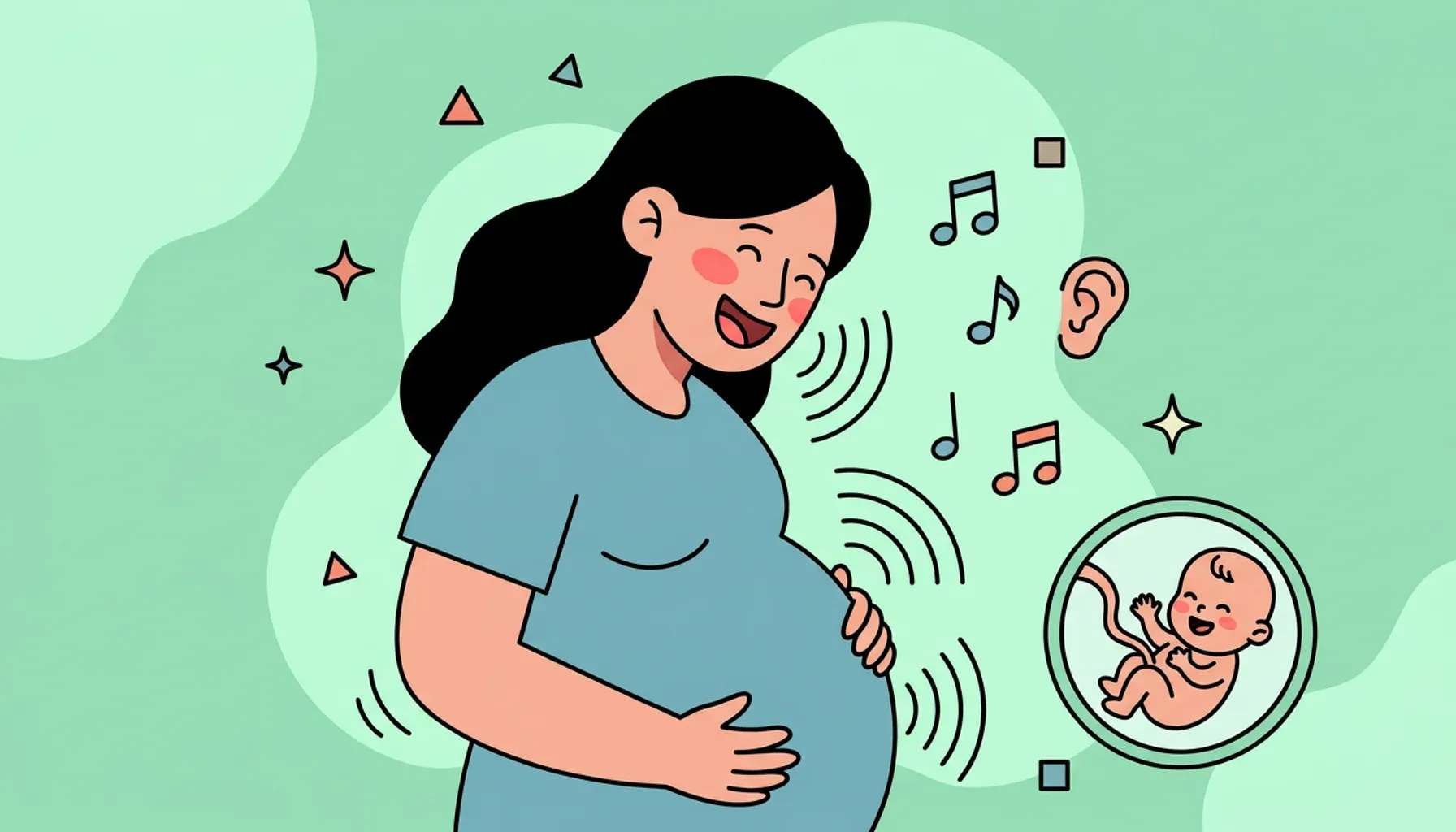
At this point in the pregnancy, the baby can taste, smell and hear [3]. Loud music excites them and they can push and kick in response. Some of these movements can even startle mom!  

The baby continues to swallow amniotic fluid and urinate into it. Sometimes the expectant mom will feel when they get the hiccups [4].

If your partner is expecting twins

The babies are very active, and space is getting tighter, so your partner can easily feel how they’re trying to get comfortable inside the womb. Their lungs are starting to produce surfactant –a liquid that protects their respiratory tract. This is part of the process that will help them adapt to breathing outside the uterus.

What we can see on an ultrasound

Here, we can see the baby’s profile. They are resting with the back of the head and foot against the walls of the uterus. On the left of the photo, we can see the eyes, nose, lips, and chin. The dark area in the chest is the heart.

The baby can hear mom’s voice - The baby can hear mom’s voice
  1. head

  2. heart

  3. leg

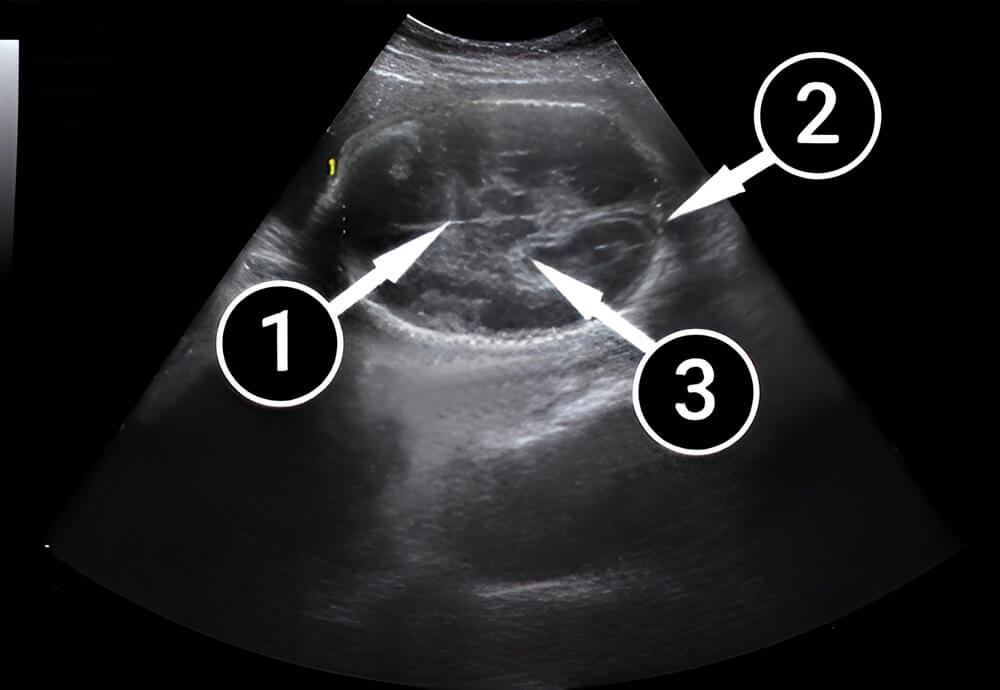
The second picture shows a cross-section of the baby’s head. The white oval is the skull. The thin horizontal line dividing the brain is the interhemispheric fissure. On the sides of it, the lateral ventricles of the brain are visible.
The baby can hear mom’s voice - The baby can hear mom’s voice
  1. interhemispheric fissure

  2. skull

  3. lateral ventricles


Not sure how far along you are?

Convert weeks to months, estimate your due date, and follow week-by-week progress.

Open pregnancy calculators
Frequently asked questions

Babies can hear their mother's voice by around 25 weeks of pregnancy, though their hearing is still developing. They respond to sounds by moving, kicking, or becoming more active, especially with loud music or familiar voices.

Baby's hearing develops gradually: by around 25 weeks, babies can hear noises and voices from outside the womb, though their hearing and nervous system are still developing. Their brain, specifically the auditory cortex, processes sounds from the amniotic fluid environment, allowing them to hear mom's voice and respond to external noises.

Medical Disclaimer

This article is for informational purposes only and is not a substitute for professional medical advice, diagnosis, or treatment. Always seek the advice of your physician or qualified health provider with any questions you may have regarding a medical condition.

Meet our medical experts

Medically reviewed content

Reviewed by healthcare professionals · Updated

This article is based on peer-reviewed research and trusted medical sources.

  1. Week-by-week guide to pregnancy. NHS.
  2. Fetal development: The 2nd trimester. Mayo Clinic.
  3. Brewer S. The Pregnant Body Book. Dorling Kindersley Publishing Staff, 2012, p. 144.
  4. You and your baby at 25 weeks pregnant. Your pregnancy and baby guide. NHS.
amma app

What is your body telling you?

Get your personal read-out from amma

What is your body telling you?

Trusted by over 30 million women worldwide

Rated 4.8417,594 reviews