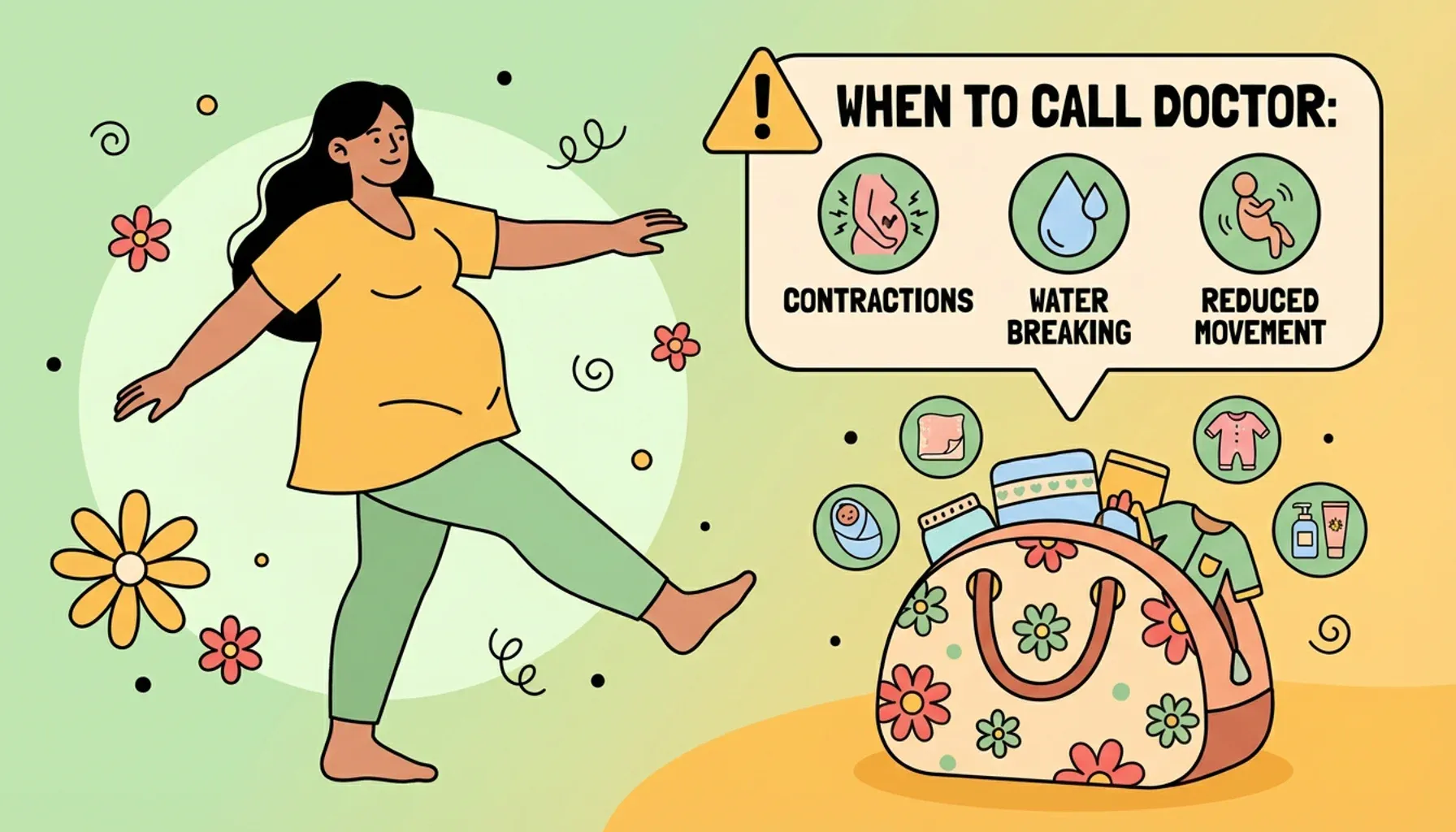

Getting ready for childbirth
Don’t worry if you feel very tired, irritable, or anxious. With all the hormones and extra weight you are carrying while getting ready for your new baby, this is to be expected [1, 2].
Take care of yourself! Get plenty of rest and eat a healthy diet. An exciting TV series, book, or video game can help you to disconnect from every day worries. Try to remain physically active; taking walks and doing gentle stretching can significantly improve your mood and help your body prepare for childbirth [3].
You might have noticed that your nipples have become more sensitive and they may leak a yellowish-white. This is called colostrum, and it is your first milk. Many women start producing colostrum well before their baby is born [4].
You may experience pain in the pubic and sacral regions. In preparation for childbirth and with the help of hormones, your body is making your joints and ligaments relax. As both joints and bones become more mobile, you can experience discomfort [5]. The softening of the connective tissues in the small pelvis often causes back pain. Low-heeled shoes with special insoles can help relieve some of the discomfort by supporting the arch. Use an orthopedic chair, especially if you spend a lot of time sitting [6].
Your enlarged belly keeps pressing on the bladder so you will keep having to go to the toilet frequently. Urine leakage is also possible [6].
As your baby descends in preparation for birth, your internal organs will have an easier time because the uterus won’t be pressing down on them as hard. You may also be breathing easier and experiencing less heartburn.
If you are expecting twins
The question of whether it is worth it to stimulate the birth of twins, if the body does not go into labor by week 38, has not yet been established by medicine [7]. You will have to weigh all the risks with your doctor and make a decision yourself.
Discharge
Towards the end of pregnancy, discharge increases. Milky white, homogeneous discharge without an unpleasant odor is completely normal [5].
You may also notice white or pink mucus being released from the vagina. This means that the mucous plug, which protected the cervix during pregnancy, has started to dislodge. However, this doesn’t mean that labor is close, it’s still too early to go to the hospital [4].
Curdled or frothy discharge accompanied by pain, burning, and itching is a sign of infection and merits a prompt consultation with your doctor. If you notice bloody discharge, seek immediate medical assistance [5].
You should also call your doctor if your water breaks. The thin, clear amniotic fluid can leak lightly or flow in large volumes (up to 5 oz or 150 ml). If your water breaks in a gush, go directly to the hospital [4].