EN
Baby reflexes get more precise
Pregnancy

Baby reflexes get more precise

3 min readWeek 19
Key takeaways
3 min
  • Observe your baby's increasingly complex movements including grimacing, sucking, frowning, and playing with the umbilical cord as reflexes develop.
  • Expect more pronounced baby movements when exposed to loud sounds or music as their hearing and response systems mature.
  • Monitor subcutaneous fat development around the neck, chest, and kidneys which helps smooth wrinkles and regulate body temperature.
  • If you're expecting twins, expect extra scans on the schedule your care team sets; twins who share a sac are scanned more often because their cords can get tangled.
  • Track digestive system progress as meconium forms in the intestines, preparing your baby's body for post-birth functions.

Baby reflexes become more precise during mid-pregnancy, including complex movements like sucking, grimacing, and playing with the umbilical cord. Babies also respond more actively to loud sounds and continue developing subcutaneous fat and digestive systems.

amma app

What is your body telling you?

A personal check-up from amma — answer honestly and get your read-out

Rated 4.8· 417,594 reviews

Baby reflexes get more precise

Your baby can now move their arms and legs, grimace, suck on a finger, frown, swallow, get the hiccups, open their mouth, and play with the umbilical cord [1]. You may have noticed or will notice soon, that the baby’s movements become more pronounced if someone is talking loudly next to you or if loud music is playing.

The baby’s digestive system continues to improve. In the intestine, meconium is now present. Meconium is the baby’s first feces, consisting of cells from the digestive tract, bile, and dead epithelial cells that line the mucous membrane of internal organs [2].

Subcutaneous fatty tissue continues to form. It will gradually help fill out the baby’s skin, smoothing wrinkles and softening its bright red color. Subcutaneous fat is deposited primarily around the neck, chest, and kidneys. Outside, the skin is still covered with a layer of primordial grease that protects it from irritation and helps retain heat.

If you are expecting twins

Your babies are now about the size of large cucumbers. They move quite actively and play with the umbilical cord. If they have a common fetal sac, then there is a high risk that the umbilical cords will intertwine. Therefore, mothers of identical twins often have to go in for additional ultrasounds [3]. If each twin has their own fetal sac, the cords can't get tangled, but twins are still scanned more often than a single baby.

What can be seen on ultrasound

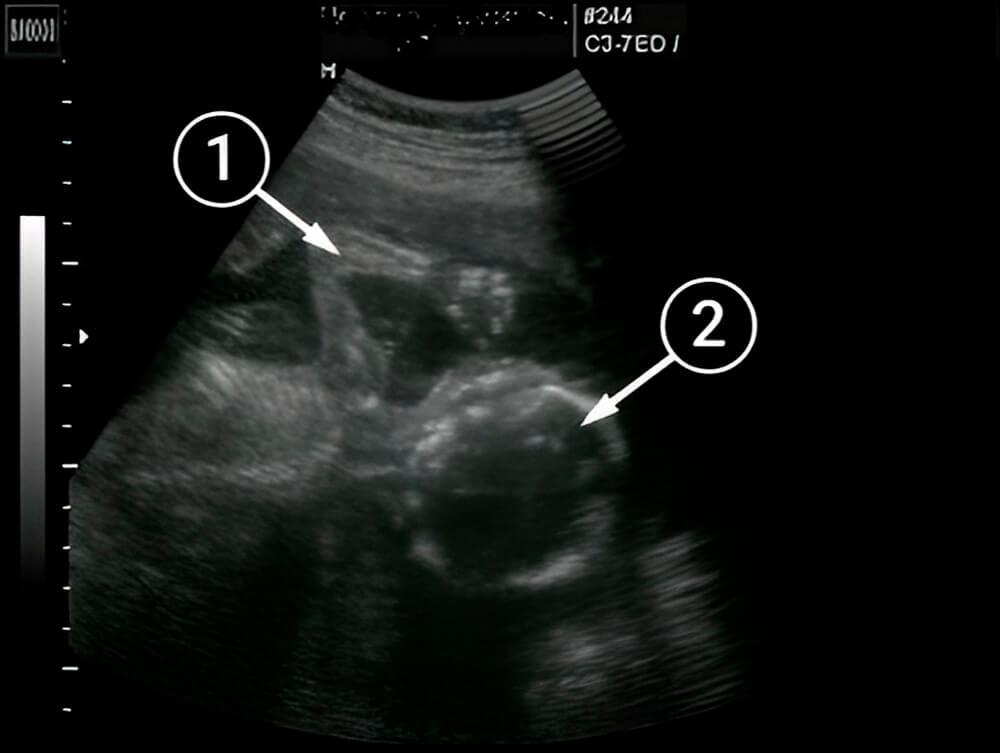
The baby is lying with their back to the screen, which makes it possible to see the left shoulder, armpit, forearm, elbow, and wrist. The neck is easier to see, around which subcutaneous fat is gradually being deposited.
Baby reflexes get more precise - Baby reflexes get more precise
  1. hand

  2. head

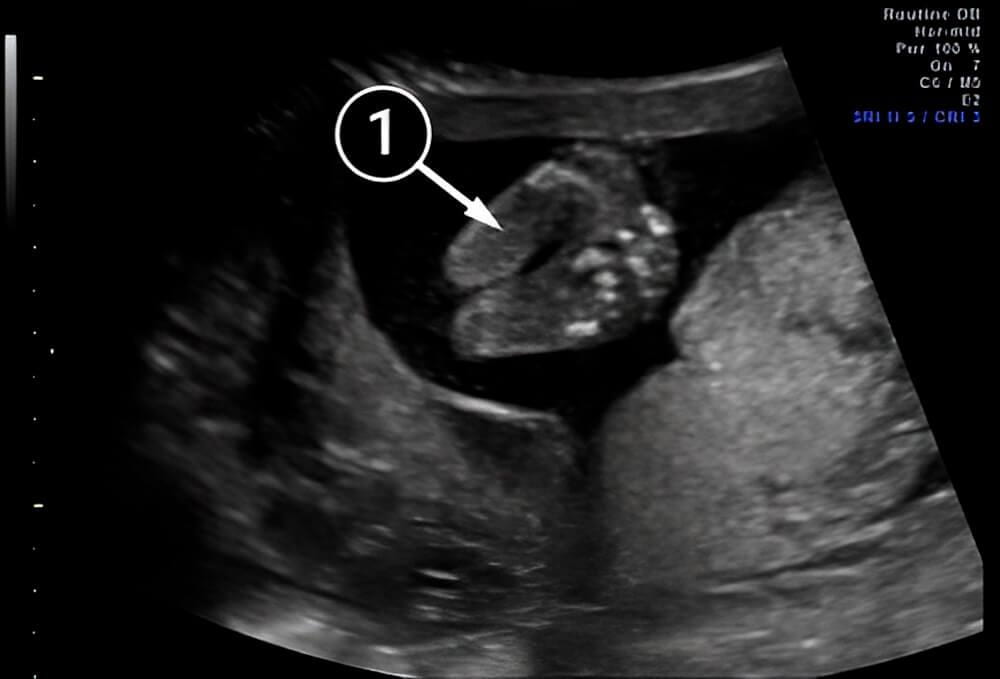
The following image is quite sweet because we can see the baby’s tiny heels. The length of the feet at this time is just under 3 cm (28 mm). They are distinguishable by the smallest detail: Rounded calcaneus and metatarsal ossicles appear as small white squares.
Baby reflexes get more precise - Baby reflexes get more precise
  1. feet

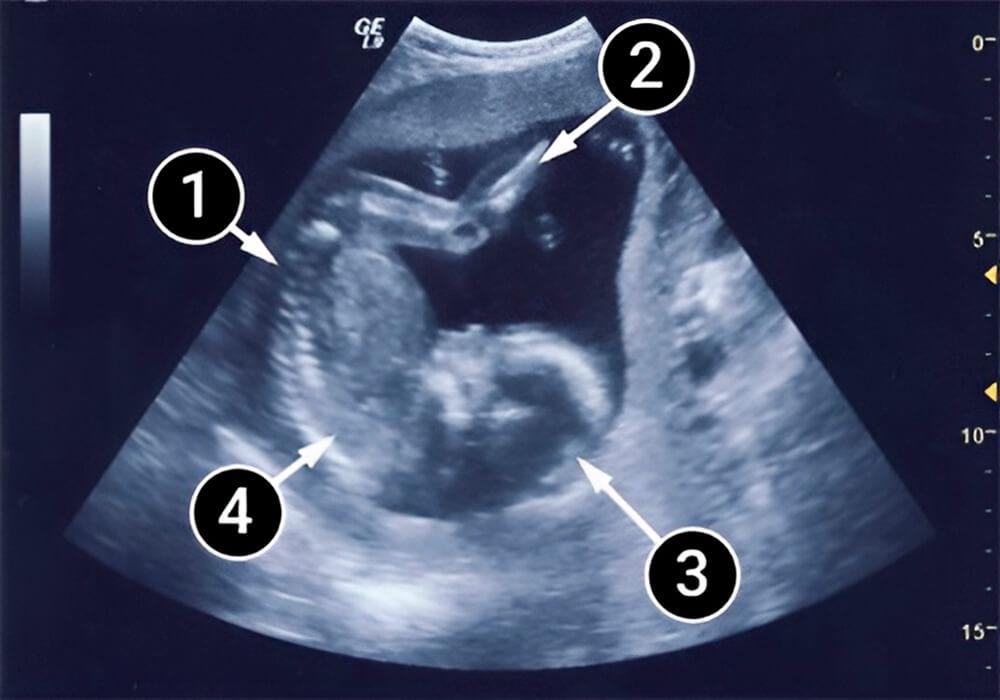
In the following image, the baby’s position is not the most convenient, but because they are actively moving, they can take the most unexpected positions.

The head is against the chest, the forehead and nose are visible, and the lips are too. We can also see the spine, the left shoulder, and the hand, which are lying along the body. You can see the baby’s legs — including the thigh, lower leg, and right patella — with the feet resting on the placenta.
Baby reflexes get more precise - Baby reflexes get more precise
  1. spine

  2. leg

  3. head

  4. hand


Not sure how far along you are?

Convert weeks to months, estimate your due date, and follow week-by-week progress.

Open pregnancy calculators
Frequently asked questions

Babies can move their arms and legs, grimace, suck on fingers, frown, swallow, hiccup, open their mouth, and play with the umbilical cord. These reflexes become more precise as pregnancy progresses.

Babies begin responding to loud sounds and music with more pronounced movements during the second trimester. You may notice increased activity when exposed to loud noises or conversations.

Meconium is your baby's first feces, consisting of digestive tract cells, bile, and dead epithelial cells. It forms in the intestines during fetal development as the digestive system matures.

Identical twins sharing a fetal sac have higher risk of umbilical cord entanglement due to their active movements. Additional monitoring ensures both babies' safety and proper development.

At around 20+ weeks, baby's feet measure just under 3 cm (28 mm) in length. Rounded heel bones and metatarsal bones appear as small white squares on ultrasound images.

Medical Disclaimer

This article is for informational purposes only and is not a substitute for professional medical advice, diagnosis, or treatment. Always seek the advice of your physician or qualified health provider with any questions you may have regarding a medical condition.

Meet our medical experts

Medically reviewed content

Reviewed by healthcare professionals · Updated

This article is based on peer-reviewed research and trusted medical sources.

  1. Brewer S. The Pregnant Body Book. Dorling Kindersley Publishing Staff, 2012, p. 134.
  2. Pediatric Clinical Care, Meconium.
  3. Physiologic Effects of Multiple Pregnancy on Mother and Fetus. Jennifer M. H. Amorosa, Jane Cleary-G
amma app

What is your body telling you?

Get your personal read-out from amma

What is your body telling you?

Trusted by over 30 million women worldwide

Rated 4.8417,594 reviews