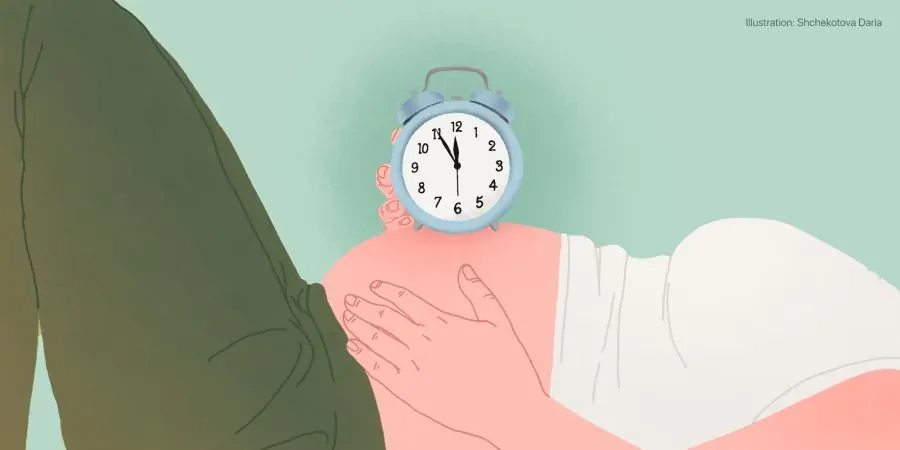

A pregnancy that lasts more than 42 weeks is called postterm and can create additional risks for both the mother and baby [1]. While some doctors believe that the baby’s condition often worsens after 40 weeks in the womb [2], the final decision to induce childbirth or wait another week is almost always left to the mother.
Why do some babies miss their due dates?
The most common reason for postterm birth is an incorrect determination of the date of birth. Perhaps, mom did not remember the exact date of her last period, or she did not have an ultrasound in the first trimester, but instead the doctor determined the gestational age of the baby by indirect signs. All this can lead to a miscalculation of the due date. According to statistics, among women who do not have an ultrasound in the first trimester, the share of post-term pregnancies is 12%. Among those who had an ultrasound according to schedule, only 3% have post-term birth [2].
The reasons that lead to a true post-term birth are not known for certain. It is statistically noted that mothers with a BMI of 30 or higher usually give birth later [2].
What is the danger of post-term for the baby?
The most obvious danger is macrosomia (large size of the baby). It is associated with complications in childbirth: bone fractures, nerve damage, and difficulty breathing in the baby.
However, sometimes a postterm baby is born with signs of prematurity. This happens if the readiness for childbirth in the mother, baby and placenta are not synchronized. The baby stops growing, the delivery of nutrients through the placenta is limited, and labor does not begin. After birth, these babies look different from everyone else: they have long and thin ("ballet") arms and legs, dry, flaky skin, long hair and nails.
With a postterm delivery, it is more likely that meconium (baby’s first bowel movement) will get into the amniotic fluid, and the baby will swallow it or inhale it at birth. This can cause breathing problems and, on rare occasions, even lead to death [1].
What are the dangers of postterm birth for the mother?
The risks for the mother are mainly associated with the large size of the baby. If the baby measures about 11 lbs, the probability of a C-section increases [1].
How do we know how a baby is doing after 40 weeks?
When your doctor is not certain if they’ve miscalculated the due date or you are experiencing a postterm pregnancy, you can monitor your baby’s condition with CTG or ultrasound once or twice a week.
Doctors analyze the frequency and variability of the pulse, the activity of movements, muscle tone (flexion and extension of the arms, legs and spine) and the volume of amniotic fluid. Each examination will take about half an hour [1].
A decrease in the level of amniotic fluid will signal it’s time to stimulate the birth.
How to stimulate childbirth?
It depends on the condition of the woman. If the cervix is soft and begins to open, then forced rupture of the fetal membranes and/or the introduction of oxytocin, a hormone that stimulates uterine contractions, can lead to the beginning of labor.
If the cervix is not ready to open, then first drugs are injected directly into it, which will accelerate maturation. And then the doctor will put you on an oxytocin drip [3].
If all these methods do not help, then the only solution is a C-section.