EN
What are Braxton Hicks?
Pregnancy

What are Braxton Hicks?

2 min readWeek 37
Key takeaways
2 min
  • Recognize that Braxton Hicks contractions are irregular training contractions that start after 20 weeks and don't open the cervix.
  • Distinguish training contractions from real labor by noting their irregular timing, mild discomfort, and tendency to stop with position changes - but before 37 weeks, call your doctor or maternity unit right away if tightenings become regular or frequent, even if they're painless.
  • Stay hydrated and change positions if you experience Braxton Hicks contractions, as they often subside with rest or movement.
  • Monitor contraction patterns during your healthy pregnancy - real labor contractions are regular, intensify over time, and affect both abdomen and lower back.
  • Understand that all pregnant women experience Braxton Hicks contractions, though not everyone notices these normal pregnancy sensations.

Braxton Hicks contractions are irregular training contractions that begin after 20 weeks of pregnancy. Unlike real labor contractions, they don't open the cervix, are relatively painless, and often stop with position changes, rest, or hydration. Before 37 weeks, call your doctor right away if tightenings become regular or frequent, even if they don't hurt.

amma app

What is your body telling you?

A personal check-up from amma — answer honestly and get your read-out

Rated 4.8· 417,594 reviews

What are Braxton Hicks?

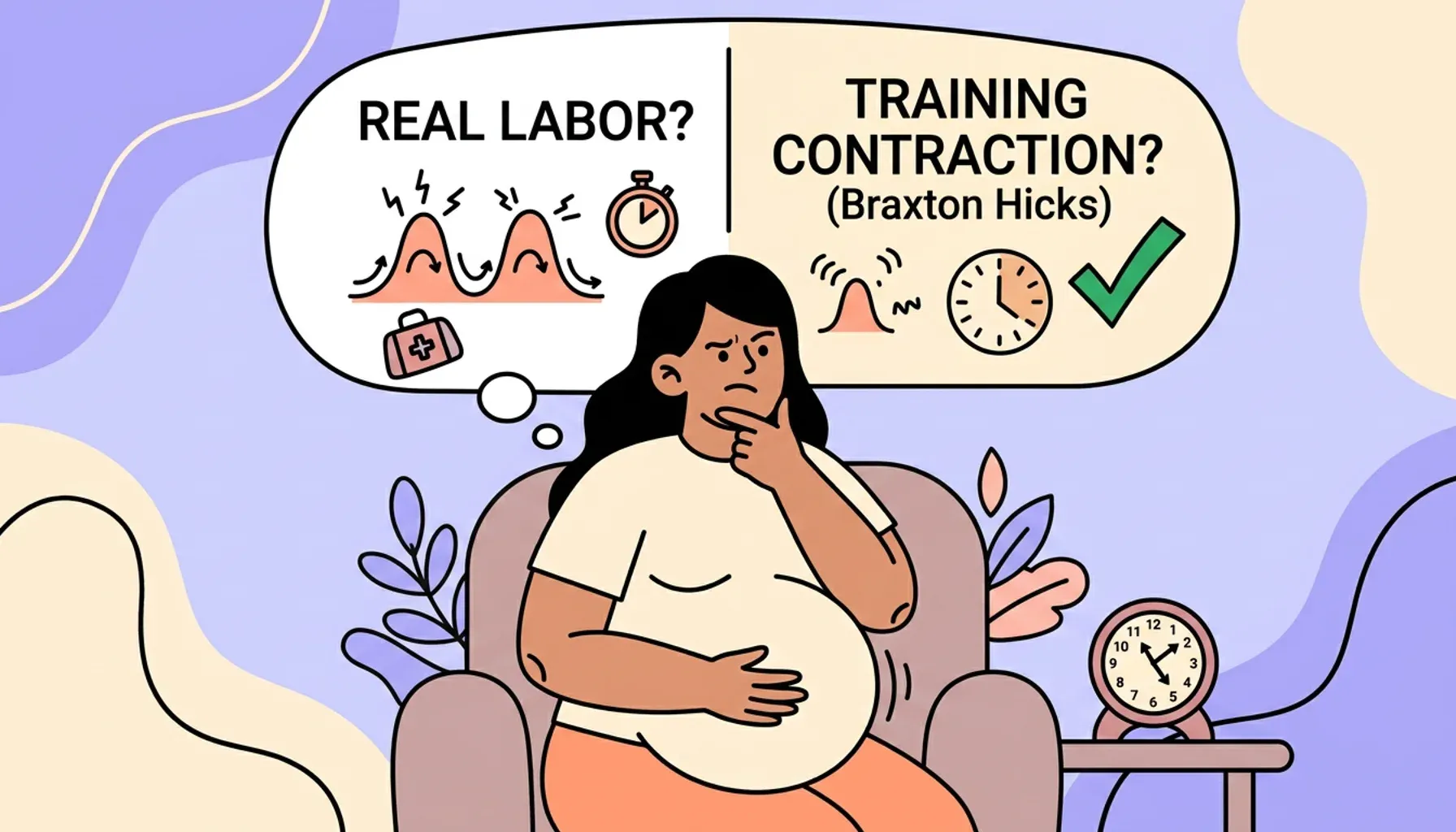
Training contractions, known as Braxton Hicks contractions, can start sometime after 20 weeks. Everybody has them, but not everyone notices them. The main difference between these training contractions and real contractions is that Braxton Hicks do not cause the cervix to open. In other words, training contractions do not mean you are in labor [1]. No one really knows why these contractions occur at all.

How to distinguish Braxton Hicks contractions from real ones?

Unlike real contractions, which last 30-70 seconds and are repeated at regular intervals, training contractions are usually rare and irregular [2]. Their frequency does not increase over time.

In addition, they are relatively painless — during Braxton Hicks contractions, you may feel some discomfort in your abdomen, but nothing more. During labor, contraction pain is much more intense and affects the abdomen and the lower back. Training contractions often stop altogether if you shift your position, rest, or drink water. And labor contractions end only after childbirth. Before 37 weeks, though, don’t go by pain: if contractions or tightenings become regular or frequent, even if they’re painless, call your doctor or maternity unit right away.



Not sure how far along you are?

Convert weeks to months, estimate your due date, and follow week-by-week progress.

Open pregnancy calculators
Frequently asked questions

Braxton Hicks contractions typically begin after 20 weeks of pregnancy. While all pregnant women experience them, not everyone notices these mild training contractions.

Braxton Hicks are irregular, relatively painless, and stop with position changes or rest. Real labor contractions are regular, intensify over time, last 30-70 seconds, and cause intense pain in the abdomen and lower back. Before 37 weeks, though, don't wait for pain: if contractions or tightenings become regular or frequent, even painless ones, call your doctor or maternity unit right away.

Try changing positions, resting, or drinking water when you feel Braxton Hicks contractions. These simple actions often help the training contractions subside completely.

Braxton Hicks contractions are completely normal and not dangerous during a healthy pregnancy. They don't cause the cervix to open or indicate that labor has begun.

The exact reason why Braxton Hicks contractions occur is unknown. They're considered training contractions that help prepare the uterine muscles for eventual labor, though they don't cause cervical changes.

Medical Disclaimer

This article is for informational purposes only and is not a substitute for professional medical advice, diagnosis, or treatment. Always seek the advice of your physician or qualified health provider with any questions you may have regarding a medical condition.

Meet our medical experts

Medically reviewed content

Reviewed by healthcare professionals · Updated

amma app

What is your body telling you?

Get your personal read-out from amma

What is your body telling you?

Trusted by over 30 million women worldwide

Rated 4.8417,594 reviews