
The baby is almost ready for birth
Thanks to more subcutaneous fat, the baby has become plump and fleshy. Their skin is smooth, pink, velvety, and coated with a thick protective biofilm called vernix caseosa. The baby’s subcutaneous fat layer is thick enough that it will help regulate their body temperature after birth.
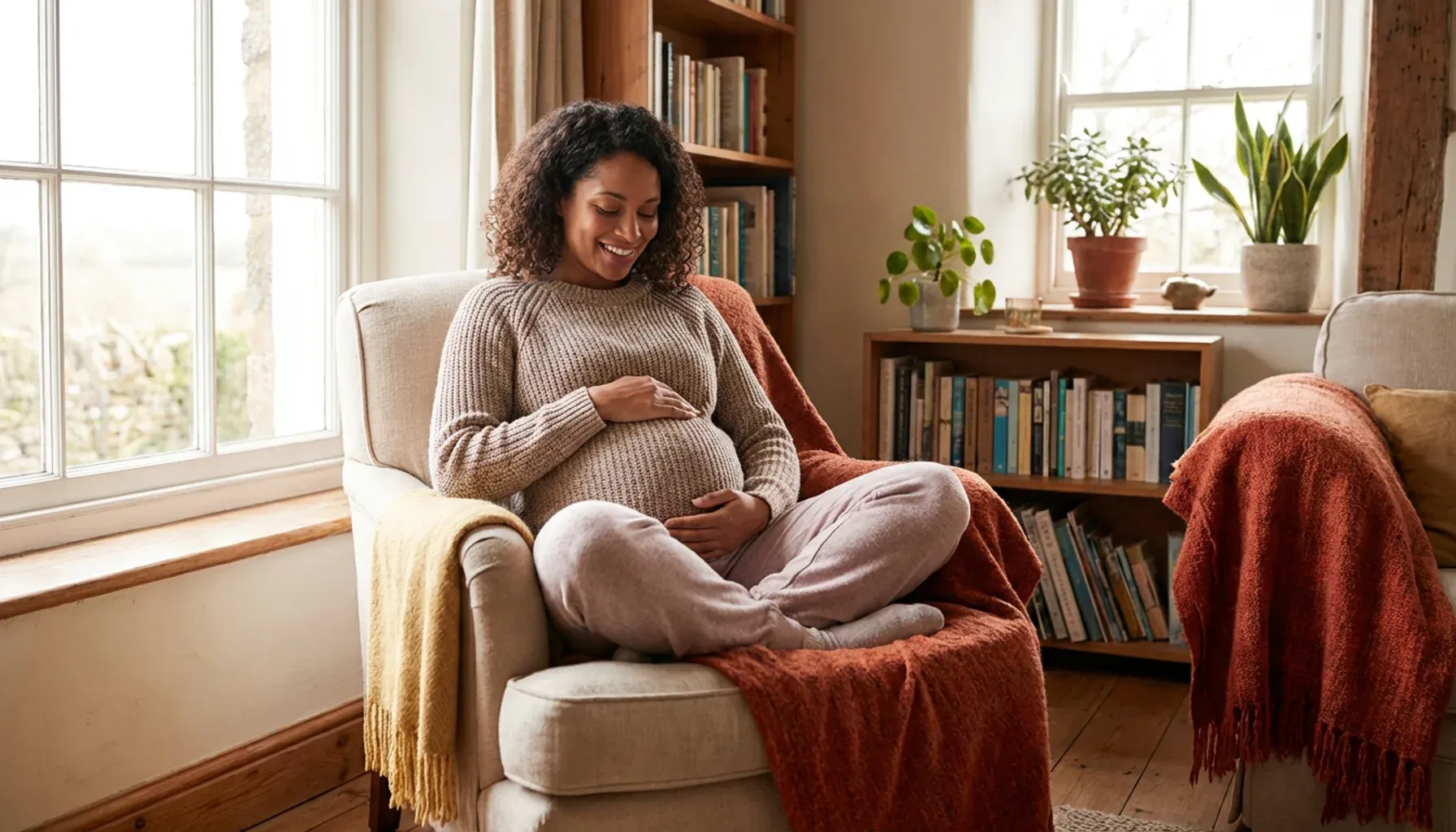
The baby is rather cramped in the womb but still manages to move a lot [1]. The expectant mother will notice her belly shift and bulge as the baby changes positions. She can also tell when the baby gets the hiccups because her belly will twitch rhythmically [2].
Most babies are already positioned head down. They are almost ready for birth. In the meantime, they will continue to gain weight [3].
If your partner is expecting twins
At this time, the average set of twins weighs about 2.5 kg each, the very limit at which a baby is no longer considered small. However, the weight is often unevenly distributed, with one baby noticeably heavier than the other. For example, one can weigh 3 kg (like a baby from a single pregnancy), and the second only 2 kg. The lower-weight baby may need special medical supervision. However, studies show that by the age of two, the "small" child usually catches up to the "big" one [4].
What we can see on an ultrasound
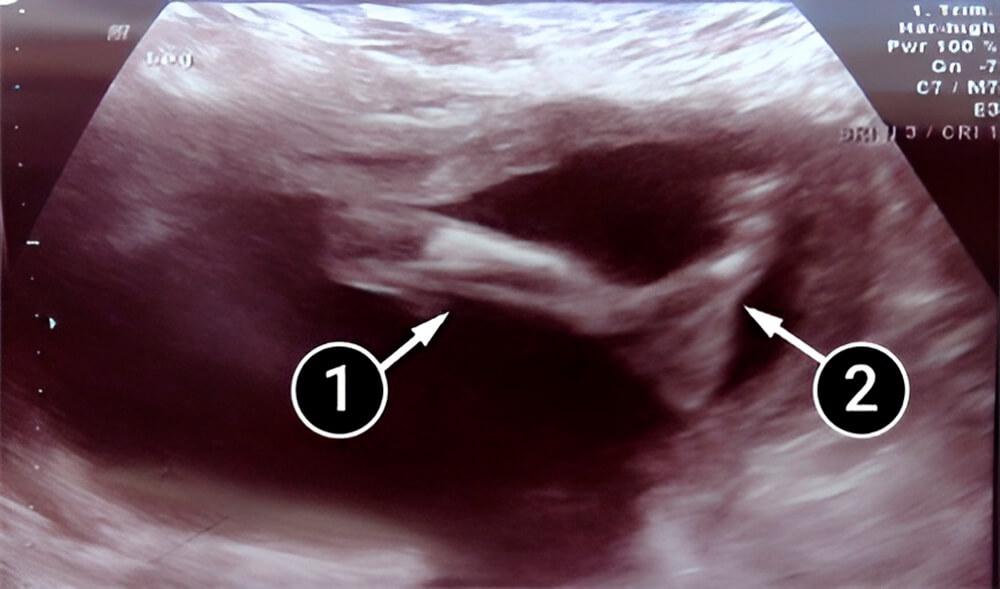
The image shows the baby’s leg. The muscles and bones of the leg and foot are clear, we can see the arch, heel, and toes.