Normal weight gain for the first trimester
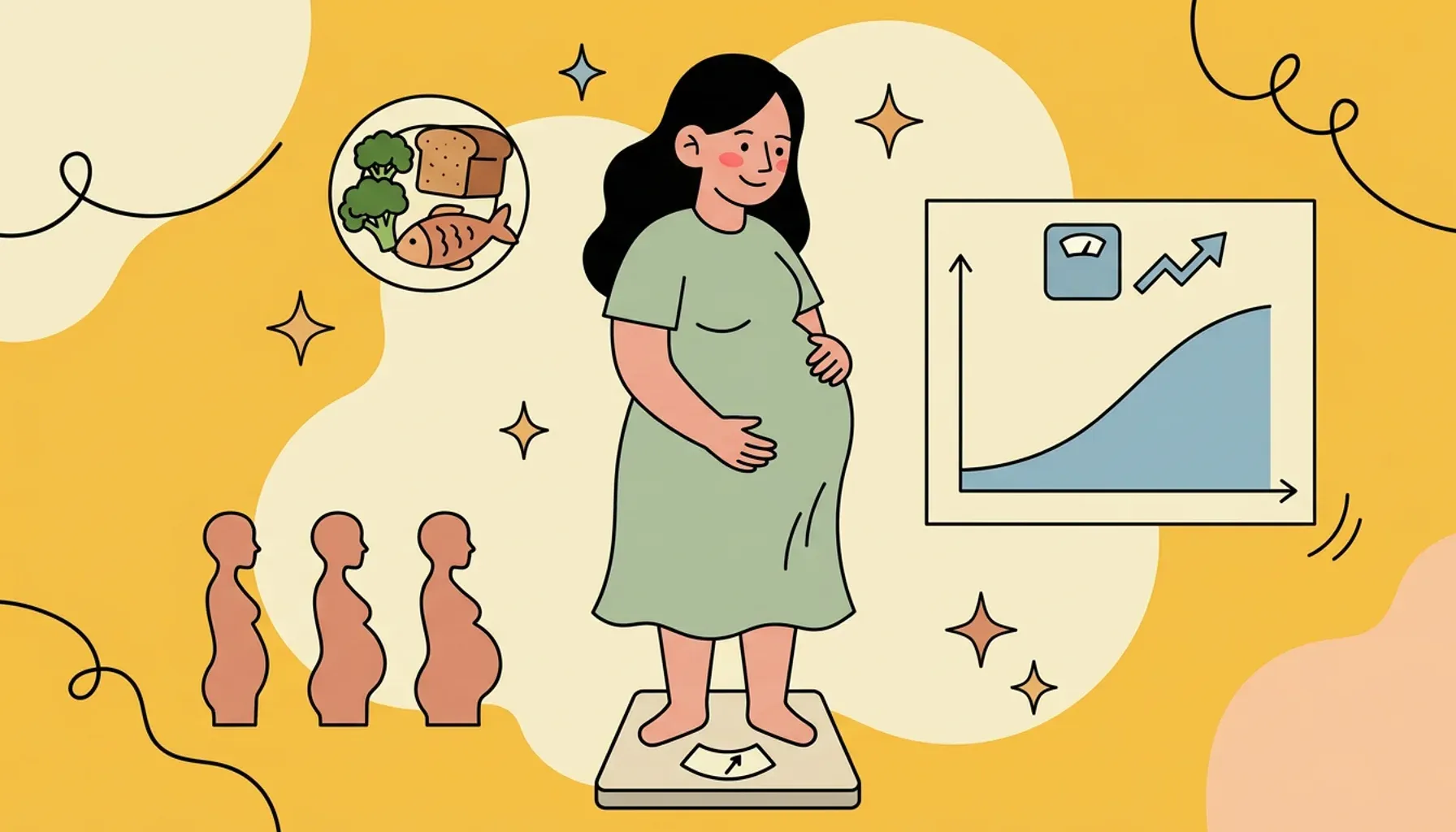
In most pregnancies, not much weight is gained during the first trimester. Gaining 1lb. to 4.5lbs. is considered average and is due to the formation of the placenta and increased volume of circulating blood, rather than increased fat [1].
Due to nausea, many expectant mothers experience decreased appetite and an aversion to food. For those affected by this, they may even lose weight — around two pounds — during the first trimester. For those unaffected, weight is likely to remain stable except due to changes in diet or physical activity.
During the first 12 weeks, the growing baby does not need the mother to consume additional calories. Your doctor will carefully monitor weight gain beginning in the second trimester. Individual experiences and needs vary, of course.
So how much weight gain is healthy?
American gynecologists recommend [2] measuring your body mass index (BMI) during your first checkup (around the 8th to 10th week of pregnancy). BMI is calculated by dividing weight by height. Those with a lower BMI will need to gain more weight during pregnancy than those with a higher BMI.
Here are some general guidelines for healthy pregnancy weight gain:
BMI < 18.5 - Gain 1lb. to 1.3lbs. per week;
18.5 < BMI < 25 - Gain 0.8lb. to 1.1lbs. per week;
25 < BMI < 30 - Gain 0.5lb. to 0.75lb. per week;
BMI > 30 - Gain 0.4lb. to 0.6lb. per week.
It is healthiest to gain weight gradually rather than suddenly to ensure the baby’s normal growth and to avoid any pregnancy complications. On average, it is recommended that you consume an extra 200 to 400 calories per day during your second trimester [1]. However, it’s best to take in these extra calories as healthy, whole foods rather than sweets or junk food.