EN
How is labor going?
Pregnancy

How is labor going?

2 min readWeek 41
Key takeaways
2 min
  • Recognize that active labor begins when contractions become frequent and painful, with the cervix dilating up to 6 centimeters upon hospital arrival.
  • Understand that pushing begins once the cervix reaches full dilation at 10 centimeters, with contractions helping move the baby through the birth canal.
  • Expect the placenta to deliver 5-30 minutes after birth through weaker contractions, with medical staff checking it remains intact.
  • Know that many hospitals allow fathers to cut the umbilical cord and place the newborn on the mother's chest immediately after delivery.
  • Prepare to provide emotional support throughout all three stages of labor while medical professionals handle the clinical aspects.

Labor progresses through three main stages: cervix dilation from 6-10 centimeters during active labor, pushing phase once fully dilated to deliver the baby through the birth canal, and placenta delivery 5-30 minutes after birth through weaker contractions.

amma app

What is your body telling you?

A personal check-up from amma — answer honestly and get your read-out

Rated 4.8· 417,594 reviews

How is labor going?

When you take your partner to the hospital and hand her over to the doctors, your only job will be to support her and wait. But, what is actually happening to her at this time?

The cervix opens

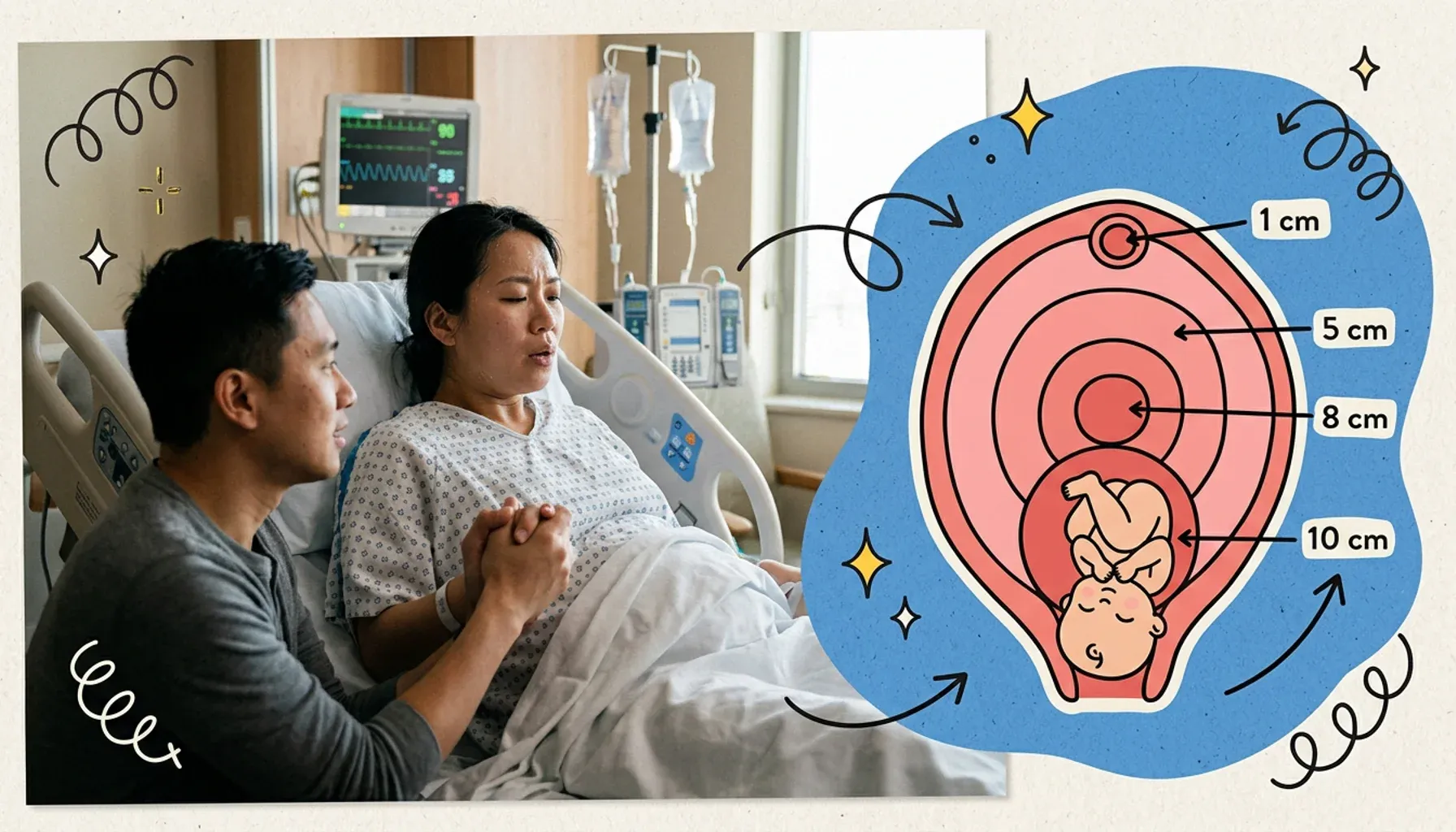
A woman usually comes to the hospital when her waters have already broken (although not always), and contractions become frequent and painful. All of which means that the active phase of labor has begun. At this time, the cervix can be dilated by up to 6 centimeters. Birth happens when the cervix is 10 centimeters dilated [1]. 

Time to push

Once the cervix is fully dilated, contractions will reach their highest point and will help move the baby through the birth canal. Contractions come on their own, but your partner will be instructed to catch their rhythm and help them along by pushing. The length of the pushing phase can be different for each woman. Usually, one final, steady push is needed for the baby’s head to crown and subsequent pushes will help deliver the rest of the body. Once they clear the baby’s air passages, the nurse, midwife, or doctor will usually place the newborn on the mother’s chest [2], before or after clamping and cutting the umbilical cord. Many hospitals allow the father to cut the umbilical cord. 

The placenta is delivered

After a few minutes, a series of weaker contractions will help deliver the placenta. It can take anywhere from five to thirty minutes and the medical team will check that it is intact and that no trace has remained in the uterus [1].



Not sure how far along you are?

Convert weeks to months, estimate your due date, and follow week-by-week progress.

Open pregnancy calculators
Frequently asked questions

Active labor (cervix dilating to 10cm) can last 4-20 hours for first-time mothers. The pushing stage varies from minutes to several hours, while placenta delivery takes 5-30 minutes after birth.

Once the cervix reaches 10 centimeters dilation, the pushing stage begins. Contractions reach their peak intensity and help move the baby through the birth canal with the mother's pushing efforts.

Active labor typically begins when contractions become frequent, regular, and painful, often accompanied by water breaking. The cervix will be dilated up to 6 centimeters at this stage.

Medical staff clear the baby's airways and typically place the newborn on the mother's chest. The umbilical cord is clamped and cut, often with the father participating if desired.

Medical Disclaimer

This article is for informational purposes only and is not a substitute for professional medical advice, diagnosis, or treatment. Always seek the advice of your physician or qualified health provider with any questions you may have regarding a medical condition.

Meet our medical experts

Medically reviewed content

Reviewed by healthcare professionals · Updated June 2, 2025

You might also like

How do I know if I’m in labor?Pregnancy 1 min

How do I know if I’m in labor?

Learn the key signs of labor during your healthy pregnancy journey. Discover when contractions signal active labor and when to head to the hospital. Get expert guidance now.

labor-and-delivery
I don't want two at once! What am I going to do?Pregnancy 3 min

I don't want two at once! What am I going to do?

Feeling overwhelmed about expecting twins? Discover expert tips for handling twin pregnancy stress, plus inspiration for choosing perfect baby names for your duo.

multiple-pregnancyemotions
The facts about stimulating labor with exercise and sexPregnancy 1 min

The facts about stimulating labor with exercise and sex

Learn the truth about stimulating labor with exercise and sex during healthy pregnancy. Discover which methods work and which are myths. Get expert advice now.

fitnesssexlabor-and-delivery
Supporting your partner when she fears going to the doctorPregnancy 2 min

Supporting your partner when she fears going to the doctor

Help your partner overcome medical appointment anxiety during pregnancy. Learn 5 proven strategies to support her for a healthy pregnancy journey. Get expert tips now.

partnerlove-y-relationships
My baby is getting huge! What does this mean?Pregnancy 3 min

My baby is getting huge! What does this mean?

Learn about fetal macrosomia risks, causes, and management for a healthy pregnancy. Discover how diet, exercise, and medical care impact large baby outcomes.

labor-and-deliverysymptoms
You're pregnant! What changes can you expect?Pregnancy 3 min

You're pregnant! What changes can you expect?

Discover the most common early pregnancy symptoms including breast changes, nausea, fatigue, and mood swings. Learn what's normal during your first trimester.

doctor-visitsstresssymptoms
amma app

What is your body telling you?

Get your personal read-out from amma

What is your body telling you?

Rated 4.8417,594 reviews