EN
try amma today
Get ready to meet your baby!
Pregnancy

Get ready to meet your baby!

2 min readWeek 40
Key takeaways
2 min
  • Understand that your baby's organs are fully formed and their skin is thick enough to regulate temperature and protect internal organs.
  • Know that your baby's lungs are producing surfactant to help them breathe independently after birth, though newborn breathing may be irregular.
  • Prepare for the Apgar test which evaluates your baby's heart rate, breathing, muscle tone, reflexes, and skin color immediately after birth.
  • Learn that twins may have different feeding patterns and should be brought to the breast as soon as possible after delivery.
  • Expect your baby to have developed clear activity and rest cycles, with rapid eye movements during active phases.

At 39 weeks pregnant, your baby is fully developed with functioning organs, thick protective skin, and lungs producing surfactant for independent breathing. All systems are ready for birth, and you can expect delivery any day now.

amma app

Track your pregnancy in the app

Personalized content for your pregnancy week

Download App

Get ready to meet your baby!

The baby could arrive any day now! All of their organs are fully formed and working. By now, the baby's skin is thick enough to protect their internal organs and regulate heat exchange [1]. A growing subcutaneous layer of fat will make the baby round and plump [2].

The lungs are now producing more surfactant, which will help the baby breathe independently once they are born [3].

Respiratory activity has improved thanks to the development of the corresponding centers in the central nervous system. They will continue to develop even after the baby is born. Newborn babies breathe intermittently and irregularly and can pause for up to five seconds [3].

By this week, the baby has developed clear states of activity and rest. In the active phase, the eyes move quickly, while in the passive phase, they remain almost motionless. These periods are synchronized with the heart rate and movements of the head, arms, and legs.

After the baby is born, the doctor will assess their health using the Apgar scale, which takes into account heart rate, breathing rhythm, muscle tone, reflexes, and skin color [3].

If your partner is expecting twins

Twins should be brought to the breast as soon as possible after childbirth. Of course, it’s more challenging to manage two, so you need to be there for her. Support from family and medical staff is also essential. Each of the babies can have their feeding style and rhythm, one can nurse often and little, and the other longer but with noticeable spacing. In the first few days, it is better to put the babies at the breast in turns to focus on particular sensations and understand how well each child latches to the nipple and how actively they nurse [4]. Later, your partner can train herself to nurse them simultaneously. If, of course, she decides to do so, and the babies cooperate!

What we can see on an ultrasound

Here, we see the baby's head from above. The dotted line indicates its circumference and diameter. It now measures almost four inches (96 mm).
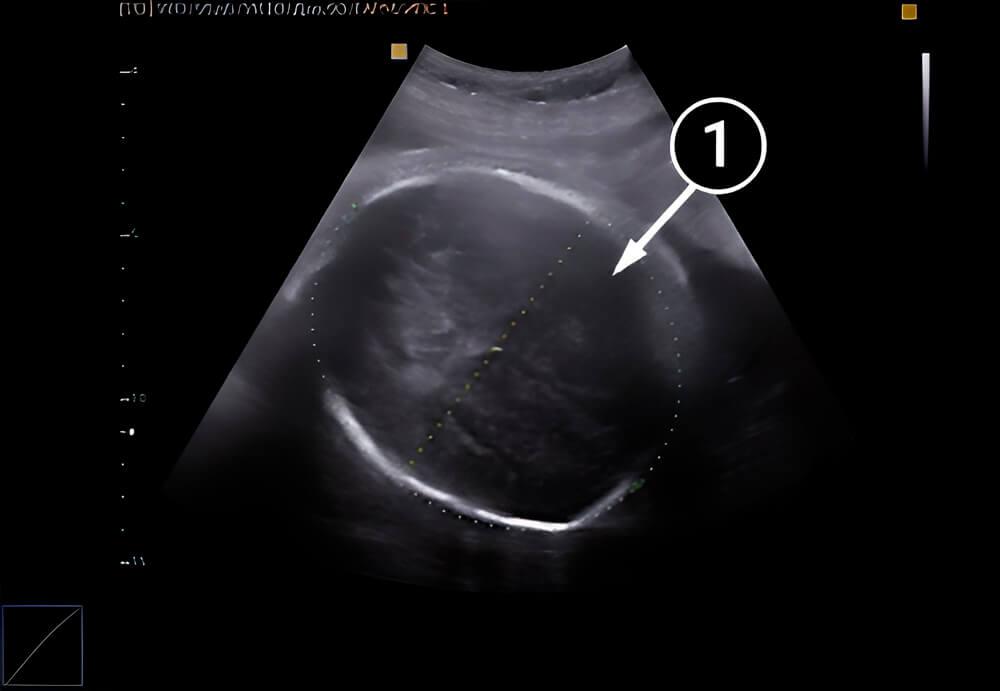

Get ready to meet your baby! - Get ready to meet your baby!
Frequently asked questions

At 39 weeks, all baby's organs are fully formed and functioning. The skin has thickened to protect internal organs, lungs are producing surfactant for independent breathing, and the baby has developed clear sleep-wake cycles.

Yes, newborn babies naturally breathe intermittently and irregularly, with pauses of up to five seconds being completely normal. Their respiratory centers continue developing after birth.

The Apgar score is a quick assessment done immediately after birth to evaluate your baby's health. It measures heart rate, breathing rhythm, muscle tone, reflexes, and skin color.

Twins should be brought to the breast as soon as possible after birth. Initially, feed them separately to understand each baby's latch and nursing style, then you can learn to nurse simultaneously if desired.

Medical Disclaimer

This article is for informational purposes only and is not a substitute for professional medical advice, diagnosis, or treatment. Always seek the advice of your physician or qualified health provider with any questions you may have regarding a medical condition.

Meet our medical experts

Medically reviewed content

Reviewed by healthcare professionals · Updated September 1, 2024

Track your pregnancy on the go

Rated 4.8417,594 reviews