EN
try amma today
Baby can hear you!
Pregnancy

Baby can hear you!

2 min readWeek 15
Key takeaways
2 min
  • Recognize that your baby's first hearing milestone occurs when they detect your heartbeat, marking an important early pregnancy development sign.
  • Expect complete ear formation between weeks 22-24 of pregnancy, coinciding with rapid brain development and the appearance of grooves and folds.
  • Monitor for increased blood supply needs and placental growth as key indicators of healthy fetal development during this stage.
  • Understand that twin pregnancies may show size differences on ultrasound, which is normal for fraternal twins but requires monitoring for identical twins.
  • Watch for visible changes like fingernail appearance and hair growth beginning, signaling proper fetal development progression.

Early signs of pregnancy include your baby's first major hearing milestone - detecting your heartbeat around weeks 18-20. Complete ear formation occurs between weeks 22-24, accompanied by rapid brain development, fingernail appearance, and initial hair growth, indicating healthy fetal development.

amma app

Track your pregnancy in the app

Personalized content for your pregnancy week

Download App

Baby can hear you!

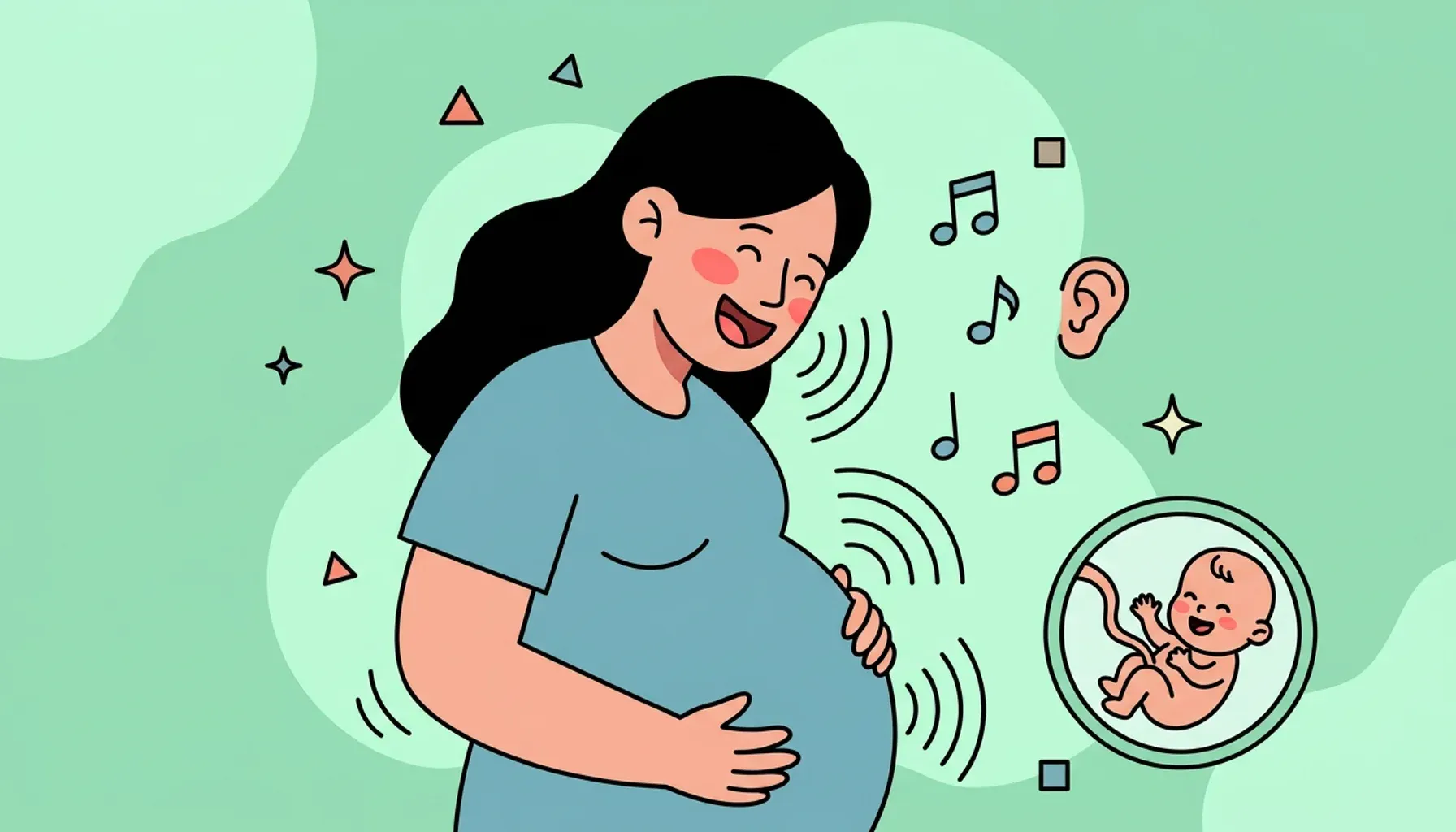
Your baby now is now able to hear their first sounds — the beat of your heart — but does not yet hear the sounds of the world around you [1]. Their complete ear will be formed between weeks 22 and 24.

Baby can hear you! - Baby can hear you!The brain is developing intensely this week. The left and right hemispheres are covered with grooves and folds, and the process of nerve cell division begins this week.

The baby’s arms and legs continue to grow and fingernails appear. Subcutaneous fatty tissue has not yet developed, so blood vessels shine through the layers of the skin, making the baby appear red.

This week, the baby also starts growing hair! Soon their hair color will be determined by their genes and the cells responsible for the color will begin to produce it.

If you are expecting twins

An ultrasound may find that one of the babies is ahead of the other in height [2]. If they are dizygotic (derived from different eggs and different sperm), then there is no reason to worry. Especially if it turns out that one of the babies is a boy, and the other a girl (which can likely be determined at this time) [3]. The difference in size is considered completely normal in these cases.

But if the twins are monozygotic (identical) and have a common placenta, then doctors will carefully monitor whether there is delayed growth in one of the babies. In order for your doctors to do this, you may be asked to come in for ultrasounds more often [2].

What can be seen on ultrasound

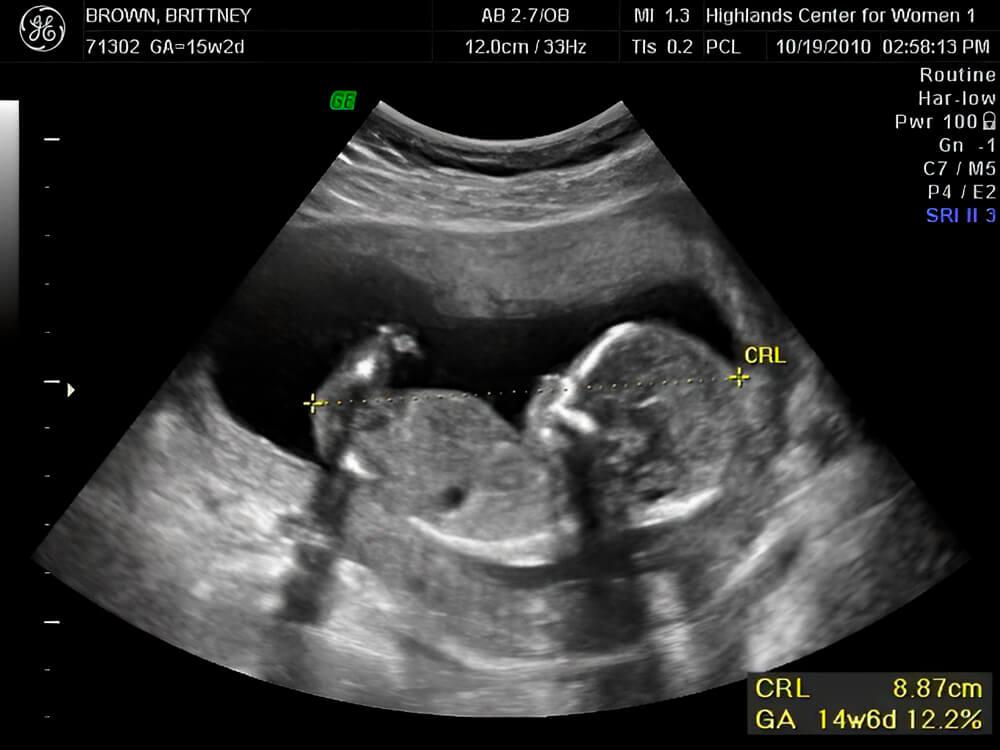
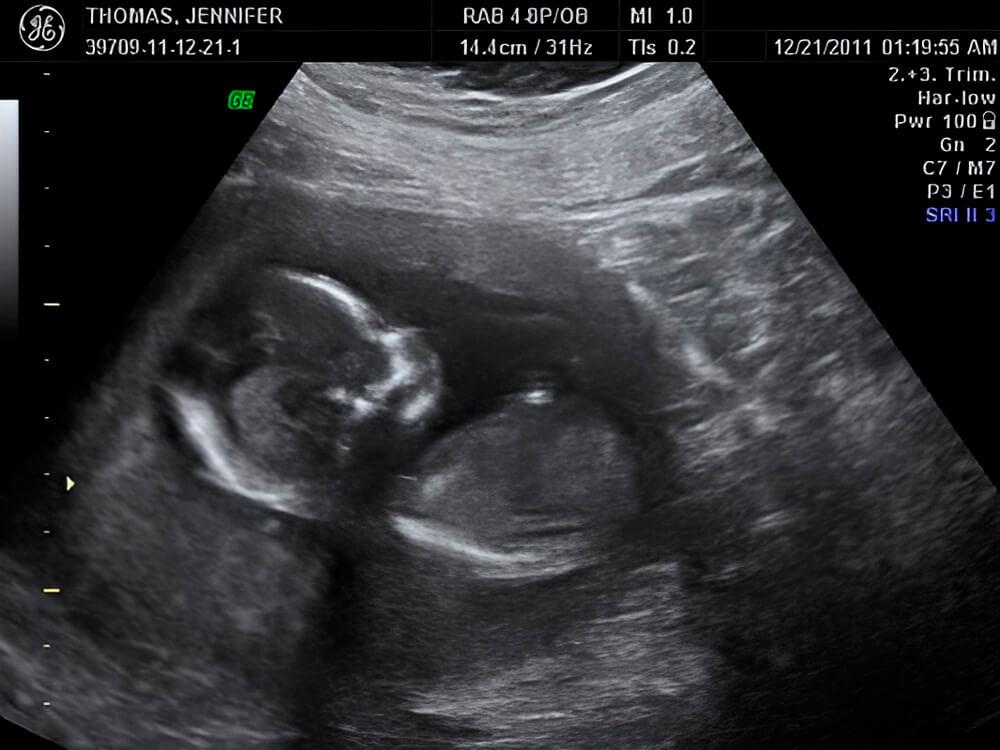
Bone marrow development continues and internal organs begin to work. The intestine is gradually filled with meconium, the baby’s first poop, which is a greenish-black color because of its bile content.
Baby can hear you! - Baby can hear you!

For development and growth, your baby needs an increased blood supply and as many nutrients as possible. The load on the placenta increases, and it grows to be a little over half an inch (17.7 mm) thick

Baby can hear you! - Baby can hear you!
Frequently asked questions

Babies first hear their mother's heartbeat around weeks 18-20 of pregnancy. Complete ear formation occurs between weeks 22-24, when they can begin to hear external sounds from the outside world.

Key signs include baby's ability to hear your heartbeat, brain development with visible grooves and folds, fingernail appearance, and hair growth beginning. Increased placental thickness and meconium formation in the intestines are also positive indicators.

Size differences are completely normal for fraternal twins (from different eggs). However, identical twins sharing a placenta require closer monitoring to ensure one baby isn't experiencing delayed growth.

You can see bone marrow development, internal organs beginning to function, and meconium forming in the intestines. The baby's arms, legs, fingernails, and early hair growth may also be visible.

Babies appear red because subcutaneous fatty tissue hasn't developed yet, allowing blood vessels to shine through the thin skin layers. This is completely normal at this stage of development.

Medical Disclaimer

This article is for informational purposes only and is not a substitute for professional medical advice, diagnosis, or treatment. Always seek the advice of your physician or qualified health provider with any questions you may have regarding a medical condition.

Meet our medical experts

Medically reviewed content

Reviewed by healthcare professionals · Updated August 12, 2025

Track your pregnancy on the go

Rated 4.8417,594 reviews