EN
try amma today
At last, she will sleep at night!
Pregnancy

At last, she will sleep at night!

2 min readWeek 10
Key takeaways
2 min
  • Expect improved sleep patterns around 9 weeks when your baby's cortisol and melatonin production stabilizes, allowing for 5-7 hour stretches.
  • Create a consistent bedtime ritual with bathing, feeding, and gentle settling techniques to establish healthy sleep habits.
  • Maintain complete darkness during sleep time as even dim light from screens can disrupt your baby's circadian rhythm development.
  • Choose sustainable soothing methods for your bedtime routine since you'll need to continue them as your baby grows heavier.
  • Implement strict sleep hygiene rules early to help babies distinguish between day and night sleep periods.

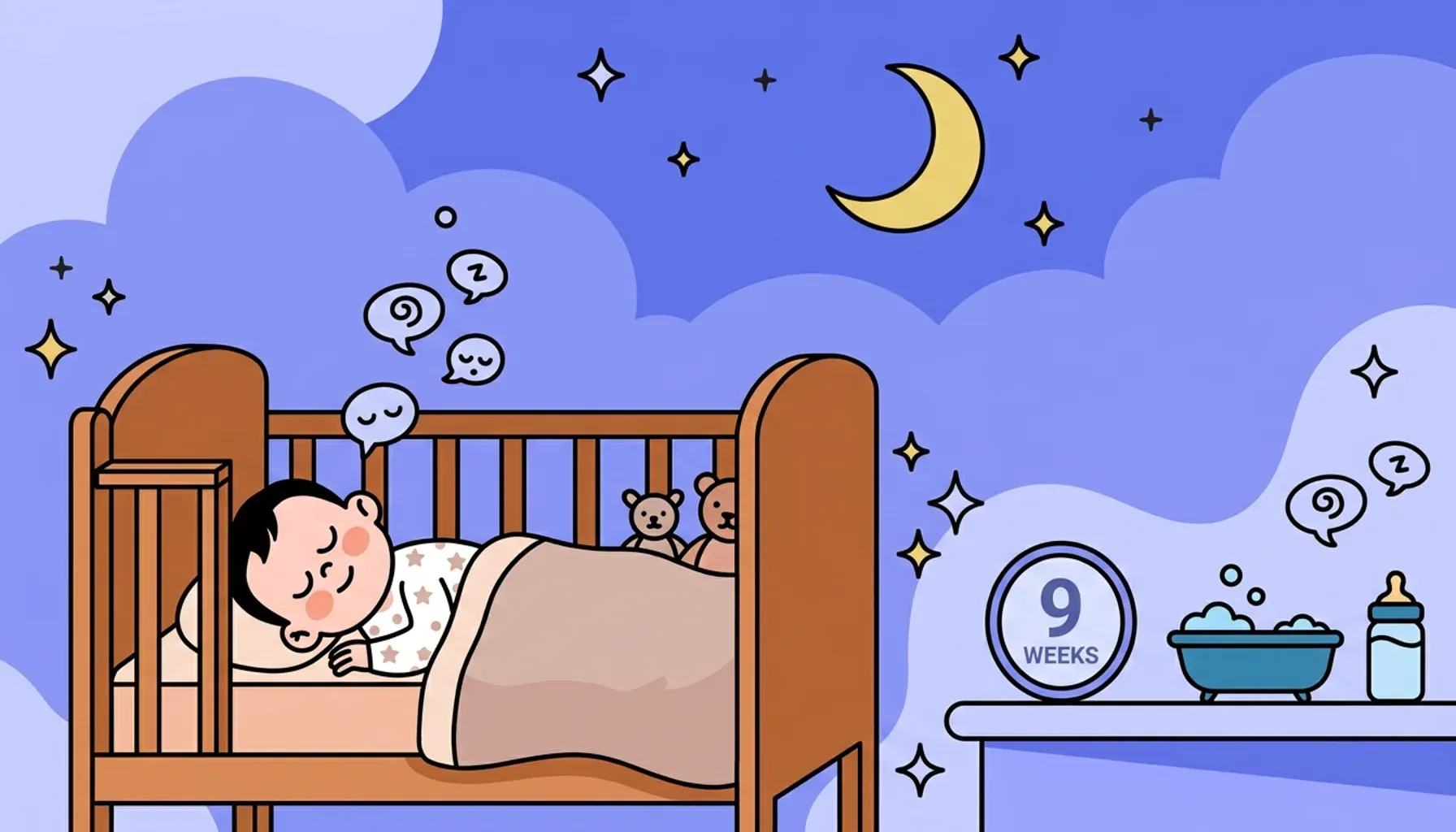
At 9 weeks old, babies typically begin sleeping longer at night due to stabilized cortisol and melatonin production. While not sleeping through the night completely, many babies can sleep 5-7 hours in a row at this milestone age.

amma app

Track your pregnancy in the app

Personalized content for your pregnancy week

Download App

At last, she will sleep at night!

But this is not really true. Nine weeks is a landmark milestone in the life of a baby and (parents). At this age, the production of cortisol and melatonin, hormones responsible for circadian rhythms and sleep, has stabilized. As a result, many infants begin to sleep more at night and less during the day [1]. It’s not that your baby girl will sleep all night long, but five or seven hours in a row is quite possible. If your daughter still confuses the time of day, try to strictly observe the rules of good sleep hygiene [2].

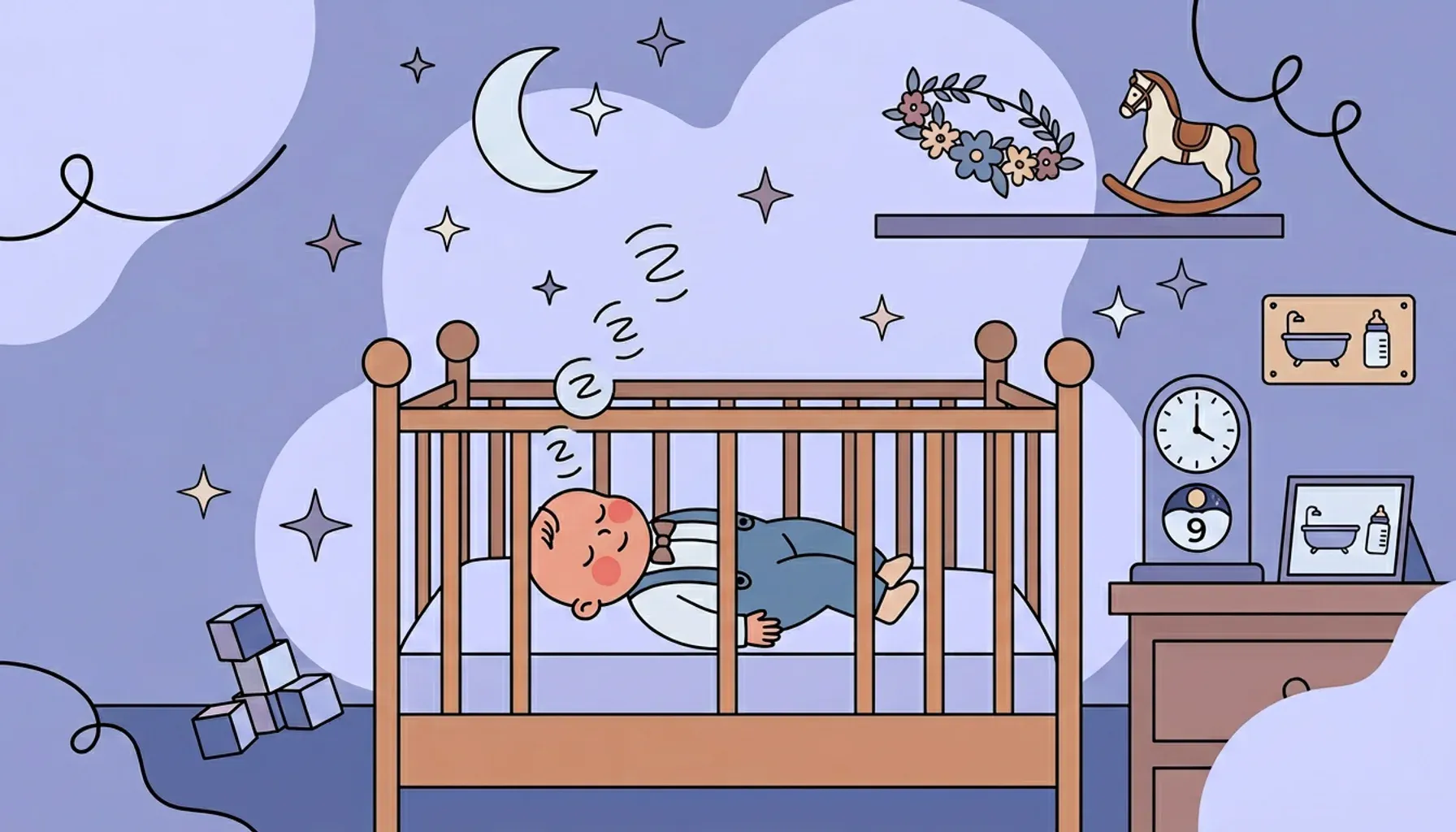
Set up a ritual of going to bed. A certain sequence of actions, which should end with falling asleep, helps baby start to find a better rhythm. For a baby, it can be, like this: bathing, changing into night clothes, last feeding, putting in a crib, patting or singing to sleep.

It is important to understand that if you include motion, such as bouncing and swinging, in this ritual, then you will likely have to do this even as your daughter grows and becomes larger and heavier. So consider which actions you will like to do in the months to come.

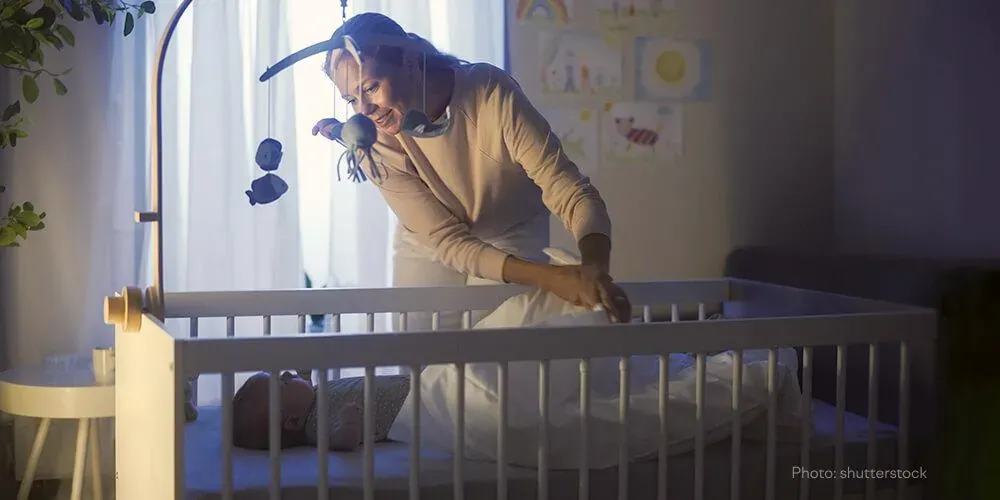
One of the main rules is that it’s necessary to sleep in complete darkness [1, 2]. The dim glow of the TV or phone can disrupt your daughter’s sleep. Animal experiments have even shown that night illumination in infancy is associated with increased anxiety in adolescence and adulthood. Such experiments have not been conducted on humans. But there is reason to believe that the effect will be the same [1].

  1. The Long-Term Effects of Light Exposure on Establishment of Newborn Circadian Rhythm. Jacqueline Yates. J Clin Sleep Med., 2018.

  2. Sleep Hygiene Tips — Sleep and Sleep Disorders. CDC, 2020.

Frequently asked questions

Most babies begin sleeping for longer stretches around 9 weeks old when their sleep hormones stabilize. You can expect 5-7 hour stretches rather than full nights initially.

Establish a consistent sequence like bathing, changing into pajamas, final feeding, and gentle settling. Keep the routine sustainable as your baby grows.

Complete darkness helps establish proper circadian rhythms. Even dim light from TVs or phones can disrupt sleep patterns and hormone production.

Strictly follow sleep hygiene rules including dark nighttime environments and consistent bedtime routines. This helps babies learn to distinguish day from night.

Medical Disclaimer

This article is for informational purposes only and is not a substitute for professional medical advice, diagnosis, or treatment. Always seek the advice of your physician or qualified health provider with any questions you may have regarding a medical condition.

Meet our medical experts

Medically reviewed content

Reviewed by healthcare professionals · Updated September 4, 2024

Track your pregnancy on the go

Rated 4.8417,594 reviews