
Since their internal clocks are still developing, newborns don't know they should sleep at night and stay awake during the day [1]. They can sleep and wake up anytime.
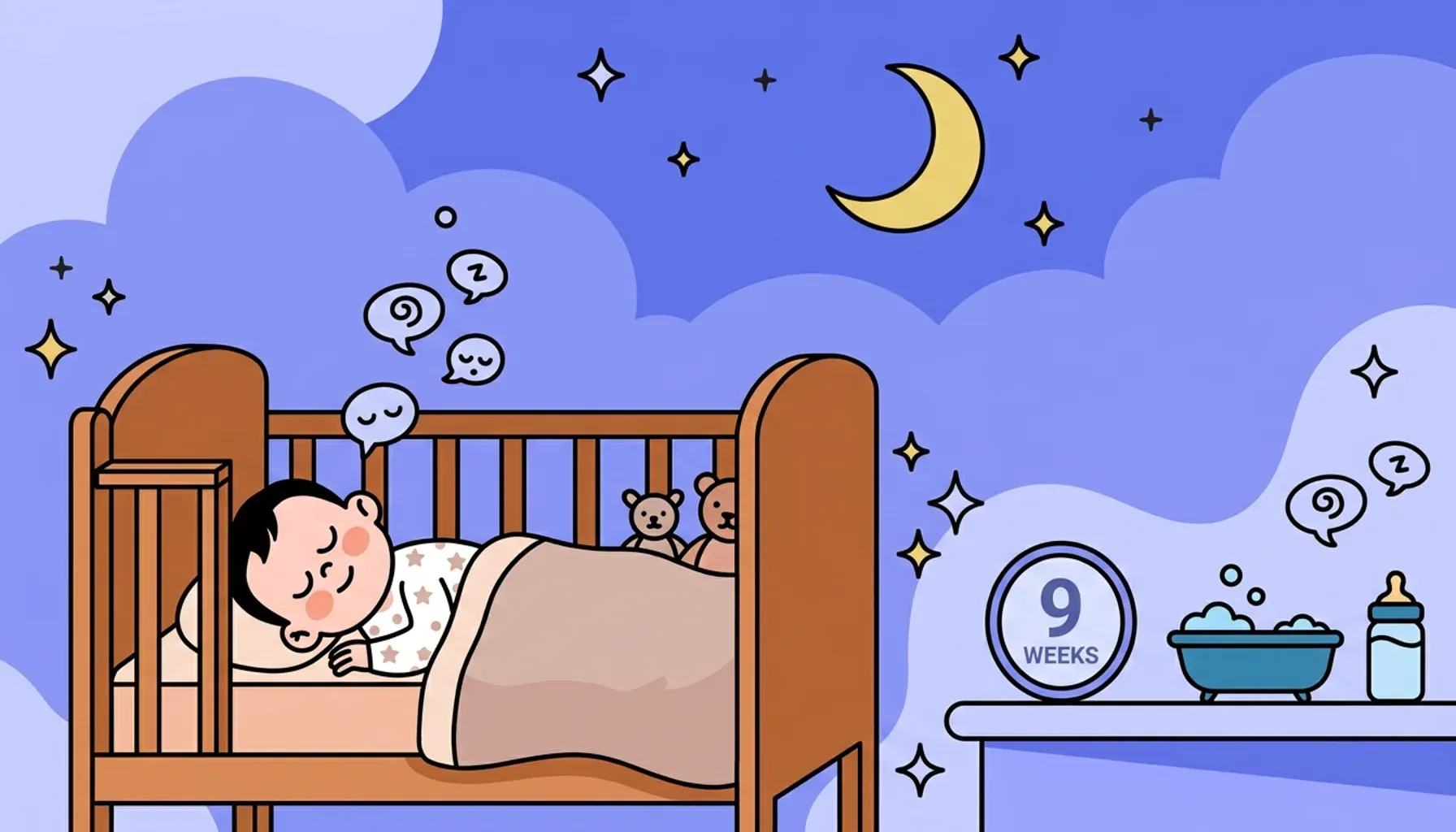
The good news is that babies quickly adjust to sleep and wake patterns. By the ninth week, their pituitary glands start secreting melatonin, the sleep hormone [1]. This means they are ready to switch to night mode. To help with this, create a relaxing environment [2].
Light up the nursery during the day and darken at night
Light and dark help our bodies tell the difference between day and night. Open the curtains in the morning to let in the fresh air. Move the crib to the room's brightest corner if you can. If it's cloudy, add some artificial light.
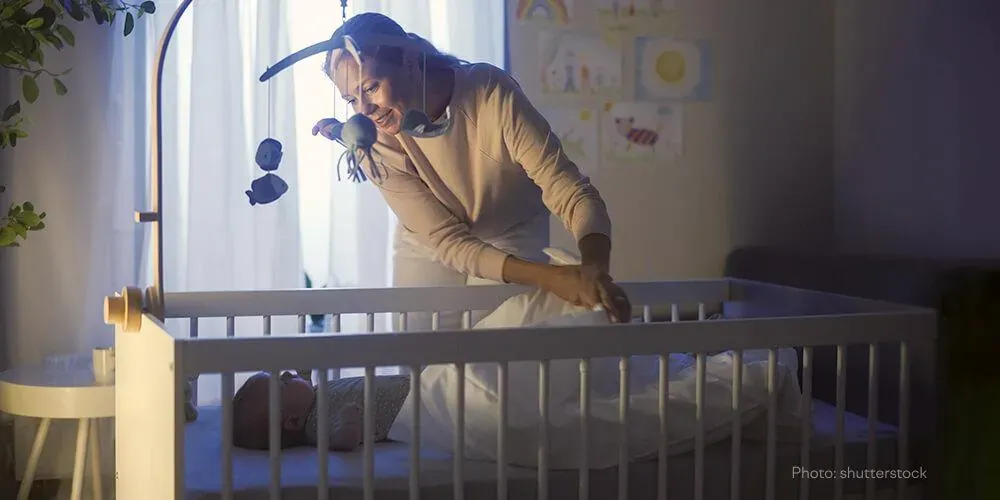
At night, turn off all the lights and hang blackout curtains. Avoid turning on the overhead light when feeding at night.
Speak loudly during the day and quietly at night
Besides light, it's important for the baby to connect different times of the day with other things. The best guide is mom's voice. During the day, talk to the baby animatedly, and at night, whisper softly.
Reduce daytime sleep
When your baby naps during the day, don't tiptoe around. Do your household chores, play music, or watch TV. It's okay if your baby wakes up—they'll make up for the lost sleep at night.
If your baby naps for more than two hours, gently wake them up. Stroke their face and hands. After feeding, sing a cheerful song or give them a rattle to play with. Make it clear that daytime is for play and fun. At night, don’t encourage playtime.
Gradually, your baby will learn that daytime is for short naps and play, while nighttime is for longer sleep.
Start a bedtime ritual
Create a consistent bedtime routine. For example, feed your baby, sing a lullaby, give a light massage, and stroke their head. If the ritual is always the same and happens at the same time, your baby will learn that it's time to sleep. This helps form a habit of falling asleep—a conditioned reflex.
You can also start a morning ritual to signal active wakefulness for the day.
Are these tips sure to make the nights more peaceful?
We hope so, but there's no guarantee. Infant sleep can still be fragmented and unpredictable. Most children can sleep for at least six hours straight by six months old [3].
If your baby continues to wake up several times a night, don't be discouraged or give up. Their brain is still learning to regulate sleep and wakefulness. Be patient—they will get there.
However, your baby might already be sleeping better than you think. During the active sleep phase, babies make involuntary movements and sounds [3]. If you’re used to listening closely, you might mistake these for waking up.
Photo: shutterstock