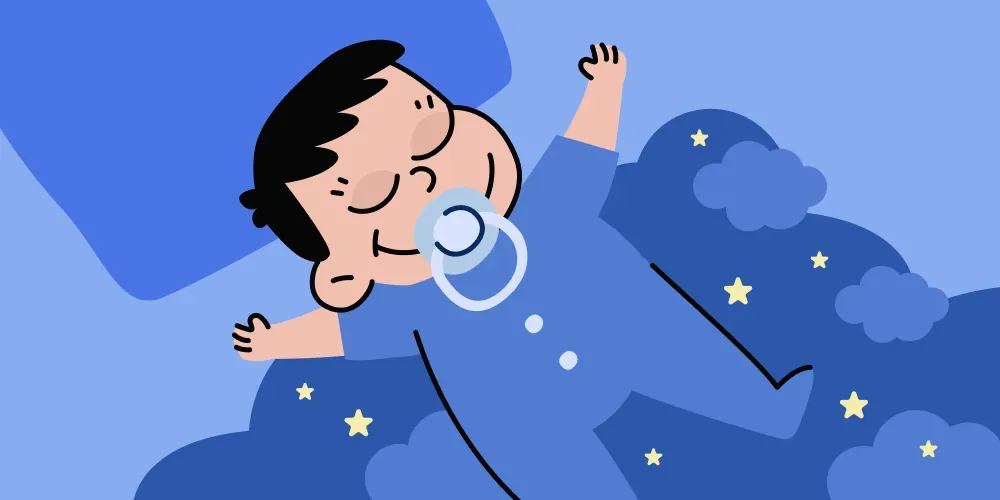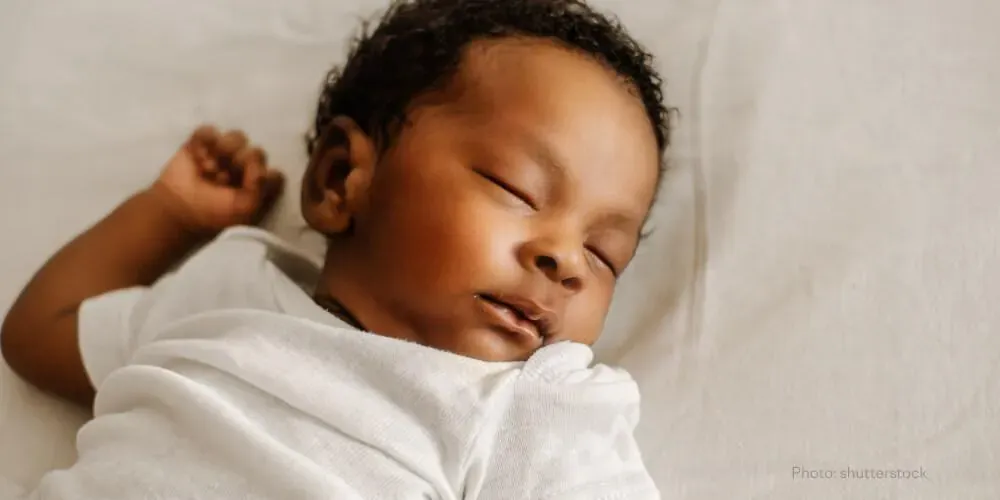

Since 1992, the American Academy of Pediatrics has recommended laying newborns exclusively on their backs. Since then, the incidence of sudden infant death syndrome (SIDS) has almost halved. Pediatricians believe that these circumstances are related [1].
When babies sleep on their backs, tragic events happen less often [1]. However, it has not been proven that sleeping on the stomach directly causes infant death. So following this one rule isn't enough to keep the baby safe. Some extra safety measures need to be taken.
Babies should sleep:
on their back;
on a firm mattress;
without pillows and blankets;
in the same room — but not in the same bed — with parents.
It is also important that no one smokes in the room where the baby sleeps. These rules should be followed at least until the baby is four months old [1].
Is it true that sleeping on the back leads to a motor delay?
Indeed, babies who have slept on their stomachs start to crawl, sit up, and even roll over faster [2]. However, scientists found that the difference in development goes away completely after a year and a half. Children who slept on their backs quickly catch up to their peers who slept on their stomachs when they start walking [3].
Can tummy time prevent the delay?
Yes. This is the method recommended by pediatricians all over the world. When babies are not sleeping and are under the supervision of parents, let them spend time on their tummies — for at least 2-15 minutes a day. This will not only improve motor skills, but also reduce the risk of developing obesity, doctors say [4].
Photo: shutterstock