
A look at how babies learn language.
Babbling sounds the same on every Continent
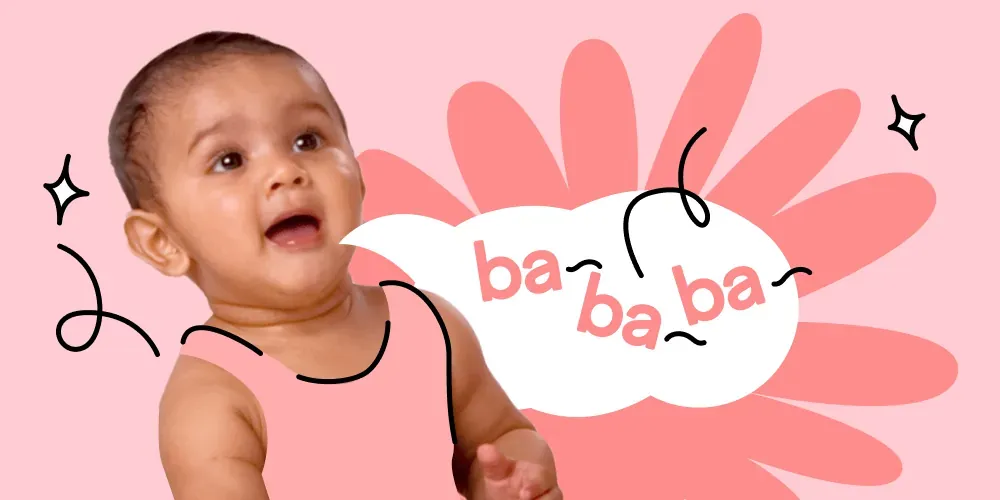
You’ve probably noticed that your baby’s formerly unintelligible sounds are starting to sound more clear, with a combination of vowels and consonants that sound like “ba”, “ga” or “mi”.
Your baby is starting to babble! Very soon, the sounds they make will become more complex starting with the repetition of one or several combinations, such as "mamama" or "dada dada" [1]. This can be seen in children all over, no matter what continent or country they’re growing up in.
"Mamamama" and "dadada" are not words yet
These sounds are very similar to their first words because a baby can articulate them almost as someone much older does [2]. But these first babblings carry no meaning for the baby yet. They don’t use them to address someone specific or to point to an object [3].
How the baby pronounces the first words depends on the parents
Studies show that the more often mom, dad, and others respond to the baby's babbling, the faster they adopt their accent and manner of speaking [3]. The baby also begins to associate certain sounds with specific people and objects. By the time their first birthday comes along, these exercises will help them start saying their first words.
Parents all over the world speak to their children in similar ways
Their first words may be the same for babies from different countries, and that is because adults often use baby talk (a “language” that mimics how babies start talking) when talking to their children. It is characterized by the lengthening of vowels, slow speech rate, high tone, chanting, and sound imitation. This type of talk can be heard in every corner of the world [4], and since children absorb this universal language, their first words tend to be very similar, regardless of where they are.