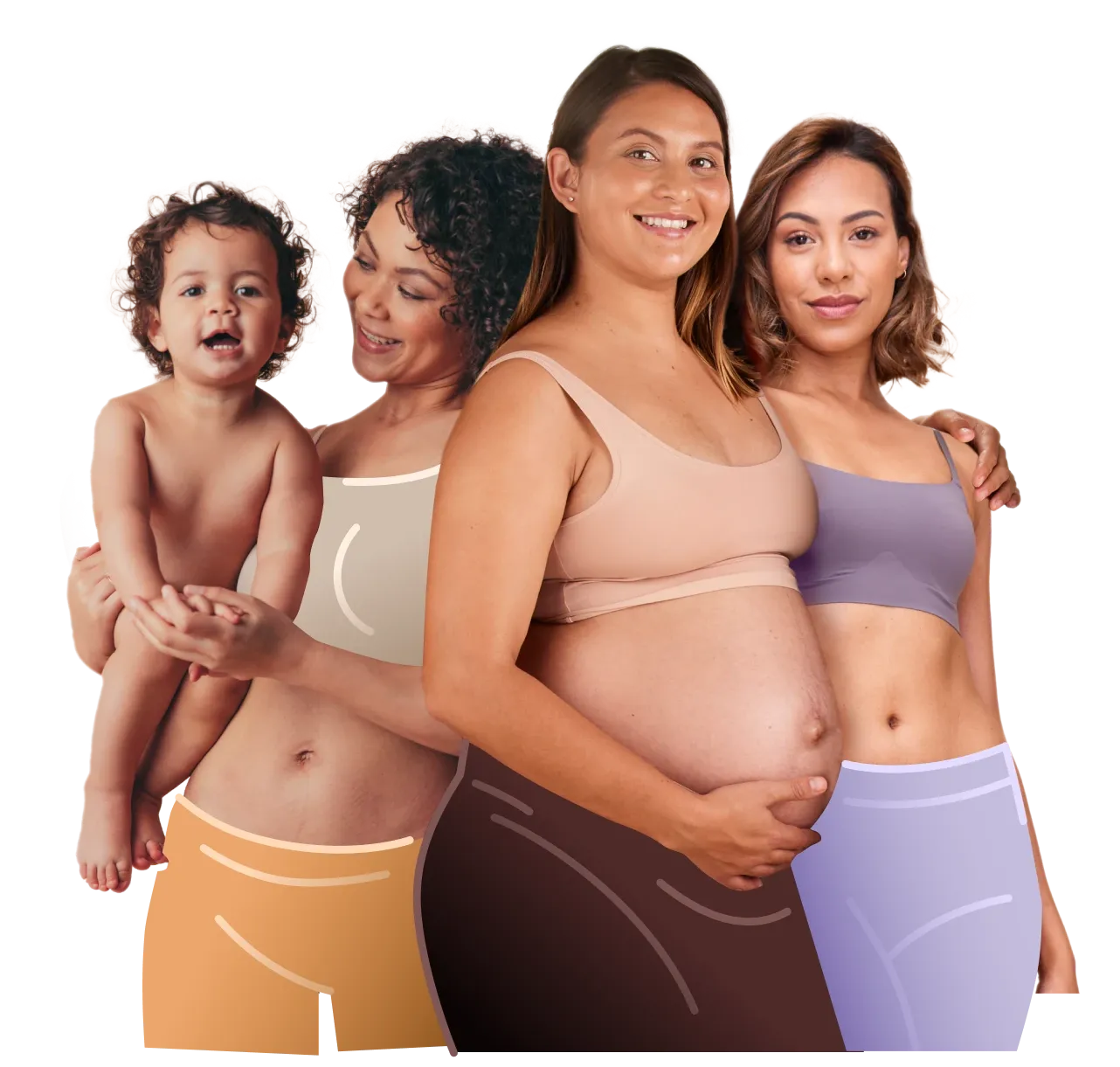

What is recovery like after giving birth? Everybody is different. Some new mamas recover easily and quickly, while others take longer or experience long term pelvic floor issues after delivery. Common pelvic floor issues include reduced sexual sensitivity and urinary incontinence [1]. Both of these result from the stretching and weakening of the pelvic floor muscles.The good news is that Kegel exercises are an effective way to strengthen those muscles again [2].
Risk factors and the prevention of pelvic floor disorders
Women who practice Kegel exercises before and during pregnancy experience less pelvic floor disorders, so it’s a great preventative measure. Those who give birth vaginally are likely to experience worse effects from a weakened pelvic floor than those who have a C-section. The likelihood of incontinence is increased if this is your second birth or more [3]. Other risk factors include [1, 3]:
if the expectant mama lifted heavy weights during pregnancy;
if she is over the age of 35;
if her BMI is 35 or higher;
if there were vaginal tears or perineal lacerations during childbirth.
If you have a normal, healthy pregnancy and don’t have any of these risk factors, it’s likely that you won’t have to deal with pelvic floor issues right after giving birth. However, there is a chance that those muscles will weaken within 6-10 years after giving birth, leading to issues like incontinence (something also experienced even by women who don’t give birth, but much later in life) [4]. Again, Kegel exercises are effective in the prevention of pelvic floor disorders.
How to do Kegels correctly
All it takes is understanding which muscles you can and can’t control in your pelvis and abdomen. The basic rules are:
Identify the muscles that stop or slow down urination. These are your pelvic floor muscles;
Get comfortable. You may want to start your Kegels lying or sitting down. When you get used to them, you’ll be able to do them standing up, too;
Breathe in and let your belly relax;
As you breathe out, squeeze your pelvic floor muscles (the ones that control urination) and hold for 3-6 seconds, breathing normally and without pulling in your stomach;
Inhale again and relax your pelvic floor muscles for 6-10 seconds;
Repeat this set ten to fifteen times, three sets per day [5].
When to start Kegels after delivery
After a vaginal birth with no complications or surgical intervention, you can start doing gentle Kegels as soon as you feel up to it. You don’t need to wait for the bleeding to stop. If you had a urinary catheter, wait until it’s out and you’re urinating normally. If you’re sore, try doing them lying on your side, and stop if they hurt.
What about C-section mamas?
Even if you don’t give birth vaginally, pregnancy itself weakens your pelvic floor [1], so Kegel exercises are recommended. Since a C-section is surgery, wait until your urinary catheter is out and consult your doctor before starting these exercises after delivery.
Other aids to explore
After your 6-week postpartum checkup, you can ask your doctor about aids like vaginal exercise weights. Ben Wa balls are a popular option. More complex aids like a perineometer (which measures pelvic floor strength) or electromyostimulation (which uses electricity to cause muscle contractions) are also helpful. Some of these devices even have phone apps that track your progress over time.
Always consult your doctor before using any of these aids to make sure your body is ready and that there is no risk of injury.