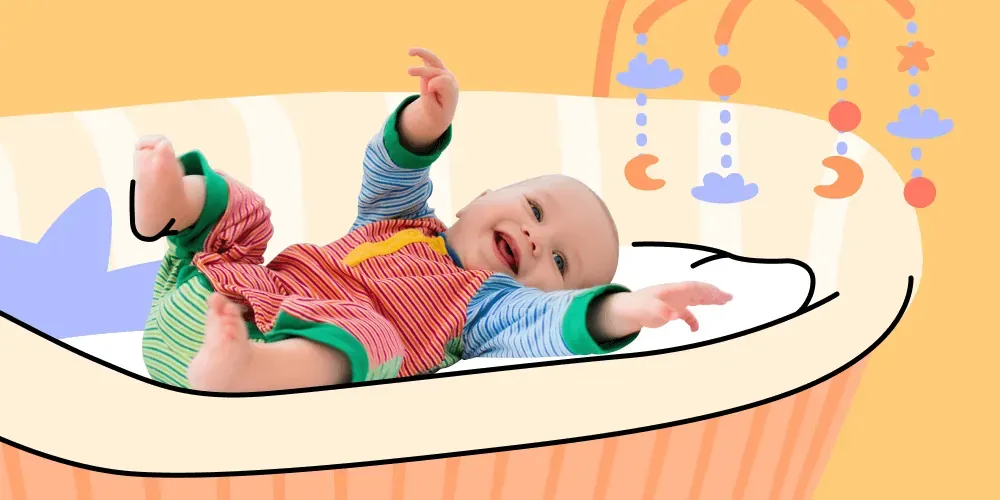
When your baby starts rolling over from their back to their side, they literally get a new perspective on the world! Your baby will be eager to use this new ability! And it is your job to minimize any and all possible risks.

- Adjust your baby's crib by lowering the mattress or raising side rails when they start rolling to prevent falls and injuries.
- Stop swaddling once your baby can roll over to prevent suffocation risks and allow proper motor skill development.
- Continue placing your baby on their back to sleep, but don't worry if they roll over naturally during sleep without swaddling.
- Use fitted onesies instead of loose blankets to reduce suffocation hazards while keeping your baby comfortable.
- Never leave your rolling baby unstrapped in car seats, bouncers, or other elevated surfaces, even momentarily.
When babies start rolling over, ensure safety by lowering the crib mattress, stopping swaddling immediately, continuing back-sleeping positioning, using onesies instead of blankets, and never leaving them unstrapped in seats or bouncers.
Track your pregnancy in the app
Personalized content for your pregnancy week
Stop swaddling immediately once your baby shows signs of rolling over, typically around 2-4 months. Continued swaddling after rolling begins can prevent them from turning back if they roll onto their stomach, increasing suffocation risk.
If your baby rolls onto their stomach naturally during sleep and is not swaddled, you don't need to reposition them. Babies who can roll over have developed enough neck and head control to sleep safely in this position.
Lower the crib mattress to its lowest setting or raise the side rails to prevent your baby from rolling out. Remove any loose bedding, bumpers, or toys that could pose suffocation hazards.
It's safer to use fitted onesies or sleep sacks instead of loose blankets. Blankets can cover your baby's face or become entangled, creating suffocation risks when they're actively rolling and moving.
Medical Disclaimer
This article is for informational purposes only and is not a substitute for professional medical advice, diagnosis, or treatment. Always seek the advice of your physician or qualified health provider with any questions you may have regarding a medical condition.
Meet our medical expertsMedically reviewed content
Reviewed by healthcare professionals · Updated September 2, 2024
This article is based on peer-reviewed research and trusted medical sources.
You might also like
New Parent 3 min How to keep breastfeeding while working
Learn how to successfully continue breastfeeding after returning to work. Get practical tips on pumping, milk storage, and balancing work schedules. Start planning today!
New Parent 1 min 8 things to look for in a safe baby toy
Discover 8 essential safety tips for choosing baby toys. Learn how to avoid choking hazards, check for toxic materials, and keep your little one safe during playtime.
Getting Pregnant 3 min Miscarriage: how to cope and when to start trying again
Learn how to cope with miscarriage emotionally and physically, plus when it's safe to try again. Expert tips for healing and planning future baby shower celebrations.
New Parent 1 min What should I buy to start my baby on complementary foods?
Discover must-have items for starting your baby on solid foods. From sippy cups to bibs, get everything you need for successful complementary feeding. Shop now!
Pregnancy 2 min Good food can compensate for environmental pollution
Discover how a healthy pregnancy diet with omega-3, folate, and antioxidants can protect your baby from pollution and toxins. Get expert nutrition tips today.
Pregnancy 3 min How to report pregnancy at work
Learn the best timing, approach, and legal rights when announcing your pregnancy at work. Get expert tips for telling your boss and colleagues professionally.