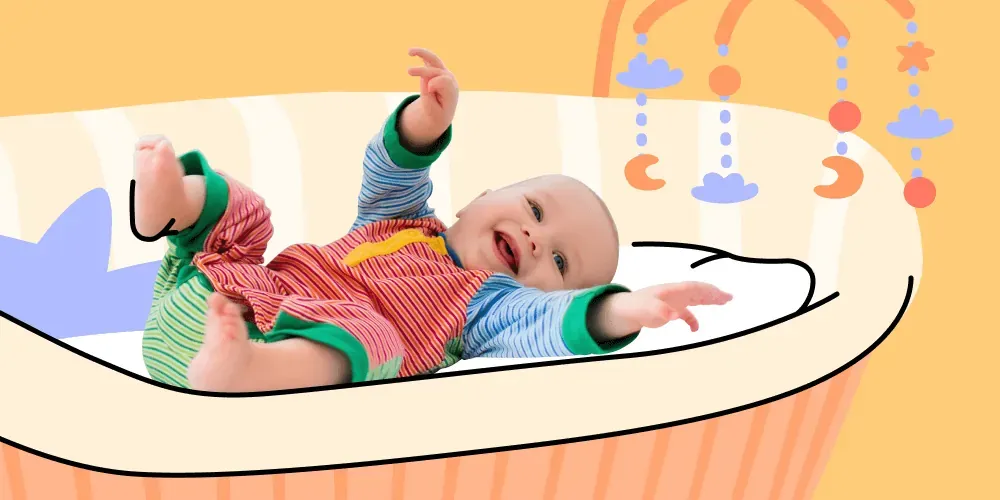

As soon as your baby starts to sit, and especially when they begin to crawl, a whole new world opens up to them. Let’s see how you can keep any possible risks at bay.
Decide what changes you have to make to your home
If you have not yet secured your furniture so it doesn’t tip over, it’s time to do it. Securing nightstands, dressers, racks, or bookshelves to a wall is extremely important. Cover all sharp corners with special pads, and use baby-proof door locks for cabinets. Your TV should be tethered to the wall or the back of the TV cabinet with a special bracket or strap, and all cables should be safely out of reach [1].
To further baby-proof your house you also need [2]:
- plugs or coverings for electrical sockets;
- safety locks or bars on windows (screens can be dangerous because they can fall out if a baby leans into them);
- protective locks on cabinets and drawers where cleaning products, cosmetics, food, medicines, and garbage are stored;
- safety gate for all stairs.
Keep your floors and tables uncluttered
When exploring the world, babies will pull on everything and put all sorts of things into their mouths. Never leave small objects within reach of children, even for a moment [3]. Check the floor by crawling on all fours to inspect everything from your baby’s perspective. Coins, buttons, pieces of hard food, and plastic bags (or pieces) are all choking hazards [3].
Watch your baby at all times
Nothing replaces your attention as a security measure. Do not leave your baby unattended at the changing table, sofa, or high chair, even if they are strapped in [3]. Close doors so your baby can’t get into rooms that pose risks, such as the kitchen or bathroom, and avoid wheeled baby walkers, which are considered a safety hazard [4].