EN
try amma today
4 facts regarding sleep deprivation in parents
New Parent

4 facts regarding sleep deprivation in parents

2 min read
Key takeaways
2 min
  • Expect peak sleep deprivation around your baby's third month, when parents lose 1-2 hours of nightly sleep on average.
  • Prepare for long-term sleep disruption, as normal sleep patterns don't return until children reach 4-6 years old.
  • Recognize that sleep deprivation causes unusual behaviors like mixing up everyday items or making silly mistakes.
  • Prioritize short 10-15 minute naps when your baby sleeps instead of rushing to complete household chores.
  • Remember that even brief daytime rest can significantly reduce stress from nighttime sleep loss.

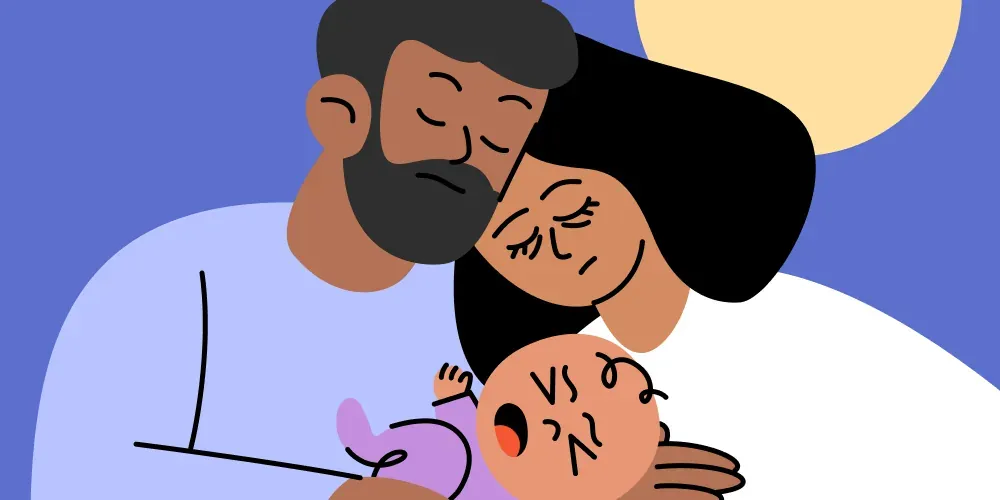
New parents experience peak sleep deprivation around their baby's third month, losing 1-2 hours of nightly sleep. Sleep patterns don't normalize until children reach 4-6 years old, making this a long-term challenge requiring coping strategies like daytime napping.

amma app

Track your pregnancy in the app

Personalized content for your pregnancy week

Download App

After the birth of your child, you may have had the strength to hold on for the first two to three months, but now you may feel like you're running on empty, and you are not alone!

1. After giving birth, most mothers reach the peak of sleep deprivation around their baby’s third month

Research shows that during this time, on average, parents lose one to two hours of sleep a night compared to before the baby was born [1, 2]. Sleep satisfaction is also at its lowest point [1].

2. Sleep deprivation will not be a short experience

You may be asking yourself when all of this will pass. Unfortunately, not anytime soon. Objective data shows that parents only return to regular sleep duration when their child reaches 4-6 years of age [1].

3. Sleep-deprived parents can do weird things

Dipping French fries into your drink instead of ketchup? Grabbing the diaper cream instead of the toothpaste? Pouring milk where you shouldn’t? They may sound amusing, but these things happen [2]!

4. A short nap during the day can compensate for a sleepless night

If your child falls asleep, don't rush to finish household chores. Instead, take a nap yourself; everything else can wait. Even a short, 10 or 15-minute nap during the day can significantly reduce the stress derived from sleep deprivation [3].



Frequently asked questions

Sleep deprivation typically peaks around the baby's third month. During this period, parents lose an average of 1-2 hours of sleep per night compared to pre-baby sleep patterns.

Parents don't return to regular sleep duration until their child reaches 4-6 years of age. This means sleep disruption is a long-term experience rather than a short-term adjustment.

Sleep-deprived parents often experience confusion with everyday tasks like using diaper cream instead of toothpaste or pouring milk in wrong places. These seemingly amusing mistakes are actually common symptoms of exhaustion.

Take short 10-15 minute naps whenever your baby sleeps instead of doing chores. Even brief daytime rest can significantly reduce stress and help compensate for nighttime sleep loss.

Yes, feeling exhausted months after birth is completely normal. Most parents experience their worst sleep deprivation around the third month, not immediately after birth.

Medical Disclaimer

This article is for informational purposes only and is not a substitute for professional medical advice, diagnosis, or treatment. Always seek the advice of your physician or qualified health provider with any questions you may have regarding a medical condition.

Meet our medical experts

Medically reviewed content

Reviewed by healthcare professionals · Updated September 7, 2024

Track your pregnancy on the go

Rated 4.8417,594 reviews