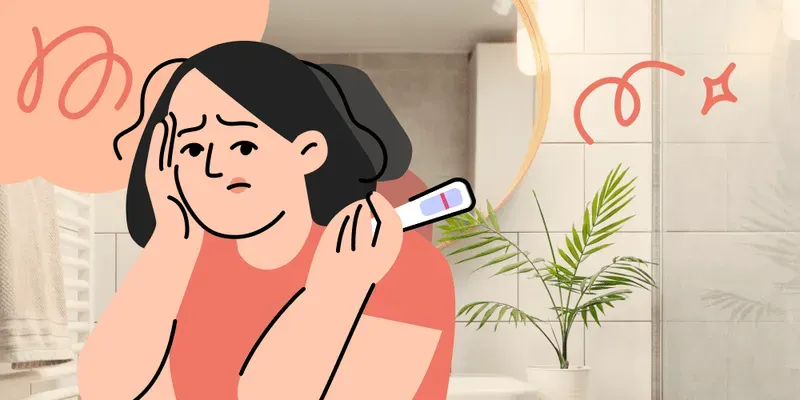

Many health problems and physical conditions are aggravated by stress. Conception is influenced by your general health, and stress plays into that. But thus far, we do not have convincing evidence of a direct link between stress and difficulty conceiving.
Are you sure?
There are studies that cite stress as a cause of conception failure. However, their conclusions are not as straightforward as they might seem.
In 2016, scientists from the University of Louisville (Kentucky) asked women to rate their stress levels on a scale from 1 to 4. Those who were most stressed had a 46% lower chance of conceiving [1]. But it's important to note that in this study, women themselves determined how intense the stress was in their lives. This is not very reliable data, as it’s self-reported.
Two other studies have shown that women who have been trying to conceive for a long time have more alpha-amylase in their bodies. This is an enzyme secreted by the salivary glands in response to stress [2, 3]. But alpha-amylase is only one indicator of stress. Levels of cortisol, a very important stress hormone, were not elevated in these subjects [4]. Therefore, both of these studies also fail to draw reliable conclusions about the effect of stress on conception.
Does stress matter at all?
It is likely that stress plays a role in difficulties conceiving, but it’s probably not a direct factor. As an example, stress can reduce a woman’s sex drive, which will lead to less sex and therefore a lower chance of conception. This is seen in nature, where females do not mate while a stressor exists (lack of food, threat from predators, etc.); their estrogen levels drop, and they stop paying attention to their male counterparts [5]. Something similar happens in humans.
Physical arousal is harder to achieve when a woman’s estrogen is low, but that doesn’t rule out psychological arousal. This is one way that human sexuality is more complex than that of other species, and it’s harder to make a generalization on the effect of stress [6].
How else can stress affect conception?
People under stress often overeat. Extra weight and obesity can lead to irregularities in the menstrual cycle, which is directly related to difficulties conceiving [7]. Your menstrual cycle can also be disrupted by irregular sleep; those who sometimes work night shifts might experience this [8].
Stress also drives some people to smoke, and smoking impacts a woman’s fertility [9].
What about stress in men?
There are studies that suggest that stress decreases sperm quality [10, 11]. However, like the study mentioned earlier, the male subjects of the study self-reported their stress levels, so the conclusions aren’t based on reliable data. In addition, one of these studies only showed a lower sperm count and lower motility, not defects in the sperm themselves [11].
As in the case of women’s estrogen, stress can lower men’s testosterone levels, reducing sex drive and impacting erection. This can lead to difficulties conceiving [5].
So how in the world do I deal with the stress of conception?
Stress is an integral part of life, especially when you’re experiencing life changes. The decision to have a baby means lots of change. It’s natural to feel stressed. But remember that many of your worries are not based in reality, and you are equipped to roll with the changes as they happen. Challenge your thoughts, and you’ll see that many of them don’t stand up to scrutiny.
You may find it helpful to set aside a designated time of day - maybe half an hour - to think about your stress and worries and deal with them all at once. During the rest of your day, when a stressful thought or emotion arises, write it down and save it for your designated time [12]. This way, you can compartmentalize the stress and manage it with boundaries.
Mindfulness techniques are also worth a shot, as is talk therapy. Studies show that these kinds of activities shorten the time of conception [13].