
Home pregnancy tests were invented nearly 50 years ago [1]. During this time, not much has changed: the tests react to the level of hCG in the urine.
How it works?
Pregnancy tests use antibodies to detect human chorionic gonadotropin (hCG). This is a hormone that is produced immediately after the embryo attaches to the lining of the uterus. If pregnancy develops, hCG levels rise by 50% every day until the 10th week. HCG can be found in both blood and urine [1].
Generally all home pregnancy tests are about the same: you bring the dipstick under the stream of urine or immerse the test strip in a container of collected urine. In a few minutes you will see the result [2].
Have pregnancy tests changed?
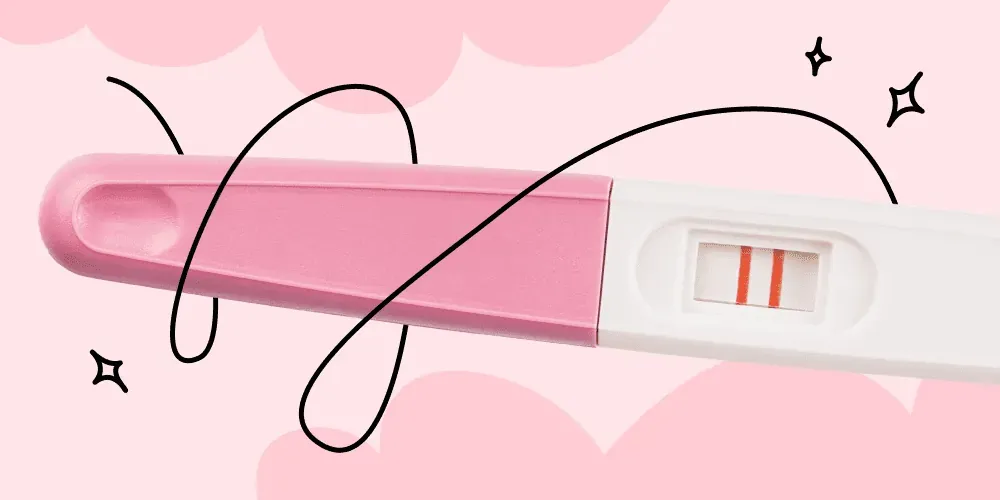
The first tests were straightforward: they were strips of paper that were soaked in two types of reagents. One responded to the urine itself, the second to hCG. Accordingly, when one stripe appears it indicates that the test was carried out correctly, but you are not pregnant. If two stripes appear on the test strip, it indicates that the test was carried out correctly and you are pregnant. If no stripes appear, the test strip didn’t function properly.
The only changes that have been made has been to the appearance of the test strips. Some home tests are inserted into plastic sheaths. Now technologies have also allowed the results to appear on an electronic display, reading: "plus" or "minus," "yes" or "no." Some tests can even highlight the day of pregnancy. But the principle of operation and reliability of the tests are unchanged.
So it doesn't matter which test you buy?
Brands don’t matter. The main thing you want to check for is that it is not expired.
Why can some tests detect pregnancy a few days after conception, while others only a few days after a delay?
The sensitivity, or efficiency, of tests is determined solely by the concentration of the reagents. It depends on what level of hCG they are able to recognize.
Nine days after conception, the average concentration of hCG in urine is 0.93 mIU / ml [1] - and the most sensitive tests can already detect it. Theory, this can be done even two to three days before the expected menstruation. But in practice it is better to wait until you’ve missed your period [2].
Why wait so long?
Testing too early can give a false result. Or it can make you worry unnecessarily about a biochemical pregnancy.
What is biochemical pregnancy?
Biochemical pregnancy is a pregnancy that is not detected by ultrasound and is determined only on the basis of an increase in hCG levels. And then it becomes negative and menstruation comes with a few day delay. According to some reports, up to 25% of pregnancies end in this way [3], and most women do not even realize that it was a miscarriage. Additional medical assistance is not required.
If the test is done soon after you’ve missed your period, are there possible false results?
It is possible to get a false negative, especially if you do not do the test first thing in the morning, when your urine is most concentrated. The most reliable way to learn if you are pregnant early on is to ask your doctor for a blood test [2]. Some medications can lead to false positives.
What medications can lead to a false positive result:
certain antihistamines;
antidepressants and sedatives;
anticonvulsants;
hormonal drugs prescribed for the treatment of infertility [4].