
In the first year, new parents spend around one thousand dollars on disposable diapers, not including the cost of wet wipes and creams [1]. Find out how to save money and avoid unnecessary purchases with this guide.
Start small
Diapers for newborns are labeled as such and are designed for babies weighing four to eleven pounds. Smaller or premature babies will need preemie diapers for babies weighing two pounds two ounces to seven pounds.
Make sure the diapers fit
The perfect diaper should:
fit snugly around the baby’s waist
not fit loosely, but also not so tightly that it contours along the baby’s body
not cause rashes or any irritation
not leak
Start by buying one pack. You can purchase more once you are sure the diapers fit well and do not cause irritation [1].
Don't buy too many
Buying a super pack of diapers at a discounted price may seem tempting. But take the time to calculate the cost per diaper and compare it with the standard price. You might find that instead of saving, you’ll end up with a stockpile of unnecessary diapers. Babies grow quickly and diapers that fit yesterday may be too small today. If you buy diapers in bulk, get a size larger than the current one [1].
Experiment with brands
Parents often say, "We've been using these diapers since birth. They're the best!" In the early days, when a baby's skin is very delicate, only one brand of diapers may work well. But as the baby grows, their skin becomes less sensitive, and you may be able to go for more budget-friendly diapers [1].
Try cloth nappies
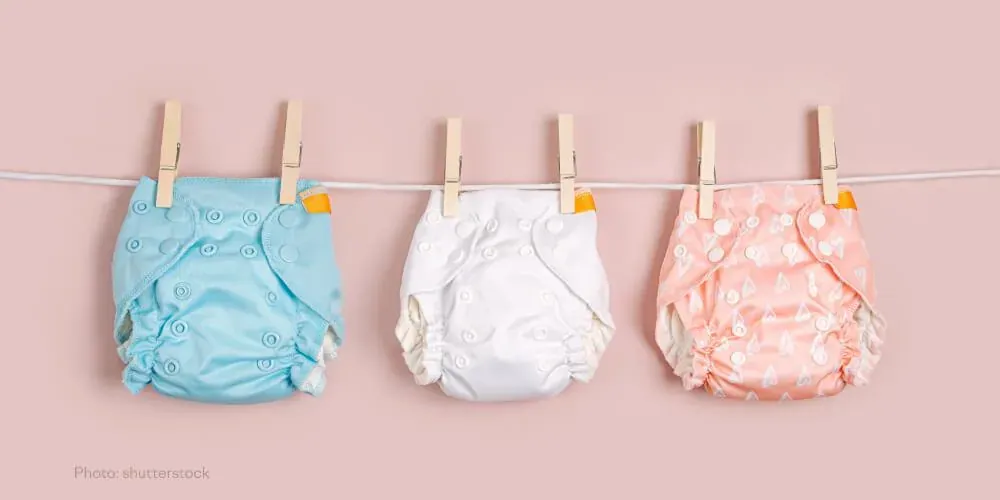
Despite their high price, in the long run, cloth diapers can help you save money because they can last several years [2]. However, in terms of reliability and ease of use, they are less convenient than disposable diapers.
A good option is to combine both, and use disposable diapers for outings and nights, and cloth diapers when you are home.