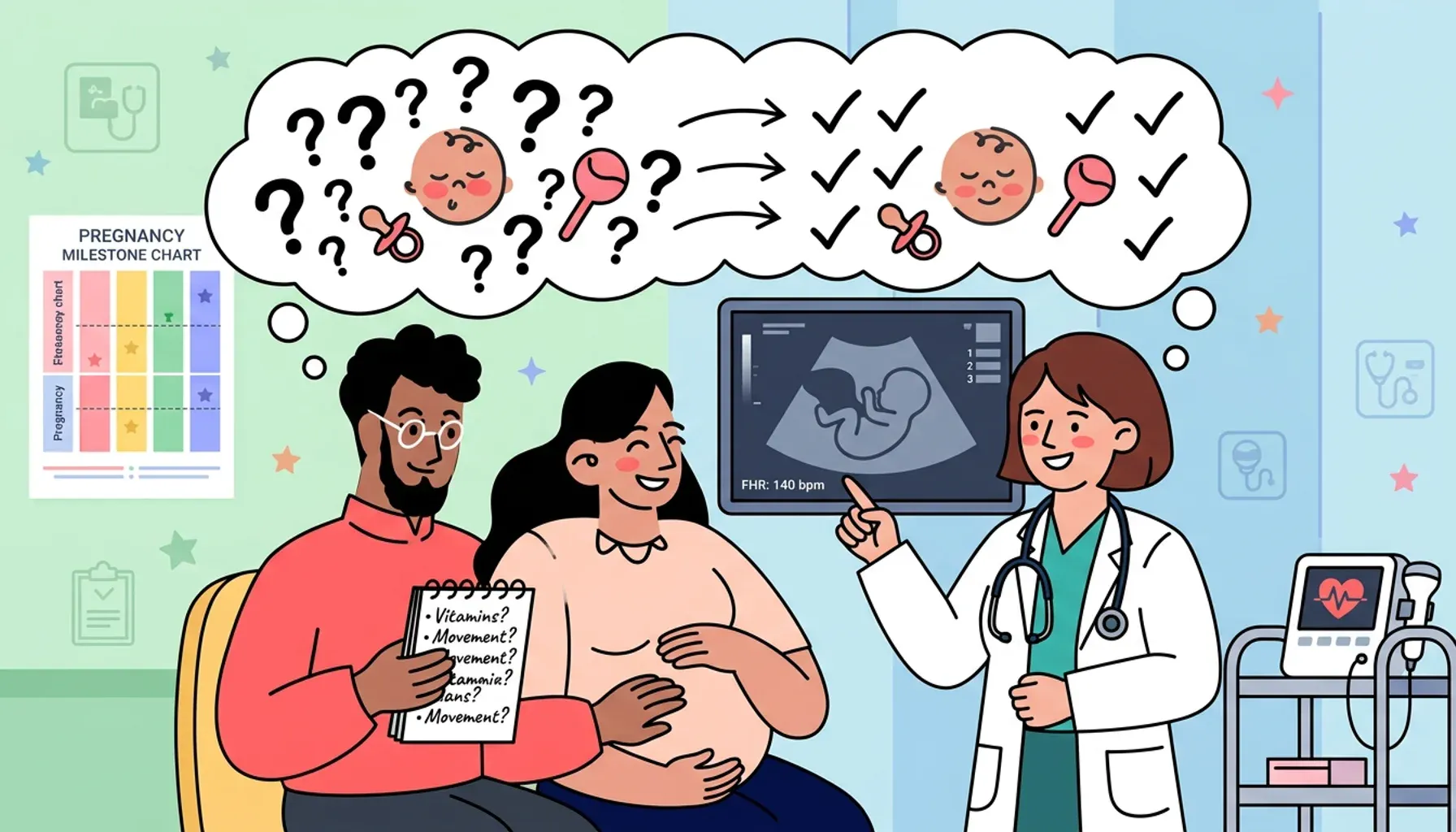

Routine appointments and screenings can cause anxiety when you’re focused on keeping yourself and your baby healthy. That is especially true if you’re a first-time mama or if you’ve had complications in the past. Many mothers-to-be get anxious about test results or worry about communicating well with their doctors. Here, we cover some common worries and what you can do to feel less anxious about them.
What if my test results contain bad news?
Understandably, many mamas have trouble sleeping or concentrating before a doctor’s appointment or until test results return. That is natural. After all, doctors are screening for potentially problematic pathogens and genetic abnormalities [1]. It’s important info!
It’s only human to worry while you wait for your test results. It’s even harder to stay calm and keep an open perspective when your emotions are all over the place. Just know that the incidence of abnormalities and problems is actually pretty low. Most test results come back normal.
I’m intimidated by my doctor and the medical staff.
Unfortunately, there are medical professionals whose “bedside manner” could use some work. Some tend to be careless with what they say or might use overcomplicated medical terminology you don’t understand. Sometimes, they unintentionally offend their patients with unnecessary comments about age or weight. Many women run into these kinds of professionals, and it’s something you don’t need when you’re anxious about getting everything right for the baby!
It can be the quickest, most innocent comment, like if the ultrasound technician says your baby’s head is small for 12 weeks. To them, it’s statistical information, but to you, it’s the stuff of nightmares and sleepless nights! The fact is that medical professionals who work day in and day out with this kind of data may forget what it sounds like to someone outside that world. We’re not letting them off the hook for that, but as far as what you can do for peace of mind, please try not to take their offhand remarks too seriously or personally. They’re certainly not trying to offend or embarrass you; they’re just immersed in their profession and sometimes forget you don’t know what they know [2].
My doctor seemed surprised at my results but didn’t tell me what was up. What’s going on?
It is likely just your impression. What you interpret as surprise, alarm, or confusion may actually be nothing at all or just a matter of interest to a medical professional. For example, you might think your doctor is staring intently at the ultrasound while, in reality, they are trying to remember how they’re supposed to abbreviate something on the new hospital forms.
We tend to think that doctors know everything, but they are just people. They have errands to run, a PTA meeting to fit into their schedule, and a car at the mechanic, just like everyone else. Sometimes, your doctor needs to do research or talk to a fellow medical professional about test results, leaving you waiting anxiously for ten minutes, which can seem like an eternity. Your mind starts to race, and you think up the worst scenarios. What if they saw something abnormal? What if something is wrong with my baby? Most likely, what happened is they want a second opinion, a confirmation of a measurement, or some similar detail from a colleague [2].
Can I tell my doctor if they offended, confused, or scared me?
Yes! You can and should be honest. Many expectant mothers feel vulnerable and underinformed, which only causes more anxiety about medical appointments. Practice asking questions when you don’t understand a term or explanation. Let the doctor know how you are feeling by saying things like: “I felt really nervous when you left me alone in the room without explaining where you were going,” “Let’s talk about this after I dress” or “I would like to talk to my partner before I make that decision” [2].
How can I deal with waiting for test results? The wait feels unbearable!
Emotions can be overwhelming but try to see the situation rationally. Stay grounded in the reality that most test results are routine and within normal boundaries. You can try journaling, and write down why this test is important to you and the baby. Practice positive affirmations, such as “I’ll have the results soon and the wait will be over shortly.”
It may also be helpful to write down possible scenarios, including the ones you fear. Make a written plan that includes who you would call, what information you need, which doctors you’d need to consult, etc. It can take cloudy and abstract fears and shrink them into manageable plans. It will give you a feeling of preparedness and control over the unknown [2].