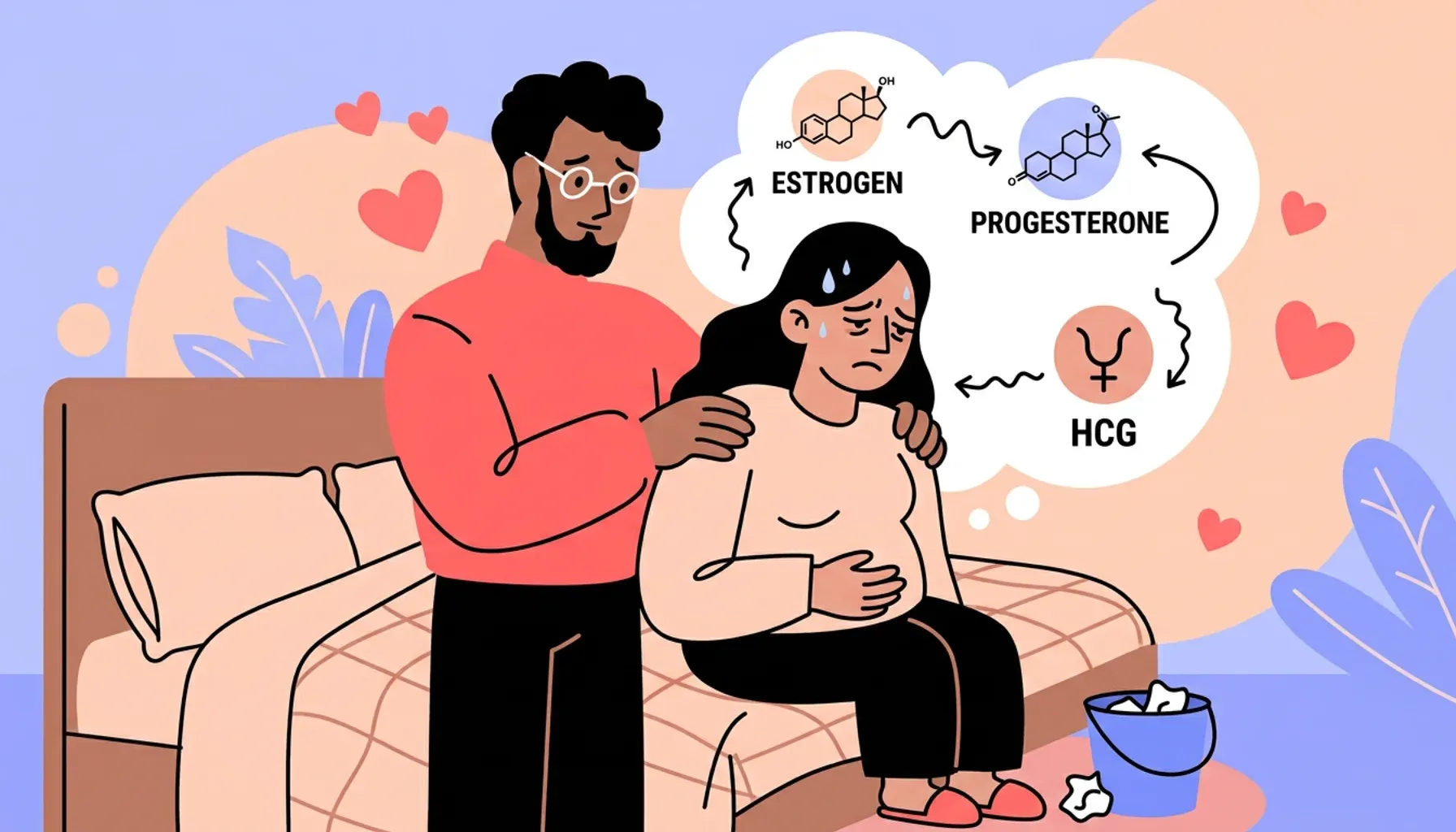

People around you may not yet suspect you are pregnant, but you can definitely feel that something is happening! Here are some typical symptoms most moms-to-be experience during the first trimester.
Your breasts grow
From the very first weeks of pregnancy, your breasts start preparing for lactation [1]. They become fuller, heavier, and feel firmer. Your nipples may also become very sensitive, but don’t worry, sensitivity will eventually decrease, and your breasts will return to their pre-pregnancy size once you have your baby and after you stop breastfeeding [2].
Nausea
It’s not just about food. Water, certain smells, and even the thought of specific foods can cause nausea. Up to 80% of expectant mothers experience morning sickness [3]. It usually starts between weeks four and nine, peaking around weeks seven to twelve. By the end of the first trimester, nausea tends to get better although aversion to certain foods and smells may last until delivery [3].
Fatigue sets in
Mornings may feel impossible, and you may struggle to keep your eyes open at work. Fatigue and sleepiness affect 95% of pregnant women [4]. The reasons aren’t fully understood, but it’s likely due to several factors, including high progesterone levels, lower blood pressure, and changes in hemoglobin [5]. By the second trimester, your body will adjust, and your energy levels should return to normal. For now, rest as much as possible, and remember that pregnant women need eight to ten hours of sleep per night [6].
Abdominal discomfort
Don’t be afraid if you feel as if you might have your period; your lower abdomen may feel tight or you may notice a pulling sensation in your lower back. This is because the uterus is growing and stretching the surrounding ligaments. These symptoms can worsen if you are constipated or bloated (common complaints during the first trimester). If the pain eases when you change positions, there’s likely no need to worry. However, if you experience bleeding, severe pain, fever, or dizziness, consult your doctor [7].
Mood swings
You might find yourself experiencing a full range of emotions within half an hour; from joy and anticipation to worry and sadness [8]. You can blame progesterone, which makes moms-to-be more emotionally sensitive. Even a long-awaited and planned pregnancy can be stressful. People who cope best with stress are the ones who express their feelings and share them with loved ones [9]. So, don’t hold back, allow yourself to feel joy, sadness, and fear.
Frequent urination
It’s very common to feel the need to go to the bathroom more often and at all hours of the day and night. Increased blood flow to the pelvic area and the growing uterus put pressure on the bladder making you want to pee more than usual [8]. Frequent urination may continue throughout pregnancy and is one of those things you will learn to manage.
You may not experience all these symptoms at once. Some will pass quickly, while others may last longer. Some moms-to-be don’t feel pregnant until their belly starts growing, and that’s normal too! [10]