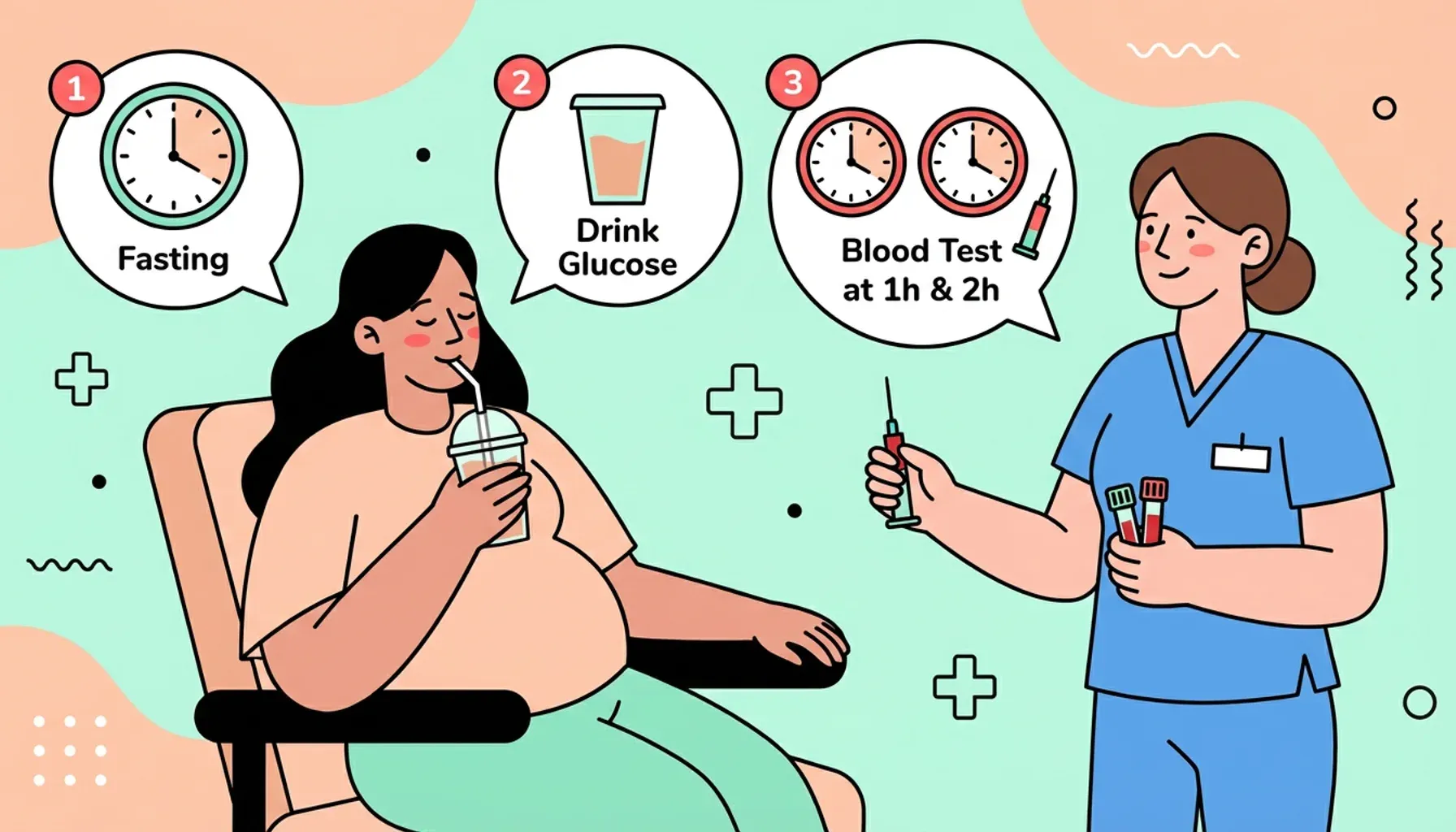

Why you need to do a glucose tolerance test (and why you shouldn't be afraid of it)
GKT or glucose tolerance test is included in the list of mandatory tests during pregnancy. It is carried out between 24 to 28 weeks in women who have not been diagnosed with gestational diabetes in earlier stages.
The test is carried out in three stages :
First, on an empty stomach, blood is drawn from a vein and blood sugar levels are measured immediately. If already at this stage an excess of the glucose level (5.1 mmol per liter and higher) is detected, then further steps are not required. If you do need to continue with the test, next, you will be asked to drink a sickly sweet glucose solution (75 g glucose per 250-300 ml of warm water) within a five minute period. An hour later, a blood sample will be taken again. If an excess is detected, the third blood sampling is not done. If not detected, they wait another hour and do another analysis.
This is an important study because it helps to determine how well your body processes glucose, and identify the risks of developing gestational diabetes and anemia.
Why is it important to have a glucose tolerance test?
Placental hormones in the second half of pregnancy cause insulin resistance. That is, cells become less sensitive to insulin. As a result, there is more glucose in the mother's blood. This "extra" sugar passes through the placenta to the baby.
In response to this rise in the mother's blood sugar, her pancreas must increase the production of insulin. If the pancreas is not able to keep up with the demand, the mother's blood glucose level will remain above normal and this can put an extra load on baby’s pancreas and can lead to an increase in baby's weight.
Is a glucose tolerance test dangerous?
The test does not pose any danger to the body of the mother and child [1].