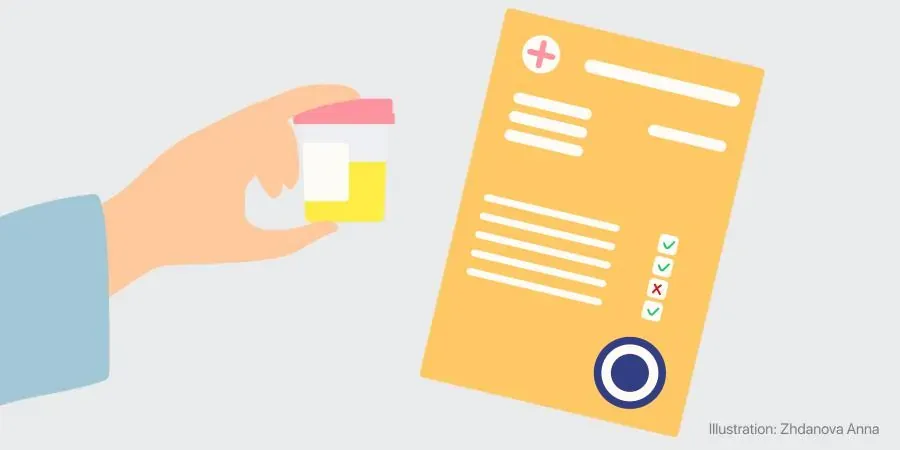

In the second half of pregnancy, you may feel that your medical team is playing a prank on you. Every time you go to your prenatal visit, you are asked to pee in a cup. Again and again.
What are they looking for anyway?
Up to 15% of pregnant women will test positive for asymptomatic bacteriuria, or infections of the urinary tract [1]. If left untreated, pyelonephritis (inflammation of the kidneys) may develop, which, in turn, may lead to complications in the pregnancy and premature birth [1].
In addition, a general urine test is done at least once every trimester to monitor protein levels in your urine and discard the possibility of preeclampsia [2].
The condition known as preeclampsia most often begins to develop after the 20th week, and its main signs are high blood pressure and protein in the urine. Therefore, after the 20th week, you will likely get a urine test.
What if they find protein in my urine?
High protein content in your urine is enough to consider your pregnancy high risk, and your doctor will know to monitor for signs of preeclampsia.
If there is protein in your urine and you have high blood pressure, then your doctor will diagnose you with preeclampsia, and you will need to schedule additional visits to monitor and control the condition.
If your blood pressure is normal, but the protein in your urine has increased, it may indicate kidney disease, which is not necessarily associated with preeclampsia [3]. In that case, your doctor may refer you to a nephrologist (kidney specialist).
Should I be concerned about kidney disease even if there are no signs of preeclampsia?
Yes, kidney disease is something your doctor will want to monitor. Gestational pyelonephritis (inflammation of the kidneys) can trigger the development of preeclampsia. However, the most dangerous complication is intrauterine infection. The sooner a kidney problem is identified, the better it can be treated by your doctor.