EN
try amma today
What should I do if my partner is crying?
Pregnancy

What should I do if my partner is crying?

2 min readWeek 11
Key takeaways
2 min
  • Understand that crying during pregnancy is normal due to hormonal fluctuations, particularly estrogen levels that affect emotional well-being.
  • Give your partner space to cry and express emotions, as tears naturally release endorphins and oxytocin that promote healing and bonding.
  • Provide emotional support by sitting with her, holding her hand, and encouraging open communication about pregnancy concerns and fears.
  • Recognize that pregnancy emotions stem from real concerns about baby's health, childbirth, motherhood, and finances - validate these feelings.
  • Build resilience together by creating a strong support network and being consistently present during emotional moments throughout pregnancy.

When your pregnant partner is crying, give her space to express emotions naturally. Sit with her, hold her hand, and encourage open communication about her concerns. Pregnancy hormones make crying normal and healthy, as tears release beneficial endorphins and oxytocin that promote well-being during this emotional time.

amma app

Track your pregnancy in the app

Personalized content for your pregnancy week

Download App

What should I do if my partner is crying?

Amazing things are starting to happen at this point in a pregnant woman’s body. For one, her heart is beating faster to support the creation of the uteroplacental circulatory system [1]. 

The reality of pregnancy is also setting in, so her emotions may be all over the place. Don’t be surprised if you suddenly find her tearing up. Even women who were not previously emotional can become a bit more sentimental. Pregnancy can be stressful on both the body and the mind; it can be the most joyful of times but it can also be stressful. 

Fluctuating levels of estrogen can contribute to a woman feeling emotional [2], with understandable thoughts about the baby’s health, childbirth, motherhood, family, and finances added to the mix. 

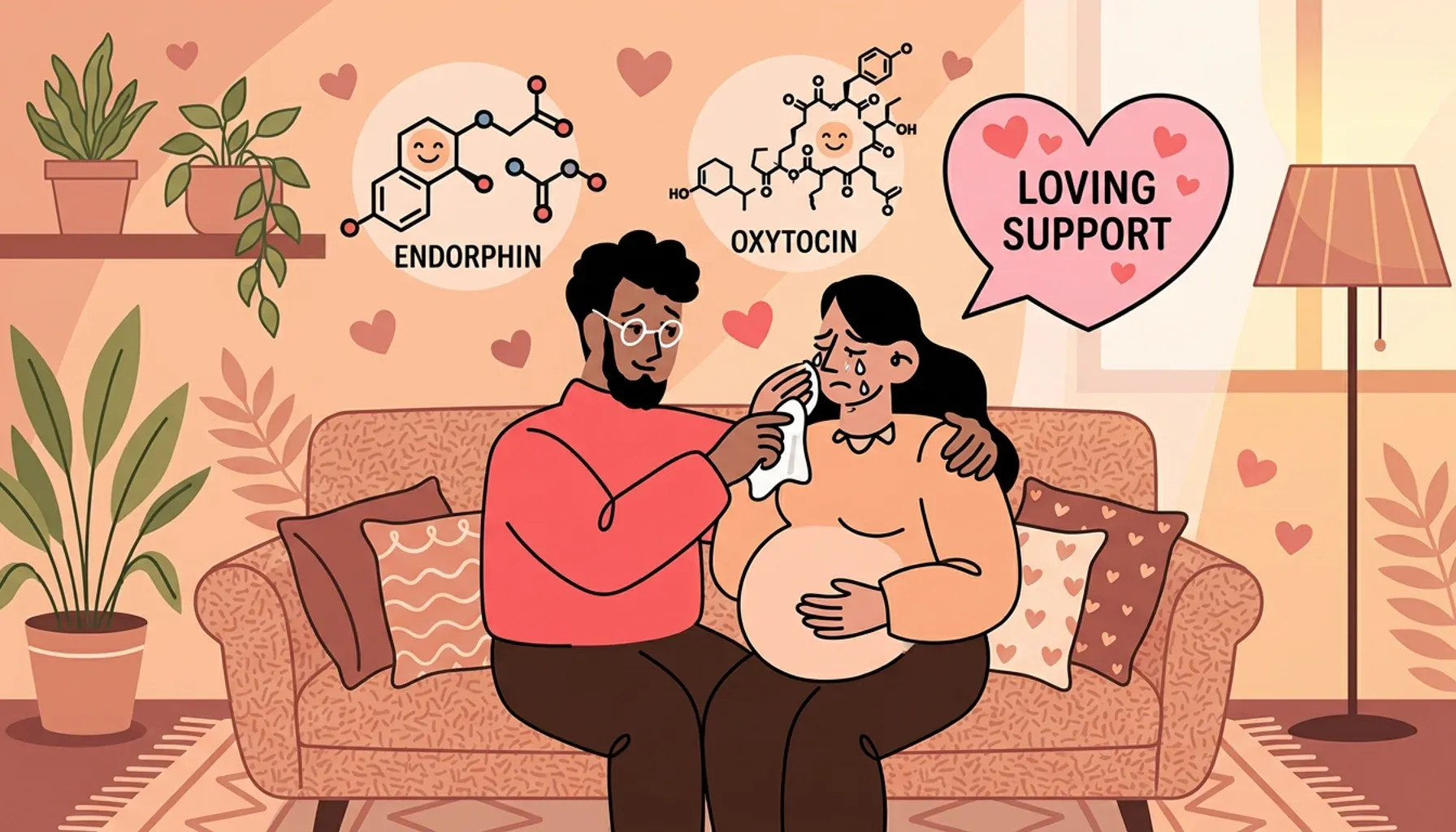
One thing to keep in mind is that crying is good for our health!  When we cry, our body releases endorphins, which act like natural painkillers, capable of numbing both physical and emotional pain. Oxytocin, the so-called “love hormone”, rises with tears, which can contribute to feelings of well-being [3]. 

So if your partner feels like weeping or wants to have a good cry, give her the space to do so. Sit with her, hold her hand, talk about what’s on her mind, and encourage her to open up to her nearest and dearest. Emotional support is an important protective factor for dealing with life’s challenges, so you are not only holding her hand, you are helping her build resilience, and effectively saying “You got this, and I am here for you” [4].



Frequently asked questions

Pregnancy hormones, especially fluctuating estrogen levels, can make women more emotional than usual. The physical and mental stress of pregnancy, combined with concerns about the baby's health, childbirth, and motherhood, naturally leads to increased crying.

Yes, frequent crying during pregnancy is completely normal and healthy. Even women who weren't previously emotional may become more sentimental due to hormonal changes and the reality of pregnancy setting in.

Sit with her, hold her hand, and give her space to express her emotions. Listen actively, encourage her to talk about what's bothering her, and provide consistent emotional support without trying to fix everything.

Yes, crying releases endorphins that act as natural painkillers and increases oxytocin levels, which promote well-being. This natural process helps pregnant women cope with physical and emotional stress.

While normal crying is healthy, contact a healthcare provider if crying becomes excessive, interferes with daily activities, or is accompanied by signs of depression or anxiety. Professional support may be needed for severe emotional distress.

Medical Disclaimer

This article is for informational purposes only and is not a substitute for professional medical advice, diagnosis, or treatment. Always seek the advice of your physician or qualified health provider with any questions you may have regarding a medical condition.

Meet our medical experts

Medically reviewed content

Reviewed by healthcare professionals · Updated June 4, 2025

Track your pregnancy on the go

Rated 4.8417,594 reviews