
A double pregnancy is always more challenging than a typical one. And if it turns out that the two babies share a single placenta (and even more so if they share the same fetal sac), the mother will be under special monitoring. What doctors are most concerned about is missing the development of twin-to-twin transfusion syndrome (TTTS).
What is twin-to-twin transfusion syndrome?
Twin-to-twin transfusion syndrome (TTTS), or feto-fetal transfusion syndrome (FFTS), is a complication that occurs only in monochorionic pregnancies in which twins (or multiples) share a single placenta.
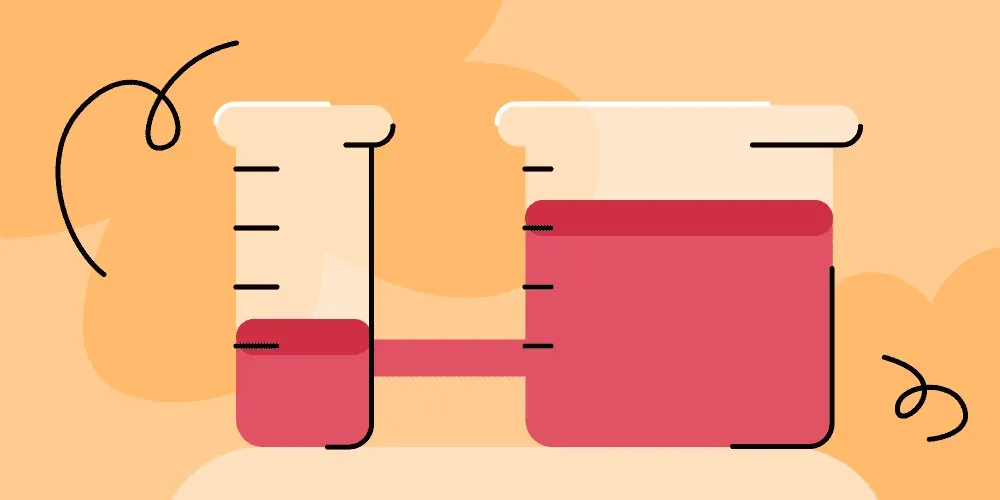
Usually, even if the placenta is shared, the blood is evenly distributed between the babies. But in about 15-20 percent of cases [1], anastomoses will form in the common placenta. Anastomoses are “tunnels" between vessels through which blood flows from one baby (known as the donor) to the other (the recipient).
As a result, the recipient cannot cope with the excess blood, their bladder overstretches, edema develops, and the weight of their fetal sac increases. At the same time, the donor develops anemia and may suffer from oxygen deprivation, has little fluid in their fetal sac, and fails to thrive. If not treated in time, the babies may not survive [2].
How do I know if I have TTTS?
During your ultrasound, your doctor will be able to determine if you are carrying twins and which type. If it turns out that the babies share a placenta, you'll most likely need an ultrasound every two weeks so as not to miss the possible onset of twin-to-twin transfusion [3].
What happens if TTTS is detected?
Action after diagnosis depends on many circumstances. First of all, the severity of the syndrome must be considered. During early stages (when there are no symptoms, except for a slight lack of amniotic fluid in one and polyhydramnios in the other), doctors will often choose a “wait-and-see” approach. In some cases, complications never develop, or the anastomoses close on their own, and the pregnancy can be carried to term without any intervention [4]. If the condition is severe, treatment will be required. Different treatments can be chosen depending on the gestational period.
What are the best treatments?
Three techniques are widely used:
Removal of excess amniotic fluid (amnioreduction);
Sealing the vessels of the placenta with laser (laser photocoagulation);
Puncturing the membrane between the twins (septostomy) to restore the balance of amniotic fluid [2].
Laser photocoagulation is considered the most modern and effective method. However, it is usually not used after the 26th week. If the need for treatment arises later in the pregnancy, and if the doctor does not have enough experience in vascular coagulation, the mother will likely be offered an amnioreduction procedure, which will alleviate her condition and allow the pregnancy to be preserved until at least 28 weeks (when the chances of survival and health in premature babies are more significant) [2, 4].