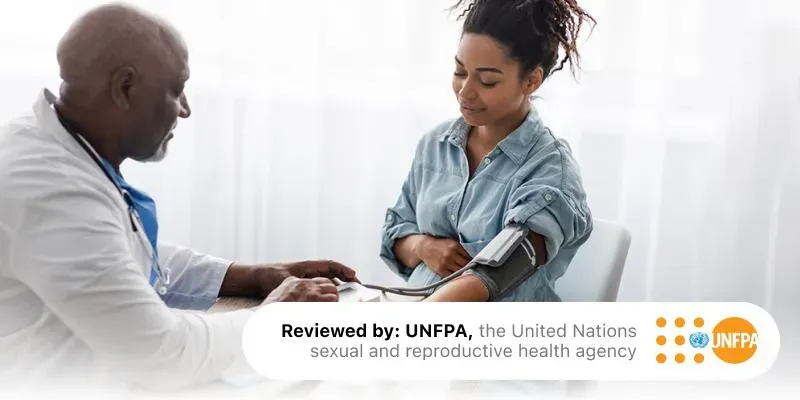

Have you heard of preeclampsia? It may be a condition that you have heard of before and if not, this article will provide you with further information and understanding. The condition is something that many health practitioners aim to prevent and manage its risks during pregnancy and after labour. Let’s take a look at what it is.
What is preeclampsia?
Preeclampsia is a condition that can occur during pregnancy. It cannot occur in non-pregnant women. This condition is associated with high blood pressure and protein in the urine after the 20th week of pregnancy and can cause damage of internal organs (primarily the liver and kidneys), if not treated. The condition occurs in about five out of 100 pregnancies [1].
Is preeclampsia the same thing as hypertension?
Not exactly, though high blood pressure after the 20th week in pregnancy is one of the most obvious signs of preeclampsia. But if there is no protein in the urine or signs of damage to organs, then it is considered gestational hypertension, which sometimes, but not always, leads to preeclampsia [2]. It is unlikely that a pregnant mother will notice these signs herself during pregnancy, which is why it is important to have regularly check in with a doctor to monitor the health of both mother and baby.
If there is protein in the urine, but my blood pressure is normal — is it preeclampsia?
Proteinuria (protein in the urine) without an increase in blood pressure is not considered preeclampsia. By itself, an increased level of protein may indicate kidney disease and is not necessarily associated with preeclampsia [3].
If I had hypertension before I was pregnant, will I have preeclampsia?
Hypertension before pregnancy is an independent disease not associated with preeclampsia. If a pregnant mother has high blood pressure, it is important to have a consultation with a health professional to assess the condition and get appropriate treatment. Therefore, blood pressure must be measured regularly in order to understand exactly when the increase began and to distinguish chronic hypertension from the onset of preeclampsia. However because high blood pressure usually doesn't have symptoms, it might be hard to know exactly when it began. Chronic hypertension is classified as a risk factor, but it cannot be said that this is a stage of preeclampsia [2].
What other risk factors are there for preeclampsia?
Doctors are especially concerned about mothers developing preeclampsia if they have one of the following risks: diabetes , obesity, or chronic kidney disease. Risks are higher in pregnancies with twins and with IVF [1].
Other things that can slightly increase the chances of developing preeclampsia include [5].
a family history of preeclampsia
being over 40 years
Having more than a 10 year gap since the last pregnancy
expecting multiple babies such as twins or triplets
having a higher body mass index (BMI) of 35 or more
Why is preeclampsia dangerous?
Preeclampsia affects the arteries that carry blood to the placenta. As a result, with preeclampsia, a baby may not receive enough nutrients and oxygen. This can lead to developmental delay, placental abruption and premature birth [2].
In severe cases, HELLP syndrome can develop — the breakdown of red blood cells, a decrease in platelet levels and liver damage. This condition is life-threatening for both the baby and the mother [4].
Therefore, if a woman has at least one of the symptoms at a 20+ weeks during pregnancy she should seek immediate medical help [2, 5]:
A strong headache
Nausea and vomiting
Sudden swelling of face, hands or feet
Severe pain in the right hypochondrium
Blurred vision (double vision, blurred vision, photophobia)
Severe shortness of breath
Is it being treated?
There are drugs that can slow down the development of severe forms of preeclampsia. They are prescribed for those who are at risk or who already have mild preeclampsia. For chronic hypertension, blood pressure medications prescribed by doctors should be taken. But in severe forms of preeclampsia, childbirth remains the only method of treatment regardless of stage of the pregnancy [1]. However, for mothers who have had a diagnosis of chronic hypertension before pregnancy and have already been prescribed medication, please make it a priority to meet with a health professional to discuss the medication you are taking to ensure it is still safe to take during pregnancy. This is important as some medications can increase the risk of certain conditions during pregnancy, but this can only be assessed through a consultation with a medical professional.
Is it true that bed rest and avoiding salt can prevent the development of preeclampsia?
No, according to WHO, these measures are not effective. However, taking calcium supplements can be beneficial as a preventive measure.
This article was created in association with UNFPA, the United Nations sexual and reproductive health agency.