EN
try amma today
The baby’s reflexes get more precise
Pregnancy

The baby’s reflexes get more precise

3 min readWeek 19
Key takeaways
3 min
  • Watch for increased fetal movements when exposed to loud sounds or music as your baby's reflexes become more sophisticated around mid-pregnancy.
  • Expect meconium formation in your baby's intestines during this stage, which is completely normal and consists of digestive cells and bile.
  • Notice subcutaneous fat developing around your baby's neck, chest, and kidneys, which helps smooth skin wrinkles and regulate body temperature.
  • Schedule additional ultrasounds if carrying identical twins due to potential umbilical cord entanglement risks in shared fetal sacs.
  • Use this exciting developmental stage to start choosing meaningful baby names that reflect your growing connection with your active little one.

During mid-pregnancy, babies develop precise reflexes including finger sucking, swallowing, blinking, and responding to sounds. Subcutaneous fat forms around the neck, chest, and kidneys while meconium develops in the intestines, marking significant developmental milestones.

amma app

Track your pregnancy in the app

Personalized content for your pregnancy week

Download App

The baby’s reflexes get more precise

The baby can now move their arms and legs, grimace, suck on a finger, frown, swallow, get the hiccups, open their mouth, blink, and play with the umbilical cord [1]. Your expectant partner may have noticed, or will notice soon, that the baby’s movements become more pronounced if someone is talking loudly next to her or if loud music is playing.

The baby’s digestive system continues to improve. In the intestine, meconium is now present. Meconium is the baby’s first feces, consisting of cells from the digestive tract, bile, and dead epithelial cells that line the mucous membrane of internal organs [2].

Subcutaneous fatty tissue continues to form. It will gradually help fill out the baby’s skin, smoothing wrinkles and softening its bright red color. Subcutaneous fat is deposited primarily around the neck, chest, and kidneys. Outside, the skin is still covered with a layer of primordial fat that protects it from irritation and helps retain heat.

If your partner is expecting twins

The babies are now about the size of large cucumbers. They move quite actively and play with the umbilical cord. If they have a common fetal sac, then there is a high risk that the umbilical cords will intertwine. Therefore, mothers of identical twins often have to go in for additional ultrasounds [3]. If each twin has their own fetal sac, then there are no additional risks at this time.

What we can see on an ultrasound

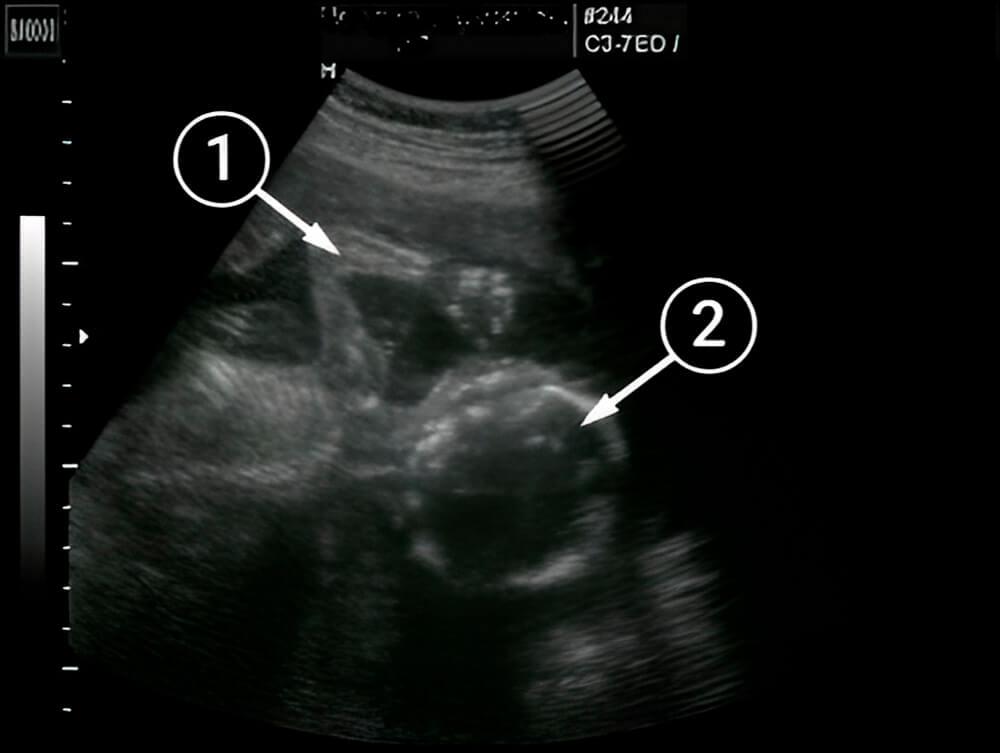
The baby is lying with their back to the screen, which makes it possible to see the left shoulder, armpit, forearm, elbow, and wrist. The neck is easier to see, around which subcutaneous fat is gradually being deposited.
The baby’s reflexes get more precise - The baby’s reflexes get more precise
Frequently asked questions

Babies develop sophisticated reflexes around mid-pregnancy, including the ability to suck fingers, swallow, blink, and respond to external sounds. These reflexes become more pronounced as subcutaneous fat develops and the nervous system matures.

Meconium is your baby's first feces, consisting of digestive tract cells, bile, and dead epithelial cells. It forms in the intestines during mid-pregnancy and is completely normal part of fetal development.

Identical twins sharing a fetal sac have higher risks of umbilical cord entanglement, requiring additional ultrasounds. Twins with separate fetal sacs don't have additional risks at this developmental stage.

Many parents begin considering baby names during mid-pregnancy when they can see detailed ultrasound images and feel strong fetal movements. This developmental stage often strengthens the emotional connection, making name selection more meaningful.

Medical Disclaimer

This article is for informational purposes only and is not a substitute for professional medical advice, diagnosis, or treatment. Always seek the advice of your physician or qualified health provider with any questions you may have regarding a medical condition.

Meet our medical experts

Medically reviewed content

Reviewed by healthcare professionals · Updated September 5, 2024

Track your pregnancy on the go

Rated 4.8417,594 reviews