
EN
try amma today
The baby turns to a head-down position
Pregnancy

The baby turns to a head-down position

2 min readWeek 33
Key takeaways
2 min
  • Expect your baby to turn head-down between weeks 34-36, which is the ideal birthing position for labor and delivery.
  • Monitor increased fetal development including thicker hair, fully formed fingernails, and continued fat accumulation for temperature regulation.
  • Prepare for potential early labor if carrying twins, especially with boy-boy pairs who have higher premature birth risks.
  • Schedule regular ultrasounds to track your baby's positioning and placental health during this crucial development stage.
  • Understand that decreased fetal movement is normal as your baby grows larger and has less space in the uterus.

Babies typically turn head-down between weeks 34-36 of pregnancy, with week 34 being common. This vertex position is ideal for delivery as it allows easiest passage through the birth canal during labor.

amma app

Track your pregnancy in the app

Personalized content for your pregnancy week

Download App

The baby turns to a head-down position

The baby’s body is fully formed now, but it needs to gain more subcutaneous fat [1] to maintain a stable temperature outside the womb.

As the baby grows, there is less space in the uterus for them to move around [2]. Soon, they will turn head-down, which is the ideal position to start labor. This shift can happen this week but may not happen until week 36 [3].

The hair on the baby's head becomes thicker at this stage. After birth and up to six months of age, however, the hair normally thins out due to fluctuations in hormone levels [4].

The baby now has fully formed fingernails and can use them to scratch itchy areas of the skin. The toenails are still underdeveloped, but they are visible [5].

If your partner is expecting twins

Labor may well start this week. It has been statistically established that twin girls behave more calmly and predictably, so their risk of premature birth is minimal. In a boy-girl pair, the risk is slightly higher. But if your partner is having two boys, then they need to be closely monitored, as they are more likely to arrive ahead of time [6].

What we can see on an ultrasound

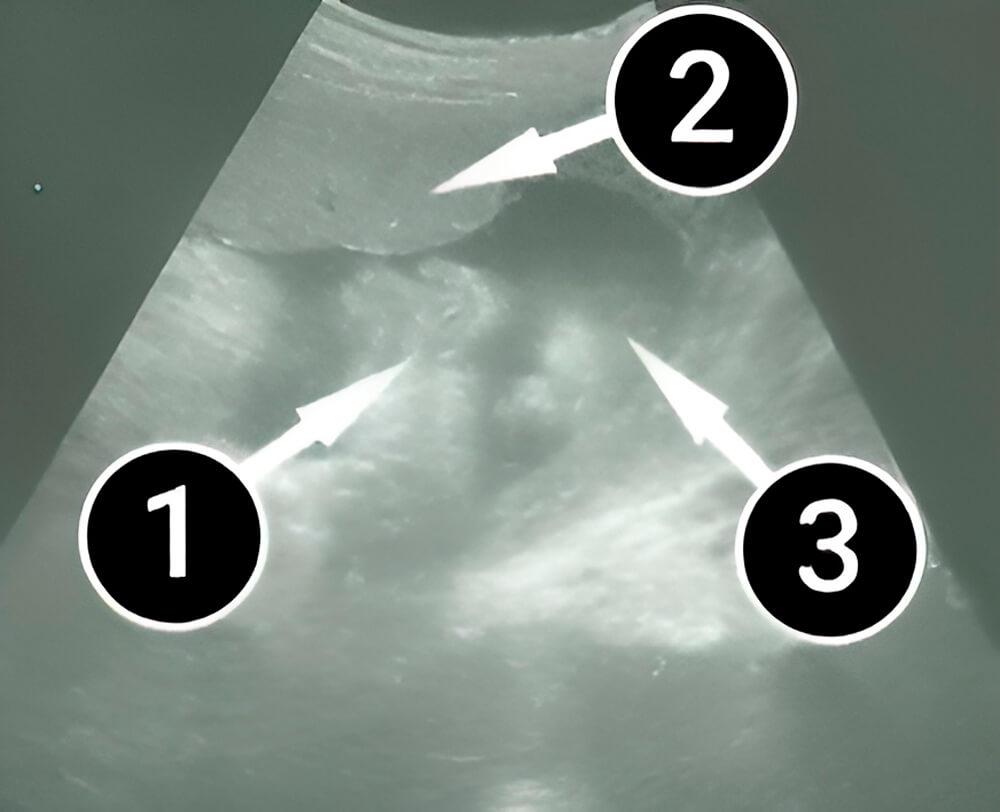
The baby has their left side to the screen. The head is visible on the right. We can also see the forehead, nose, and left eye. To the left, we can see the arms bent at the elbows. The placenta, which has provided the baby with everything they need to develop, is at the top of the image. 
The baby turns to a head-down position - The baby turns to a head-down position
Frequently asked questions

Most babies turn head-down between weeks 34-36 of pregnancy. This positioning, called vertex presentation, is ideal for labor and delivery as it allows the baby to move through the birth canal most easily.

At 34 weeks, babies develop thicker hair, fully formed fingernails, and continue gaining subcutaneous fat for temperature regulation. Toenails become visible but remain underdeveloped, and movement decreases due to limited uterine space.

Yes, twin pregnancies often deliver around 34 weeks. Twin girls have the lowest premature birth risk, boy-girl pairs have moderate risk, and twin boys require closest monitoring due to highest early delivery likelihood.

A 34-week ultrasound clearly shows the baby's head position, facial features like forehead and nose, bent arms, and the placenta. The baby's positioning and development can be accurately assessed at this stage.

Reduced fetal movement at 34 weeks is normal because your baby has grown larger while uterine space remains limited. The baby still moves but has less room for the big movements you felt earlier in pregnancy.

Medical Disclaimer

This article is for informational purposes only and is not a substitute for professional medical advice, diagnosis, or treatment. Always seek the advice of your physician or qualified health provider with any questions you may have regarding a medical condition.

Meet our medical experts

Medically reviewed content

Reviewed by healthcare professionals · Updated September 2, 2024

Track your pregnancy on the go

Rated 4.8417,594 reviews