EN
try amma today
Riboflavin: the growth vitamin
Pregnancy

Riboflavin: the growth vitamin

2 min readWeek 8
Key takeaways
2 min
  • Consume 1.4-2mg of riboflavin daily during breastfeeding as this B vitamin is actively transferred to breast milk.
  • Include animal proteins like beef liver, seafood, or dairy in your diet, as they're the richest riboflavin sources.
  • Consider vitamin B2 supplements if following a vegetarian or vegan diet during pregnancy and nursing.
  • Cook riboflavin-rich foods gently and save cooking liquid, since this water-soluble vitamin leaches out during cooking.
  • Watch for deficiency signs like skin peeling, hair loss, cracked lips, and increased irritability during pregnancy.

Riboflavin (vitamin B2) is essential for healthy pregnancy because nursing mothers need 1.4-2mg daily as it's actively transferred to breast milk. This growth vitamin supports baby's physical development while preventing maternal deficiency symptoms like skin issues and irritability.

amma app

Track your pregnancy in the app

Personalized content for your pregnancy week

Download App

Riboflavin: the growth vitamin

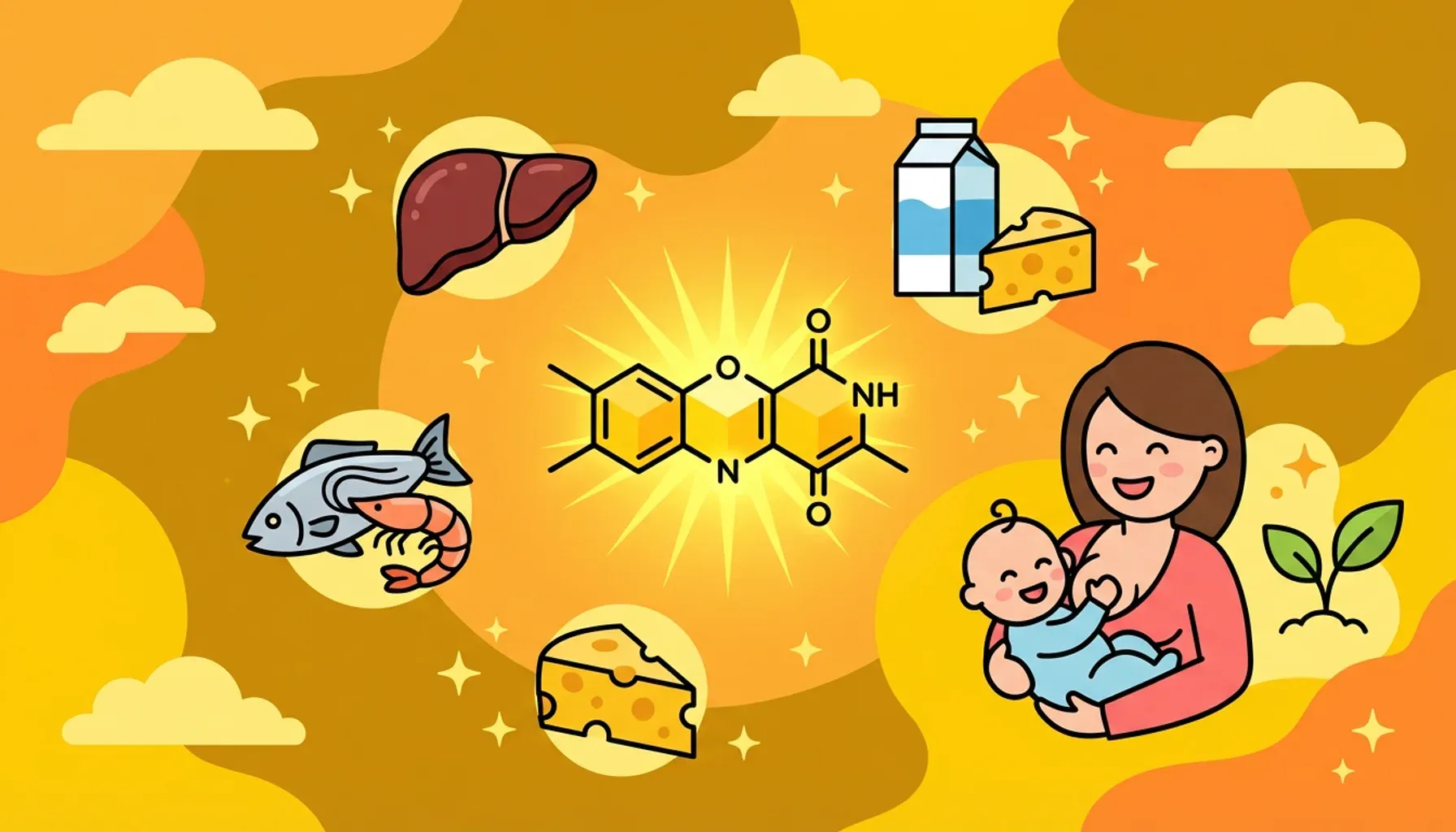
Riboflavin (vitamin B2) is consumed actively during lactation, meaning a significant part of it goes toward milk [1] and little remains for mama. Therefore, experts recommend that nursing mothers consume 1.4 mg of vitamin B2 per day [2]. In Europe the recommendation is even higher — as much as 2 mg [3].

With a healthy, balanced diet, you can easily get your daily allowance from food. Two mg of riboflavin is:

  • 3 oz (90 g) beef liver
  • 8 oz (250 g) beef steak
  • 4 cups milk or yogurt
  • 8 oz (250 g) of seafood.

Because all of these are animal-based, vegans and vegetarians may need vitamin supplements.

It’s important to note that riboflavin dissolves well in water and if the food is cooked, then half of the vitamins will go into the broth [2]. Also, the flora in your large intestine can produce riboflavin if given enough fiber through greens and grain [2].

What mom needs

Vitamin B2 is involved in the metabolism of fats, and its deficiency can manifest itself in the form of cosmetic problems: skin peeling or rashes, hair loss, cracked lips. Increased irritability and nervousness are also aggravated by a lack of riboflavin [2].

What baby needs

Babies need riboflavin for normal growth and development, in the most literal physical sense [4]. Therefore, it is added to formula[1].



  1. B Vitamins in Breast Milk: Relative Importance of Maternal Status and Intake, and Effects on Infant Status and Function. Allen L. H. Advances in Nutrition, 2012.

  2. Riboflavin. Fact Sheet for Health Professionals. NIH, 2021.

  3. Dietary reference values: advice on riboflavin. EFSA, 2017.

  4. Nutrition and Lifestyle for Pregnancy and Breastfeeding. Peter Gluckman, Mark Hanson, Chong Yap Seng, Anne Bardsley. Chapter. Vitamin В2 (riboflavin) in pregnancy and breastfeeding. Oxford University Press, 2014.

Frequently asked questions

Nursing mothers need 1.4mg of riboflavin daily according to US recommendations, while European guidelines suggest up to 2mg daily. This increased need occurs because riboflavin is actively consumed during lactation and transferred to breast milk.

The best riboflavin sources include 3oz beef liver, 8oz beef steak, 4 cups of milk or yogurt, or 8oz of seafood to meet daily needs. These animal-based foods provide the most bioavailable forms of vitamin B2.

Yes, babies need riboflavin for normal growth and physical development. Deficiency can impact both maternal health (causing skin issues, hair loss, irritability) and infant development, which is why it's added to infant formulas.

Vegetarians and vegans may need vitamin B2 supplements since the richest sources are animal-based foods. However, gut bacteria can produce some riboflavin when adequate fiber from greens and grains is consumed.

Medical Disclaimer

This article is for informational purposes only and is not a substitute for professional medical advice, diagnosis, or treatment. Always seek the advice of your physician or qualified health provider with any questions you may have regarding a medical condition.

Meet our medical experts

Medically reviewed content

Reviewed by healthcare professionals · Updated September 4, 2024

Track your pregnancy on the go

Rated 4.8417,594 reviews