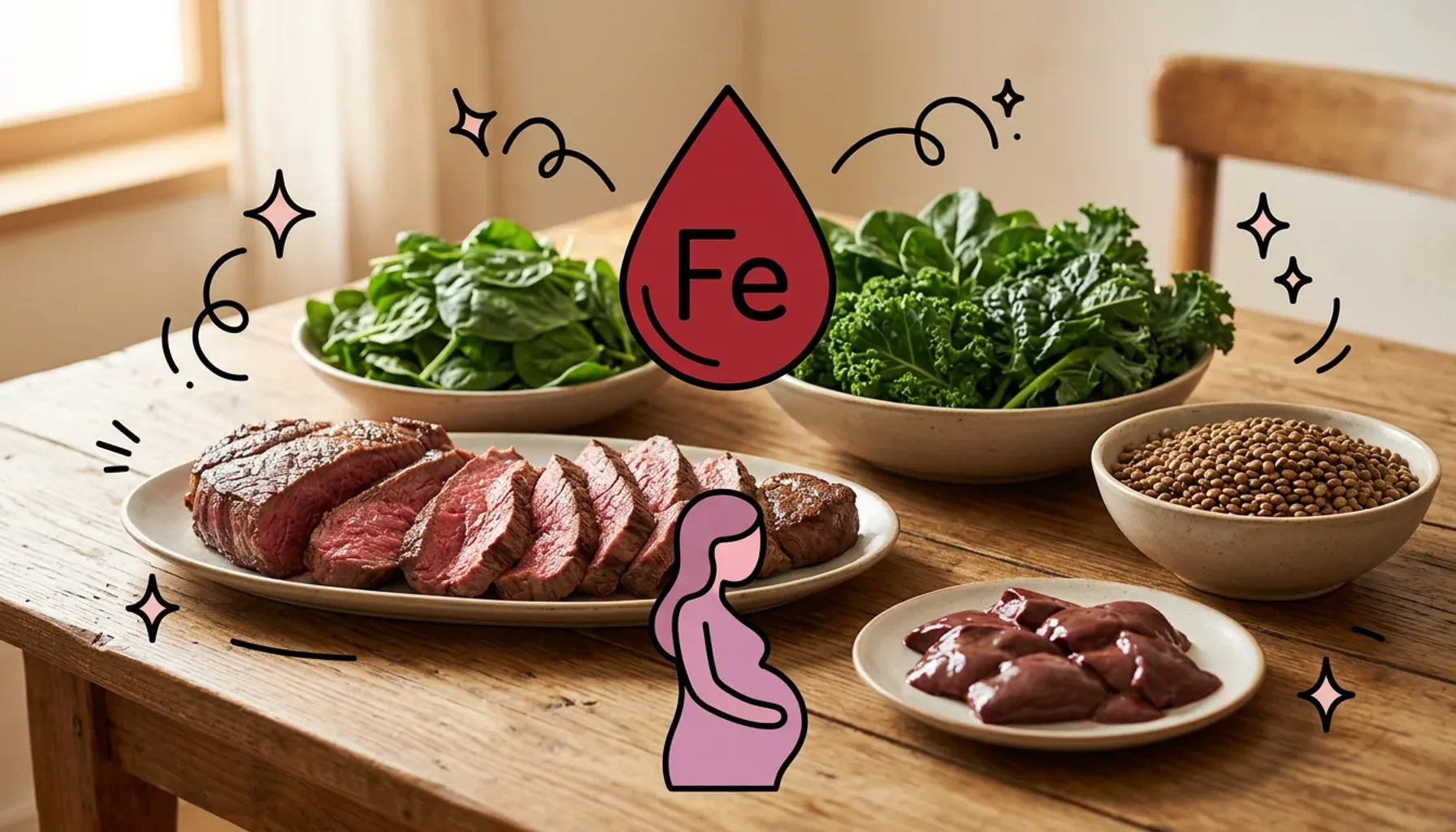

Let’s talk about iron
Iron is part of hemoglobin, the main protein in blood. And since the volume of blood increases significantly during pregnancy, the need for iron increases as well. Before becoming pregnant, 18 mg of iron per day is adequate. But, now you should get at least 27 mg [1]. Most prenatal vitamins contain iron. But, often, iron supplements cause side effects, including constipation and vomiting, so it is often easier on your body to get the needed iron through your diet.
What foods contain the most iron?
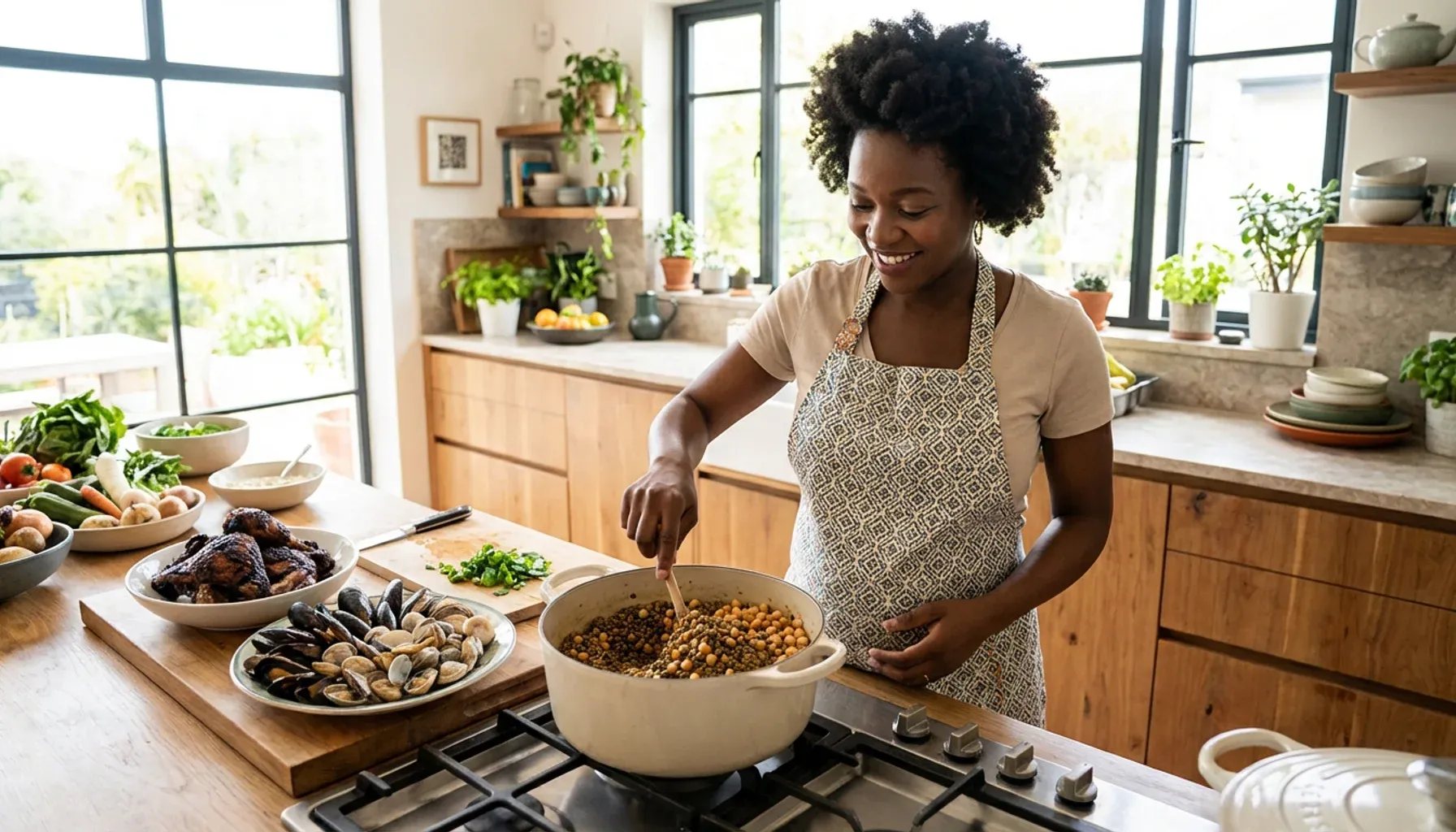
There are two types of iron: heme and non-heme. Heme is found in animal products: meat, liver, poultry, shrimp; non-heme is found in both meat and vegetable products, especially nuts (walnuts, almonds, cashews), legumes (lentils, beans, chickpeas), grains (especially buckwheat), fruits and berries (apples, apricots, pomegranates) [2].
Knowing the difference is important because heme is more easily absorbed by the body [3]. For example, liver contains almost as much iron as in lentils, but the body will absorb only half of the iron from lentils.
All iron, both heme and non-heme, is better absorbed in combination with vitamin C. For this, simply squeeze lemon juice on your iron-rich foods or serve them with veggies that contain vitamin C, like broccoli or bell peppers [1, 3, 4].
Polyphenols found in some plants, like tea [4], impede the absorption of iron. Therefore, it is better not to drink tea immediately after eating a meal.
Iron-containing food additives are widely used in the USA and Canada: many breakfast cereals, pastas and milk products are enriched with iron [3]. In many other countries, enriched products are not very common, so animal products remain the main source of iron.