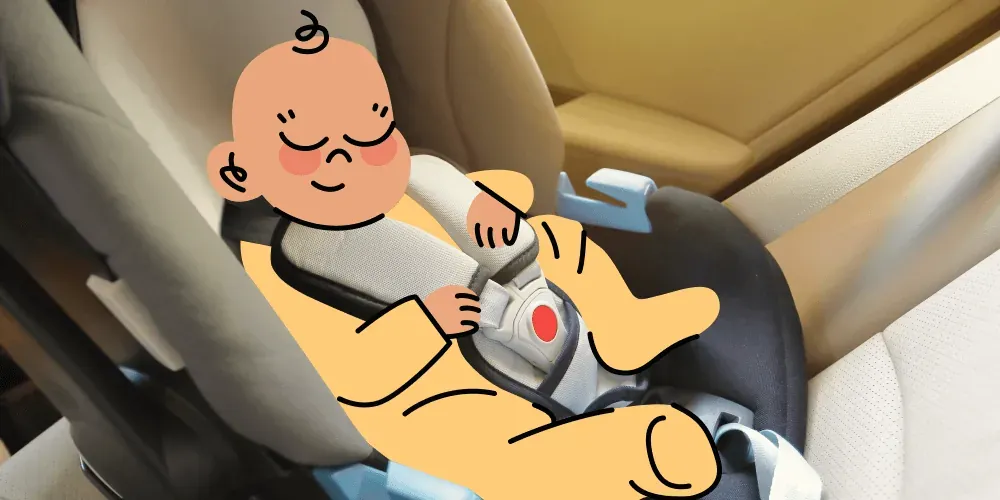

If you are going to give birth in a hospital, you will not be able to travel home without a car seat for your baby [1]. So your best bet is to start thinking about which one you want to purchase.
Types of infant car seats
There are three types of baby car seats [2]:
Rear-facing-only. These are compact infant carriers that are suitable from 0 to 9-month-old babies. They usually come with a handle so you can carry a sleeping infant. The downside is that they have a very short period of use.
Convertible seats. These bulkier car seats can be used from 0 to 15 months. Initially, they can be installed rear-facing, as required by safety rules. When the child grows, they can be turned to face forward and used for several more months.
"All-in-one" seats. These can transport children from 0 up to 4 years of age. These seats can be large and heavy. They can be installed rear-facing and moved to a semi-reclined position in accordance with safety regulations. However, if you have a small car, the recline angle may be insufficient for a newborn.
Car seat installation
All infants should ride in a rear-facing car seat as long as possible and until they reach the highest weight or height allowed by their car seat’s manufacturer [2].
Infant car seats can be installed by using the vehicle's seat belt or its LATCH (lower anchors and tethers for children) system. The LATCH system is designed to safely attach car seats to automobiles. When installing a seat, lower anchors can be used instead of the seat belt, and many parents feel that they are easier to use in certain vehicles [3].
Always read the vehicle owner's manual and the car seat manual before installing. If you have any questions, look for a certified CPST near you for help.
Safety standards
Tested and quality car seats come with safety labels that read: “This restraint system conforms to all applicable federal motor vehicle safety standards. This restraint is certified for use in all motor vehicles and aircraft.” This exact wording means the seats have been tested to comply with Federal Motor Vehicle Safety Standard 213, which regulates child car seats [4].
Second-hand car seats
Purchasing a used car seat is not recommended, even if it appears to be in perfect condition [5]. A used one may have hidden defects, may be expired (car seats expire after 6-10 years), or may have been in a car accident, even if it looks undamaged. All of these issues compromise the car seat’s function and may render it inefficient in protecting a child from injury in case of an accident.