EN
try amma today
First-trimester ultrasound
Pregnancy

First-trimester ultrasound

2 min readWeek 12
Key takeaways
2 min
  • Schedule your first ultrasound between weeks 11-14 for optimal timing to detect abnormalities and confirm pregnancy length.
  • Expect your doctor to check the baby's heartbeat, measurements, and nuchal fold thickness to screen for chromosomal abnormalities.
  • Prepare minimally by avoiding gas-producing foods and drinking adequate water as advised by your healthcare provider.
  • Understand that referrals to external facilities are normal and don't indicate problems with your pregnancy.
  • Consider that 3D ultrasounds offer no medical advantages over standard 2D scans but are safe if desired.

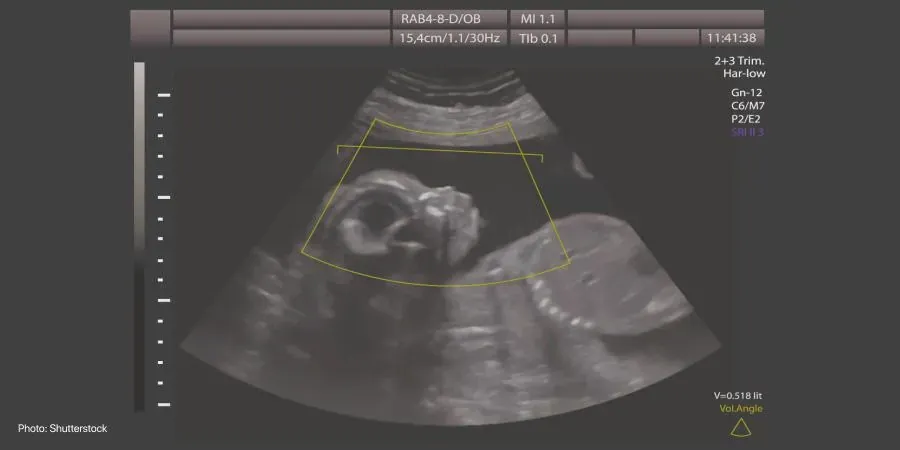
A first trimester ultrasound is performed between 11-14 weeks to check your baby's development, heartbeat, and screen for chromosomal abnormalities. This timing is optimal for accurate measurements and detecting potential issues while treatment options remain available.

amma app

Track your pregnancy in the app

Personalized content for your pregnancy week

Download App

Two ultrasounds are usually performed during pregnancy. The first between weeks 11 and 14, the second between weeks 18 and 21. Depending on your health and the development of your pregnancy, you may get more than two scans [1]. Scheduling will vary depending on where you live.

Why do you need an ultrasound in the first trimester?

At 11–14 weeks of pregnancy, an ultrasound is performed as part of your prenatal care to determine whether the baby is developing as expected. It will also help identify any signs of abnormalities [2].

What exactly is an ultrasound?

During an ultrasound, your doctor checks your uterus to make sure there are no issues that may interfere with your pregnancy. At the same time, your doctor will look for signs of chromosomal abnormalities in the baby, their heartbeat, head size, and bone lengths. The thickness of the nuchal fold — the tissue at the back of the baby's neck — is also measured to determine the risk of Down syndrome. If your doctor has any doubts, they will have you undergo additional examinations [3].

Why is the screening carried out at this time?

At 11 weeks, it is easier to confirm the length of the pregnancy and determine if you are having twins. It’s also the best time to consider the external signs of chromosomal abnormalities, if any. Before week 10, the baby is still too small, and after week 14, your choices and available screenings are more limited if something abnormal appears [4, 5].

I was given a referral for an ultrasound outside my doctor’s office. Does this mean something is wrong?

Not all OBGYN offices are equipped to perform detailed ultrasounds. So don’t worry if you are sent somewhere else to get your ultrasound. Talk to your doctor about it if you need reassurance. 

Do I need to prepare for the procedure?

The first-trimester ultrasound does not require special preparation. Your doctor may advise you not to eat certain foods, such as those that cause gas, or they may recommend you drink more water than usual [5].

Should I get a 3D ultrasound?

Since its invention more than 20 years ago, the question of the 3D ultrasound remains undefined. This procedure does not provide any medical advantages, especially considering that most technicians undergo training in 2D only. However, there are no safety concerns regarding 3D ultrasounds [6].

Frequently asked questions

The first trimester ultrasound is typically performed between 11-14 weeks of pregnancy. This timing allows for accurate measurements and optimal screening for chromosomal abnormalities.

The ultrasound checks the baby's heartbeat, head size, bone lengths, and nuchal fold thickness to screen for Down syndrome. It also confirms pregnancy length and detects multiple pregnancies.

Minimal preparation is needed for a first trimester ultrasound. Your doctor may advise avoiding gas-producing foods and drinking adequate water before the appointment.

Yes, it's completely normal to receive a referral for an external ultrasound. Many OBGYN offices aren't equipped for detailed ultrasounds, so referrals don't indicate any problems.

3D ultrasounds provide no medical advantages over standard 2D scans, especially in the first trimester. They're safe but not medically necessary for proper prenatal care.

Medical Disclaimer

This article is for informational purposes only and is not a substitute for professional medical advice, diagnosis, or treatment. Always seek the advice of your physician or qualified health provider with any questions you may have regarding a medical condition.

Meet our medical experts

Medically reviewed content

Reviewed by healthcare professionals · Updated March 25, 2025

Track your pregnancy on the go

Rated 4.8417,594 reviews