EN
try amma today
Breastfeeding after a C-section: What you need to know
Pregnancy

Breastfeeding after a C-section: What you need to know

2 min readWeek 38
Key takeaways
2 min
  • Start breastfeeding within one hour after C-section delivery, even with pain medications and anesthesia present in your system.
  • Request help from your birth partner and hospital lactation consultant to find comfortable nursing positions that protect your incision.
  • Begin skin-to-skin contact immediately and pump if direct nursing isn't possible to establish milk production early.
  • Contact a lactation specialist if you cannot breastfeed in the first days - successful nursing can still be established later.
  • Understand that C-sections don't directly cause milk production problems, but delayed nursing initiation might affect supply.

Yes, you can breastfeed immediately after a C-section. WHO recommends starting within one hour of delivery, even with anesthesia present. You'll likely need help positioning your baby to protect your incision, and hospital lactation consultants can assist with comfortable nursing positions.

amma app

Track your pregnancy in the app

Personalized content for your pregnancy week

Download App

The World Health Organization (WHO) and the United Nations Children's Fund (UNICEF) recommend starting breastfeeding within the first hour after the birth of a child [1, 2], including after a C-section.

Will the pain medicine and anesthesia be in my breastmilk?

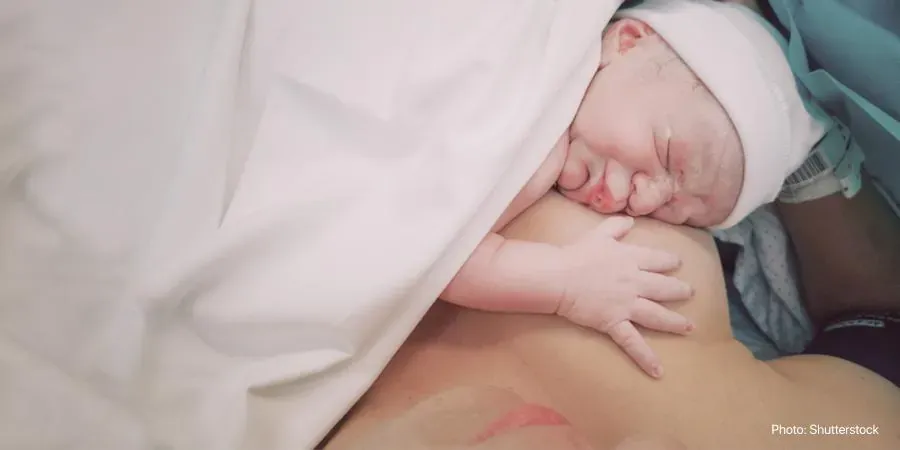
It doesn't matter whether drugs were used to relieve pain or to perform a C-section, experts believe that it’s important to place the baby on mama’s chest in the first hour after delivery [1]. A mother after a C-section is more likely to need the help of a birth partner to hold the newborn at her breast.

Is it true that mama’s who have a C-sections are more likely to have problems with milk production?

It’s a common misconception that mama’s who have C-sections have trouble with milk production; but it’s not caused by the C-section. Mamas have trouble with milk production if they are not able to start nursing immediately after birth, which can sometimes happen after a C-section [1].

How to put baby on mama’s chest after a C-section?

Statistics show that 40 percent of women after a C-section could not breastfeed the baby on the first attempt. Among those who gave birth vaginally, there were half as many of them [3].

The child should be set to the breast within an hour after birth. A birth partner and midwife can help mama choose a comfortable position for breastfeeding. They can also help hold and support the baby at the breast. Most hospitals will have a lactation consultant who can come help you with your latch and find comfortable positions for nursing [4].

By the time of discharge from the hospital, only 17 percent of mothers who had a C-section could not breastfeed their baby [3].

If mama’s condition after surgery does not allow for her to put the baby to the breast in the first hour or even in the first days, will it be possible to establish breastfeeding later?

Yes. It’s best to contact a lactation specialist who will provide support and help you choose the appropriate poses and strategy to start breastfeeding. It is possible that first you will need to start with pumping to get your milk production up [1]. It will be important to do skin-to-skin contact as much as possible. This will help you and baby start to breastfeed [1, 2].



Frequently asked questions

Yes, WHO and UNICEF recommend starting breastfeeding within the first hour after C-section delivery. Pain medications and anesthesia are safe for breastfeeding, though you may need help positioning your baby.

C-sections themselves don't cause milk production problems. However, if breastfeeding is delayed after surgery, this can impact milk supply. Early and frequent nursing or pumping helps establish production.

Side-lying and football hold positions work best after C-section as they keep baby away from your incision. A lactation consultant can help you find the most comfortable position for your situation.

If immediate breastfeeding isn't possible, start pumping as soon as you can and do skin-to-skin contact. A lactation specialist can help you establish breastfeeding even days after delivery.

Medical Disclaimer

This article is for informational purposes only and is not a substitute for professional medical advice, diagnosis, or treatment. Always seek the advice of your physician or qualified health provider with any questions you may have regarding a medical condition.

Meet our medical experts

Medically reviewed content

Reviewed by healthcare professionals · Updated March 25, 2025

Track your pregnancy on the go

Rated 4.8417,594 reviews