EN
try amma today
The first days at home
New Parent

The first days at home

2 min readWeek 2
Key takeaways
2 min
  • Schedule heel screening within first days if you had a home birth, as hospitals typically perform this test before discharge to detect congenital disorders.
  • Attend routine pediatric checkups starting 3-5 days after birth, then at 1, 2, 4, 6, 9, 12, 15, 18 and 24 months for optimal newborn health monitoring.
  • Monitor for concerning symptoms like yellow palms/feet or marble-patterned skin on chest, and contact your doctor if baby continues losing weight or has trouble latching.
  • Expect frequent bowel movements initially as your baby's digestive system adjusts from meconium to milk processing, with patterns normalizing by 3 months.
  • Complete administrative tasks like birth certificates, social security applications, and insurance updates during your recovery period.

The first days home with your newborn involve essential medical monitoring including heel screening and pediatric checkups, completing administrative tasks like birth certificates and insurance updates, and watching for concerning symptoms while understanding normal newborn behaviors like frequent bowel movements.

amma app

Track your pregnancy in the app

Personalized content for your pregnancy week

Download App

The first days at home

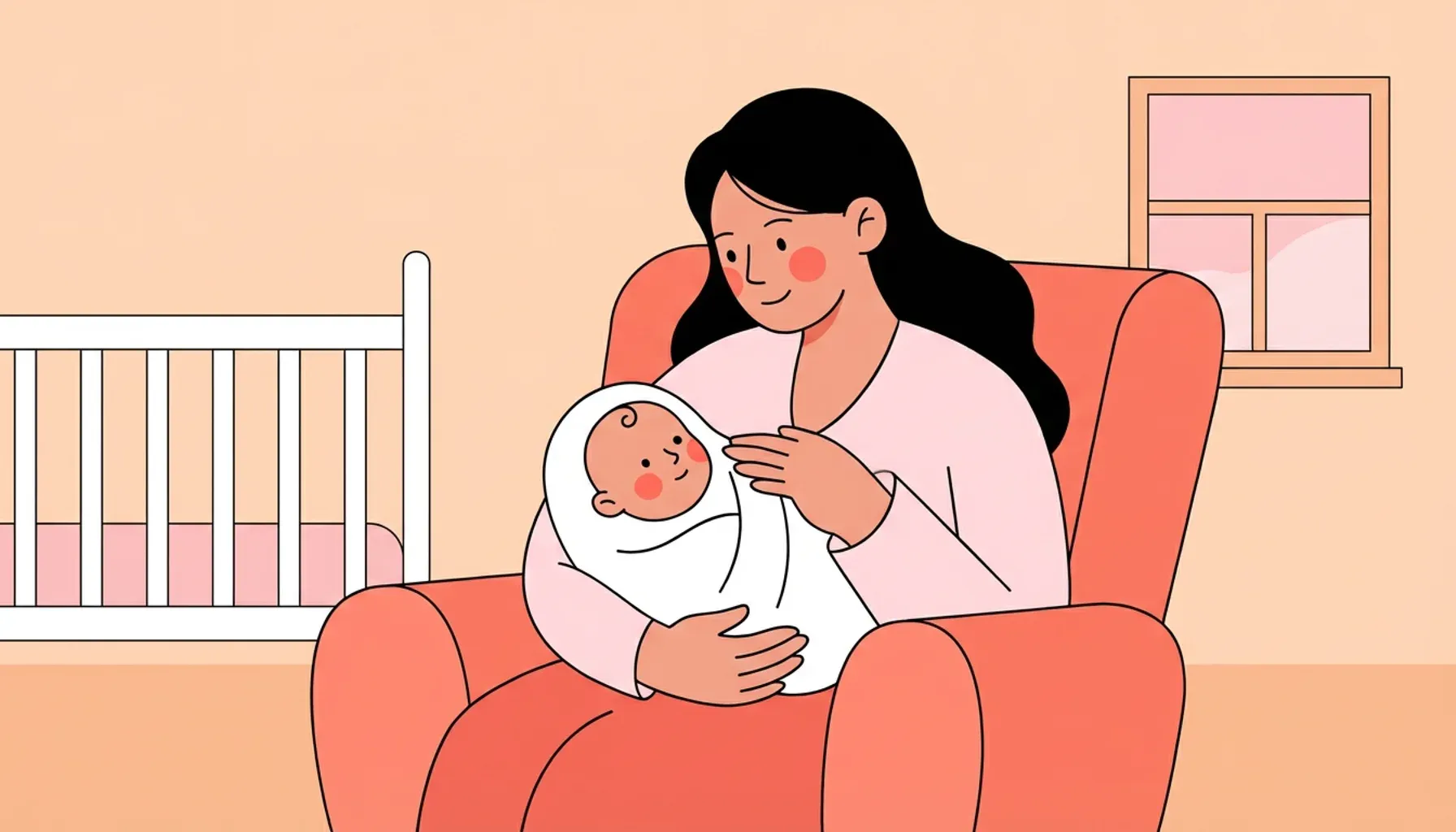
A new baby is a juggling act: cuddles, round the clock feedings, dirty diapers and also administrative duties. This includes birth certificates, applying for a social security number, and alerting your medical insurance to your newest family member. Ideally, this will all be taken care of by your partner.

There’s also health issues you will need to pay attention to

What to pay attention to

Heel screening. In the US, a few drops of blood are taken from the heel for analysis before discharge from the maternity hospital. This is to detect congenital disorders— which diseases are tested for vary by state [1]. You will be informed and assigned a repeat test only if something is wrong. If you gave birth at home, then you need go get this test.

Routine checkups. Most pediatricians will see your babies 3 to 5 days after birth and then at 1, 2, 4, 6, 9, 12, 15, 18 and 24 months [2]. These are often called well-child visits. Some practices may offer home visits instead of office visits, which are recommended by the WHO [3].

Skin condition. WHO recommends that you consult a doctor if your son’s feet or palms turn yellow. Or if there is a "marble" pattern (pale with streaks) on the skin of the chest [3].

Weight and appetite. This week, your baby boy will begin to gradually regain weight. If he continues to lose weight or trouble latching, this is also a reason to call your doctor [3].

Nothing to worry about

Frequent stool. The second week of life is a very important period in setting up digestion. The baby's intestines completely got rid of meconium and switched to milk assimilation and due to this, the stool becomes more frequent. The child can poop almost after every feeding. By one month, regularity should be established at about three to four times a day. By three months, just twice a day [4].


  1. CDC. Newborn Screening Laboratory Bulletin. Feb 21, 2014.

  2. Healthline.com.Well-Child Visits. Feb 21, 2020.

  3. WHO recommendations on newborn health: guidelines approved by the WHO Guidelines Review Committee. Geneva: World Health Organization, 2017. Postnatal care, p. 4.

  4. The defecation pattern of healthy term infants up to the age of 3 months. Jolanda den Hertog, Ellen van Leengoed, et al. BMJ, Nov 2012.

Frequently asked questions

Your newborn needs heel screening (newborn screening) to test for congenital disorders, typically done before hospital discharge. You'll also need to schedule the first pediatric checkup within 3-5 days of birth for weight and health monitoring.

Newborns may poop after almost every feeding during the second week as their digestive system adjusts. By one month, this typically reduces to 3-4 times daily, and by three months, about twice daily.

Contact your doctor if your baby's palms or feet turn yellow, if there's a marble pattern on chest skin, or if your baby continues losing weight or has trouble latching. These can indicate serious health issues requiring immediate attention.

Essential tasks include obtaining a birth certificate, applying for a social security number, and adding your baby to your medical insurance plan. Ideally, have your partner handle these while you focus on recovery and bonding.

Medical Disclaimer

This article is for informational purposes only and is not a substitute for professional medical advice, diagnosis, or treatment. Always seek the advice of your physician or qualified health provider with any questions you may have regarding a medical condition.

Meet our medical experts

Medically reviewed content

Reviewed by healthcare professionals · Updated September 5, 2024

Track your pregnancy on the go

Rated 4.8417,594 reviews