
Home ovulation tests are readily available nowadays and they can be very helpful in pinpointing the days in which you are most likely to conceive. One type of test checks for changes in your saliva (salt levels rise under the influence of estrogens), and the most popular ones use a small urine sample (there is a rise in the luteinizing hormone within 24 to 48 hours of ovulation) to determine when you ovulate [1].
Can ovulation accurately be detected through a saliva test?
When you are close to ovulation, salt concentrates in your saliva and crystallizes when placed on a glass slide; with the help of a microscope, you can then see a pattern similar to fern leaves, which confirms ovulation (on other days, the pattern is more like dots or circles). These kits are available in the United States but are not necessarily popular in other countries. They include a dropper, glass slides to place the saliva sample in, and a small tube that acts as a mini-microscope.
How does a home urine test determine ovulation?
There are several types of tests. The choice is up to you.
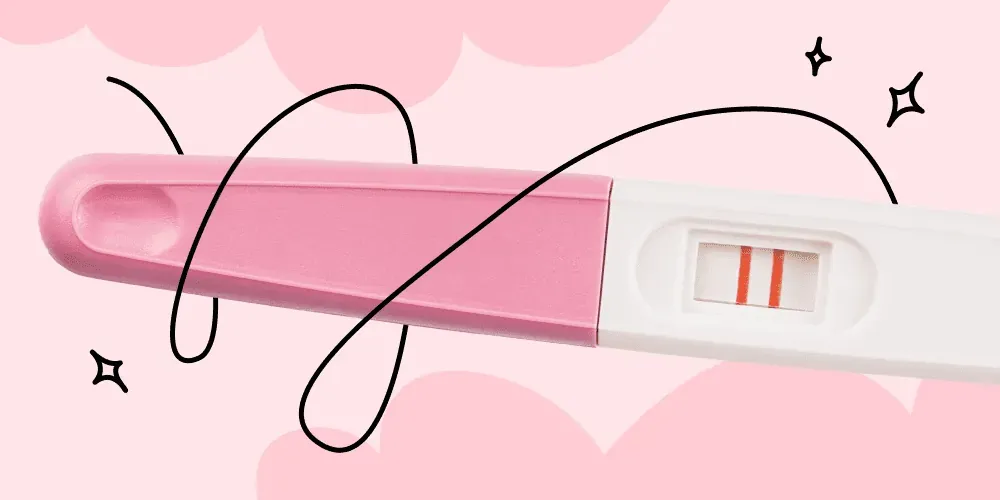
Test strips. These tend to be the least expensive option. They are made of a specially treated material that reacts when LH levels peak and are very straightforward; you just collect urine in a small container and dip the paper strip in it up to the mark, keeping it submerged for as long as the instructions indicate. You then place the test strip on a flat surface and wait (follow the instructions on the package). If the second line is as clear or brighter than the control one, ovulation will likely occur within the next 24-48 hours. If the second line is missing or barely noticeable, the result is negative.
Cartridge. These are an improved version of the test strips. They consist of a small case with windows. You use a dropper to place one to two drops of urine in the indicated place, and the results read the same as with regular test strips.
Stick. These are more convenient than the previous options because there is no need to collect urine; you just remove the cap, hold the test under your urine stream, and replace the cap. After a few minutes, you will have your results.
Digital. These reusable devices have a small LCD screen. You just have to follow the instructions and wait for the result, which will appear on the screen as an emoji, stripes, or a plus (+) sign.
When should I test for ovulation?
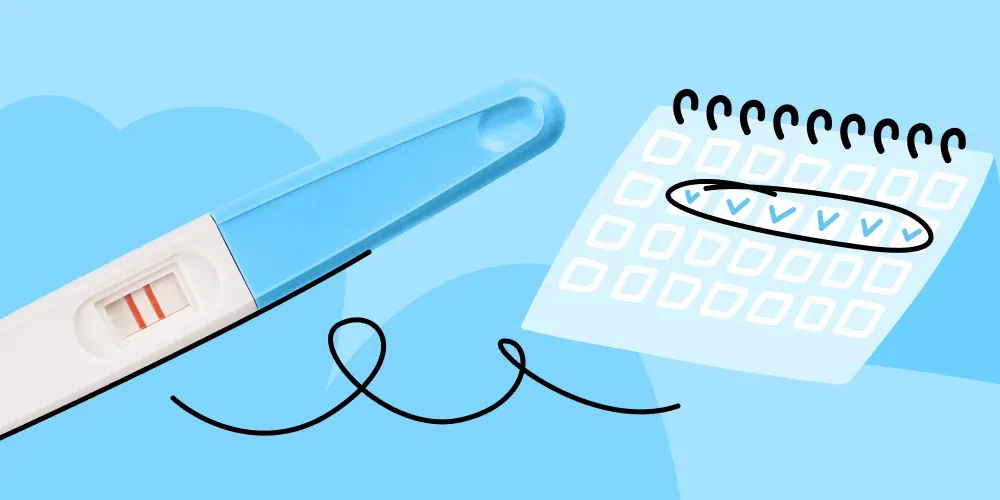
The ideal time to test for ovulation depends on the duration of your menstrual cycle. For example, with a regular 28-day cycle, you can start testing on day 11. If your cycle is irregular, consider your shortest cycle to calculate ovulation. You can start testing three to five days before your expected ovulation [2] and do it up to twice a day at around the same time so as not to miss your peak LH level. Limit your fluid intake about four hours before taking the test to avoid diluting the concentration of the luteinizing hormone in the urine, which can limit the reliability of your results.
How accurate are these tests?
If you follow the instructions carefully and everything is in order with your reproductive health, then in nine out of ten cases the tests will be accurate [3]. Sometimes, a false positive result will be displayed, with two bright stripes but no ovulation [4]. It may signal an issue, such as in the case of the syndrome of luteinization of an unopened follicle (SLNF) or polycystic ovary syndrome (PCOS). To track ovulation, in cases such as these, you can use a combination of methods, such as monitoring your basal body temperature every morning and paying attention to changes in cervical mucus.
I did ovulation tests for several days, and the results came out negative. What could be the reason?
Human error is not uncommon. For example, you might have ingested a lot of liquids the day before, didn’t keep track of the time, or held the test incorrectly. Try again calmly, and make sure to follow the instructions carefully.
You may have missed your ovulation altogether or taken the test too early in your cycle. Keep taking the tests, and don’t give up. Your luck may change as soon as your next cycle.
Some women may present anovulatory cycles in which ovulation does not occur. The underlying reasons may vary and can range from stress to changes in the weather, physical activity, sudden weight fluctuations, or viral infections. Anovulatory cycles can happen once or twice a year, which is normal. If your ovulation tests are still negative after three menstrual cycles, see your doctor.