EN
try amma today
I sometimes get angry at my older child. What can I do?
New Parent

I sometimes get angry at my older child. What can I do?

1 min read
Key takeaways
1 min
  • Practice deep breathing exercises or mental countdowns to activate your nervous system's relaxation response when anger rises.
  • Remove yourself temporarily from the situation if children are safe - go to another room and focus on calming down first.
  • Recognize that sibling transition stress affects the whole family, with mothers experiencing up to a year of heightened emotions.
  • Address your older child's behavior with understanding once you're calm, focusing on the emotions behind their actions.
  • Expect the adjustment period to last about 4 months for fathers and older children, up to a year for mothers.

When feeling angry at your older child after baby #2, take deep breaths or do a mental countdown to activate relaxation. Step away temporarily if children are safe, then address behavior with understanding once calm, focusing on underlying emotions.

amma app

Track your pregnancy in the app

Personalized content for your pregnancy week

Download App

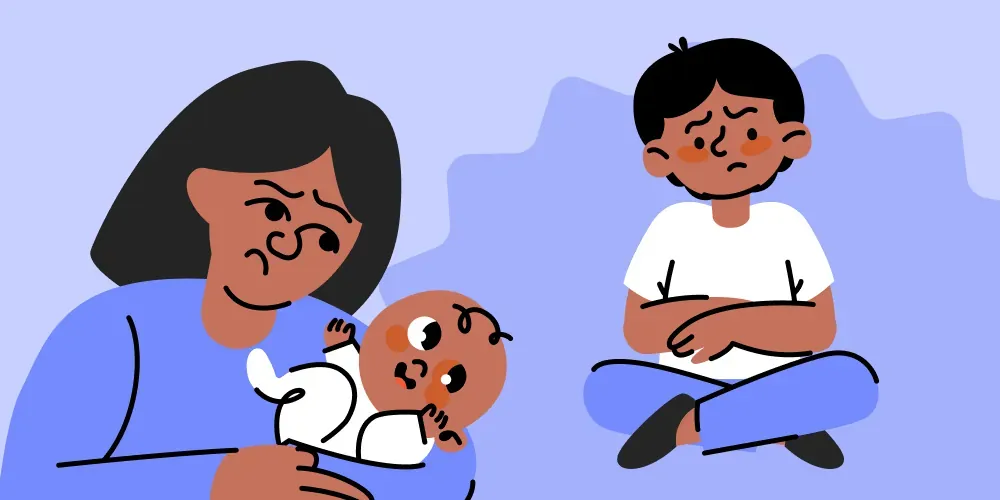
When a second child is born, it changes how the family works. Emotions can run high. The older child might feel jealous, and parents might feel guilty [1]. Despite your best efforts, anger can bubble up.

This “transition into siblinghood” affects everyone. Moms may feel stressed for a year, while dads and older kids feel it for about four months [2]. Stress can make you irritable, and older kids might act out [3]. Recognizing anger and frustration early helps manage them. Here's what you can do.

  • Take deep, slow breaths. It sounds simple, but changing your breathing switches the nervous system into relaxation mode. If you don't enjoy breathing exercises you can do a mental countdown to try to shift your focus to a nearby object or scene. The effect will be the same.

  • If your children are safe, go to another room and look out the window. 

  • Notice how your heart rate slows down and your muscles release tension. 

Once you feel calmer, talk to your older child about their behavior and what may be behind it. These actions can help you maintain a warm and trusting relationship with them while teaching them about coping with feelings [4].
Frequently asked questions

This is a normal response to the stress of sibling transition. The entire family dynamic changes, causing heightened emotions, jealousy in the older child, and parental guilt that can trigger anger.

Research shows mothers may experience stress for up to a year after a second child is born. Fathers and older children typically adjust within about four months.

Take deep, slow breaths to activate relaxation mode, or do a mental countdown while focusing on a nearby object. If children are safe, step into another room until you feel calmer.

Wait until you're calm, then discuss their behavior with understanding. Focus on exploring the emotions behind their actions rather than just addressing the behavior itself.

Medical Disclaimer

This article is for informational purposes only and is not a substitute for professional medical advice, diagnosis, or treatment. Always seek the advice of your physician or qualified health provider with any questions you may have regarding a medical condition.

Meet our medical experts

Medically reviewed content

Reviewed by healthcare professionals · Updated September 1, 2024

Track your pregnancy on the go

Rated 4.8417,594 reviews