
When does pregnancy begin?
Determining how far along you are in your pregnancy can be a confusing task. There are two common ways to calculate it:
The obstetric term: Which marks the beginning of pregnancy on the first day of the last menstrual cycle.
The fetal term: Which marks the beginning of pregnancy on the estimated date of ovulation, when conception is most likely to occur. As a general rule, ovulation happens somewhere between days 12 and 16 of a 28-day cycle.
The fetal term is shorter than the obstetric one by an average of 14 days. And although this method of calculation seems more logical, the obstetric definition is more commonly used around the world [1], and it is the one we will use in this app.
What we can see on an ultrasound
Let's look at the uterus and ovaries as they prepare for fertilization.
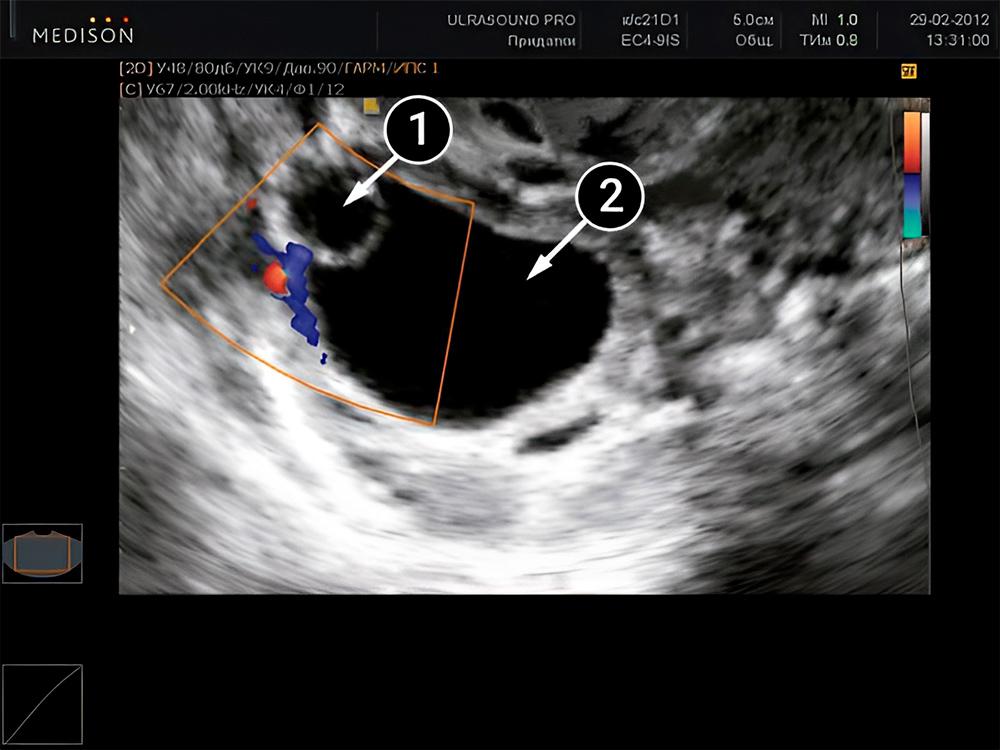
The first picture was taken in the middle of the menstrual cycle, and the dark outline of the uterus is clearly visible. The light areas seen in the cavity are the mucous membranes (endometrium). In the second phase of the cycle, progesterone softens the endometrium so that a fertilized egg can easily attach to the uterus wall.
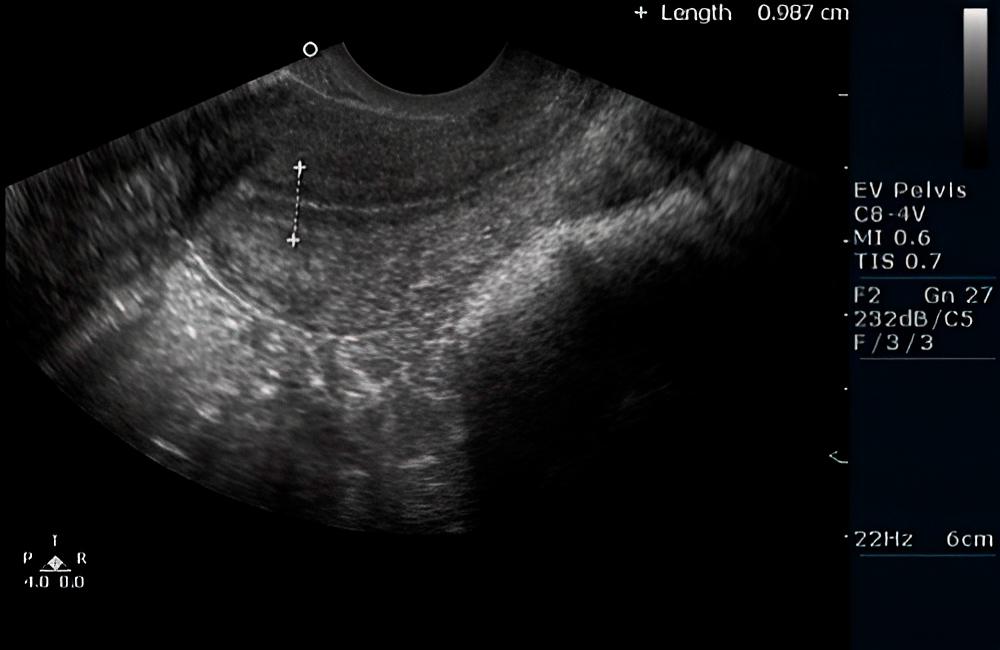
The second picture shows the ovaries. The dark, rounded cavity is the dominant follicle. An hour after it ruptures, the egg enters the abdominal cavity and, from there, into the fallopian tube to meet with the sperm. Usually, with every menstrual cycle, only one follicle is ahead of the others in terms of growth; it then bursts and releases an egg that is ready for fertilization. In some cases, there can be two or even three dominant follicles. This makes the possibility of having a multiple pregnancy much higher.
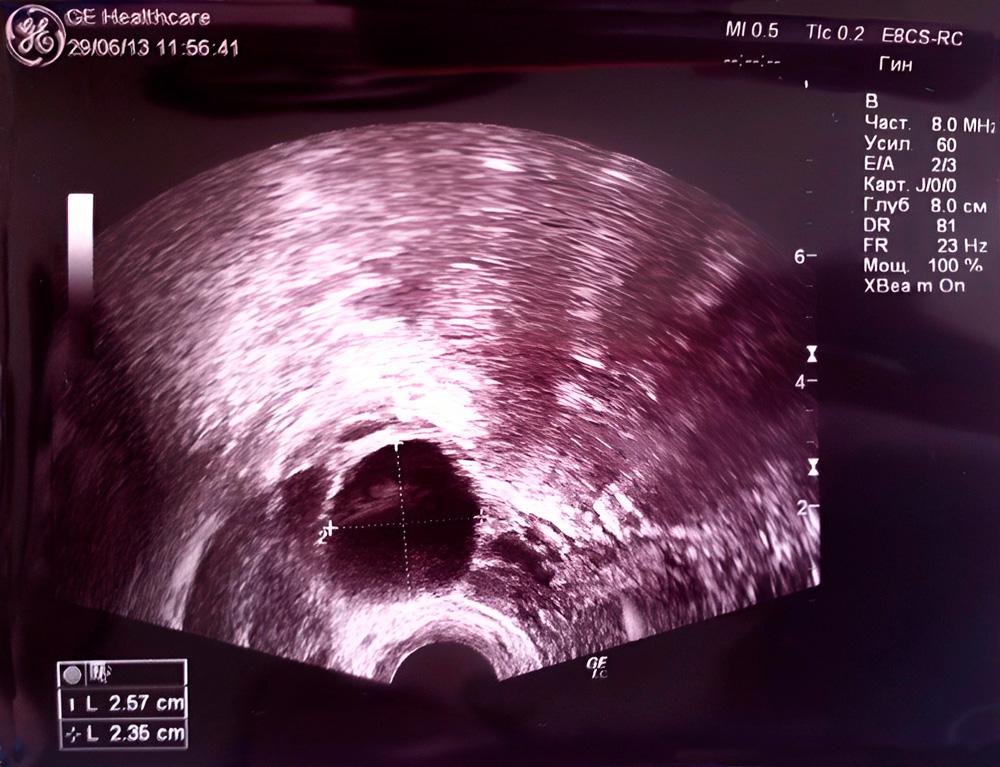
In the third picture, the ovary and the ripening dominant follicle are visible, appearing as a dark, irregular oval. In the left corner of the follicle, it appears that an egg-bearing tubercle may be present. This is the basis of the future egg.