
A guide for parents on how to choose new toys and check old ones.
-
Check the packaging: confirm what ages the toy is suitable for and how to use it correctly. Make sure the label says "nontoxic." Electronic toys should also have the UL-approved mark.
-
Make sure no part of the toy can fit into the baby’s mouth and become a choking hazard.
-
Avoid toys that shoot anything into the air. They can cause eye damage and small parts can end up in the baby’s mouth.
-
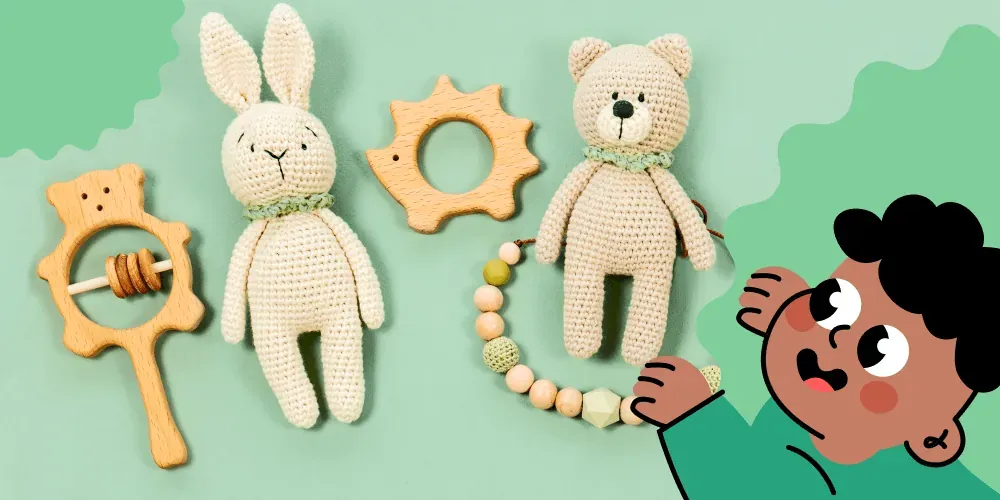
Check soft toys carefully. Make sure seams are strong and that all parts are firmly attached. Remove any ribbons, scarves, or cords. Feel the stuffing; small polyethylene beads are not appropriate because they are a choking hazard.
-
Check all plastics for strength; they should be thick and strong.
-
If there is a mobile over the baby’s crib, they should not be able to reach it. Remove the toy when the baby starts crawling or is five months old, whichever comes first [1].
-
Make sure batteries and magnetic parts are securely fixed. Small toys with magnets should only be used under adult supervision [2, 3].
-
Do not give children antique toys, as they may contain lead. The same applies to imported toys, except those made in Canada and the EU [4].
You can report unsafe children’s items at SaferProducts.gov , and find out about recalls on particular toys at Recalls.gov .