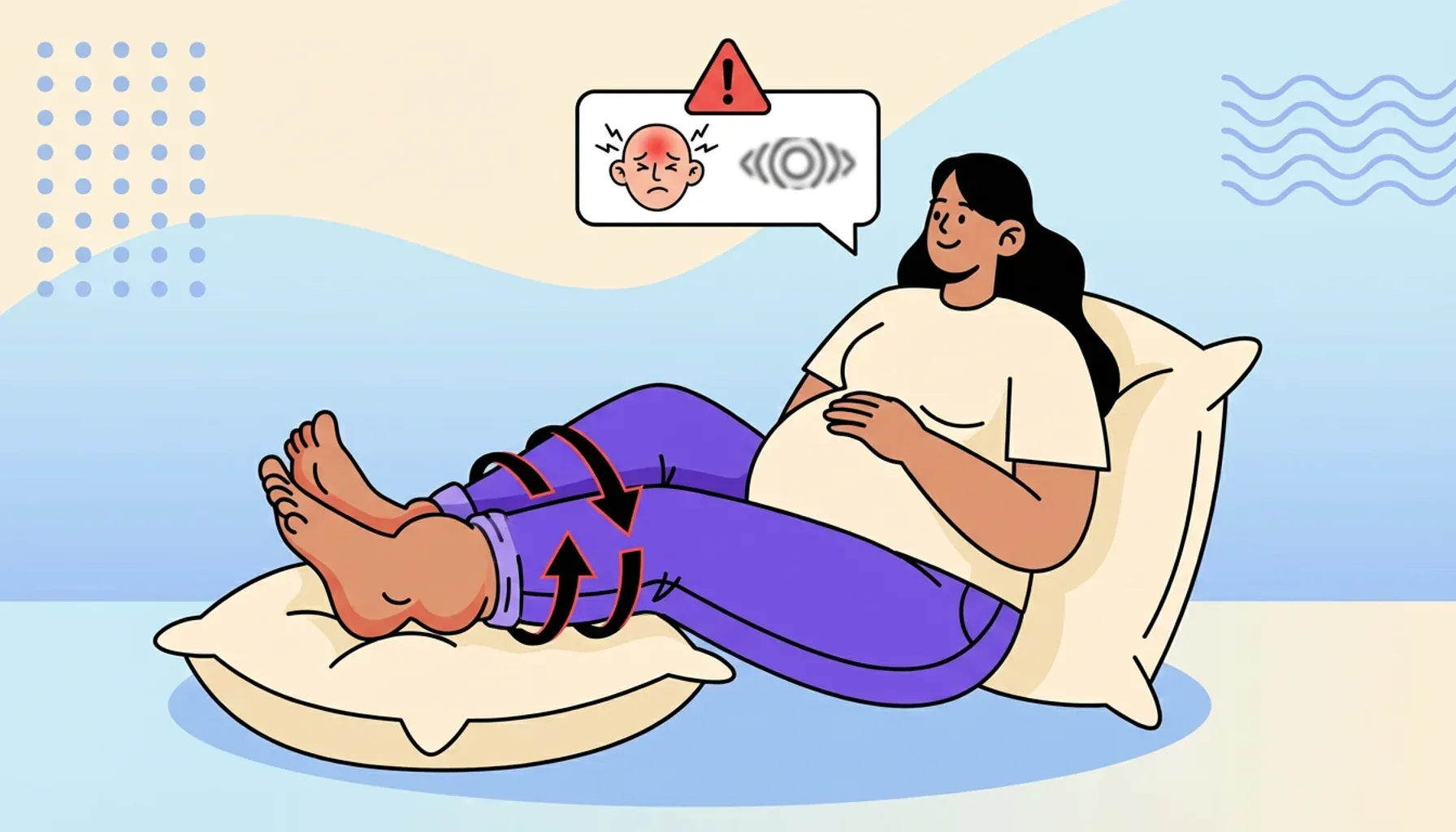

Almost all women in the last trimester of pregnancy complain of edema. Swelling legs and feet may even force you to buy shoes one size larger. This swelling is usually caused by physiological edema.
What is physiological edema?
During pregnancy, the adrenal glands produce more hormones, which keep fluid in the tissues — this is called physiological edema.
In addition, a large uterus restricts blood from flowing from the legs to the heart. As a result, fluid accumulated in the veins seeps through the vein walls and into the surrounding tissues and further causes swelling [1].
Is this dangerous?
While unpleasant, physiological edema is not dangerous for mama or baby.
On the other hand, pathological edema can develop into dangerous complications, including:
varicose veins;
heart failure [2];
deep vein thrombosis [1];
preeclampsia.
How to distinguish physiological from pathological edema?
Physiological edema grows gradually and usually decreases if you lie on the left side, which relieves the pressure of the uterus on the inferior vena cava and enables better blood flow [1].
If edema develops suddenly, contact your doctor. It may be caused by kidney or heart disease [2]. If you have already been diagnosed with gestational diabetes or hypertension, then you should also inform your doctor about edema in order to rule out the threat of preeclampsia [1].
Call an ambulance if:
only one leg is swollen (this is a sign of deep vein thrombosis);
you have edema and your blood pressure rises to 140/90 (a sign of preeclampsia);
edema is combined with headache, nausea, and other signs of preeclampsia [1].
Can physiological edema be reduced?
Yes. Lying on the left side and compression tights help [1].