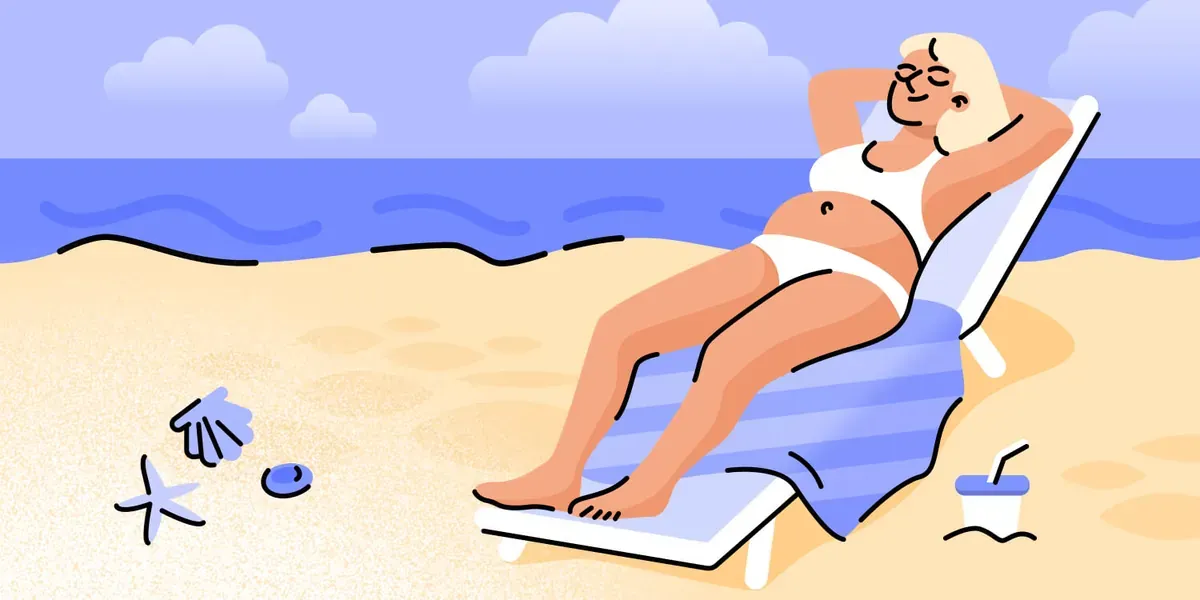

Among the many myths surrounding pregnancy, some seem to be contradictory. For example, expectant mothers need vitamin D, but they’re not supposed to lay out in the sun. Let’s explore what’s safe in terms of sunbathing while pregnant.
How can the sun be dangerous for pregnant women?
Excessive exposure to ultraviolet radiation is the main reason that the incidence of skin cancer has increased worldwide [1]. That applies to everyone, not just pregnant mamas.
Specific to pregnancy, several studies have shown [2] that the sun's rays destroy folic acid, which is necessary for the proper development of the baby’s nervous system, especially in early pregnancy.
In addition, sunbathing can lead to the development of chloasma in pregnant women. Also known as “pregnancy mask” it consists of patches of excessive pigmentation that tend to appear on the face. Scientists have linked it to a combination of sun exposure and elevated progesterone levels in the body during the third trimester. Chloasma usually disappears on its own but can linger for several months [3].
Should I just avoid being the sun?
Not exactly. In small doses, ultraviolet radiation has its benefits. In the first trimester, it can help the baby’s development and the mom’s blood pressure [4]. Its most important benefit is the production of vitamin D in your body. A deficiency of this vitamin during pregnancy can lead to an increased risk of rickets and certain blood diseases for the baby [5] and may lead to the development of multiple sclerosis [6].
How can I sunbathe safely?
There’s no consensus on how much sun exposure a pregnant woman should get. General WHO guidelines are as follows [1]:
Limit exposure to the sun from 11 AM to 3 PM. If you’re outside between these hours, stay in the shade.
Wear light, loose clothing that covers most of your skin.
Wear a hat to protect your face and neck.
Wear sunglasses to protect your eyes.
Drink more water to avoid dehydration.
Apply sunscreen on exposed skin every two hours.
What about sunscreen? Can it be harmful?
Check the ingredient list in your sunscreen and avoid those that contain oxybenzone. Studies show that it can enter the bloodstream and lead to congenital bowel pathologies in the baby [7]. It may also affect the mother’s mammary glands, potentially impacting lactation [8].
Instead of oxybenzone, choose a sunscreen with zinc oxide or titanium dioxide. These ingredients are harmless because they don't react chemically to the skin.
Can I use a tanning bed while pregnant?
No one, pregnant or not, should use a tanning bed [1]. Some emit UV radiation that is many times higher than that of the midday sun. Frequent tanning bed use can lead to skin cancer, as many studies have proven. In addition, the WHO is against the use of tanning beds for anyone under the age of 18, which arguably includes an unborn baby.