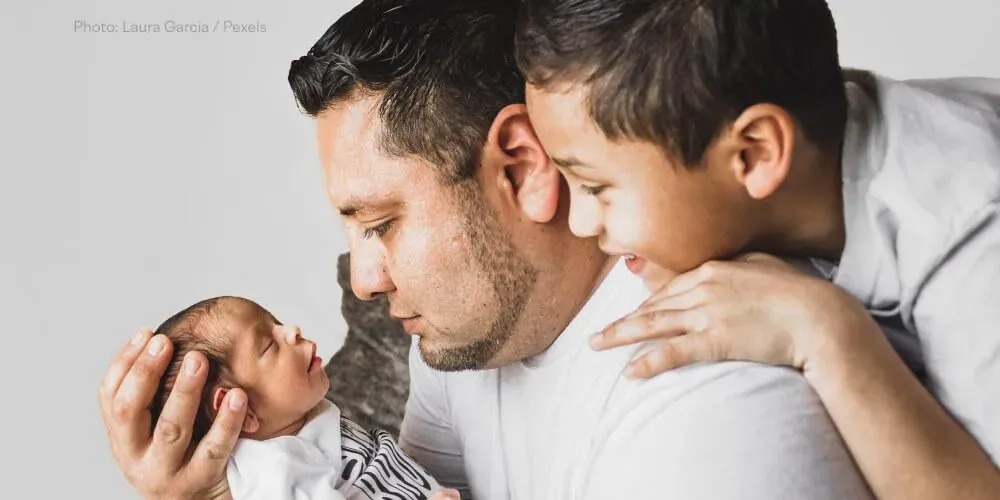

First and foremost, the two-month-old infant needs food, sleep, and a secure place to live. Apart from that, though, your infant also needs social interaction. Babies need constant comforting, patting, smiling, and picking up.
Naturally, the baby's closest person is his mother. But other caregivers—dad, grandma, or a family friend, for instance—can offer the same kinds of connections. More so if the infant is not nursing.
Does having the baby interact with other adults make sense then?
It is a good idea, yes. These should be people you trust, of course. The baby is ready to communicate with everyone during the first three months of life. When someone looks at them, they perk up. When the words are said in an affectionate voice, the baby looks at his "interlocutor," smiles, and responds with happy babbling [1].
Living in big, extended families used to be common. The entire family was therefore taking care of the babies. From an evolutionary perspective, a baby's chances of surviving increased if they were constantly in contact with people.
Life is much safer now than it used to be. Why would a child need anyone else than their parents?
The survival program of a newborn's brain is the same as it was in ancient times. Babies want to be near loved ones, thus, they seek attention from adults.
Wouldn't it break the baby's emotional connection to their parents?
Babies who interact with multiple adults on a regular basis will develop bonds with each of them. As the child gets older, it actually aids in their socialization [1].
Can there be too many adults?
Absolutely, it is preferable to have a small social circle—no more than ten people.
Photo: Laura Garcia / Pexels