You can hear your baby's heartbeat without an ultrasound
Your baby is becoming very active, but increasingly more cramped. The uterus restricts their movements, but they will still jerk their legs as if riding a bicycle. Later, this skill will help your baby roll her head upside down to get into the position for childbirth.

The baby also develops reflex reactions. Hearing a sharp, loud sound or feeling unusual movements can cause them to fold their arms over their chest and shift their legs [1].
By this time, your baby has fully formed eyelashes. The central nervous system now regulates body temperature and rhythmic breathing movements [2], while subcutaneous fat continues to accumulate [3].
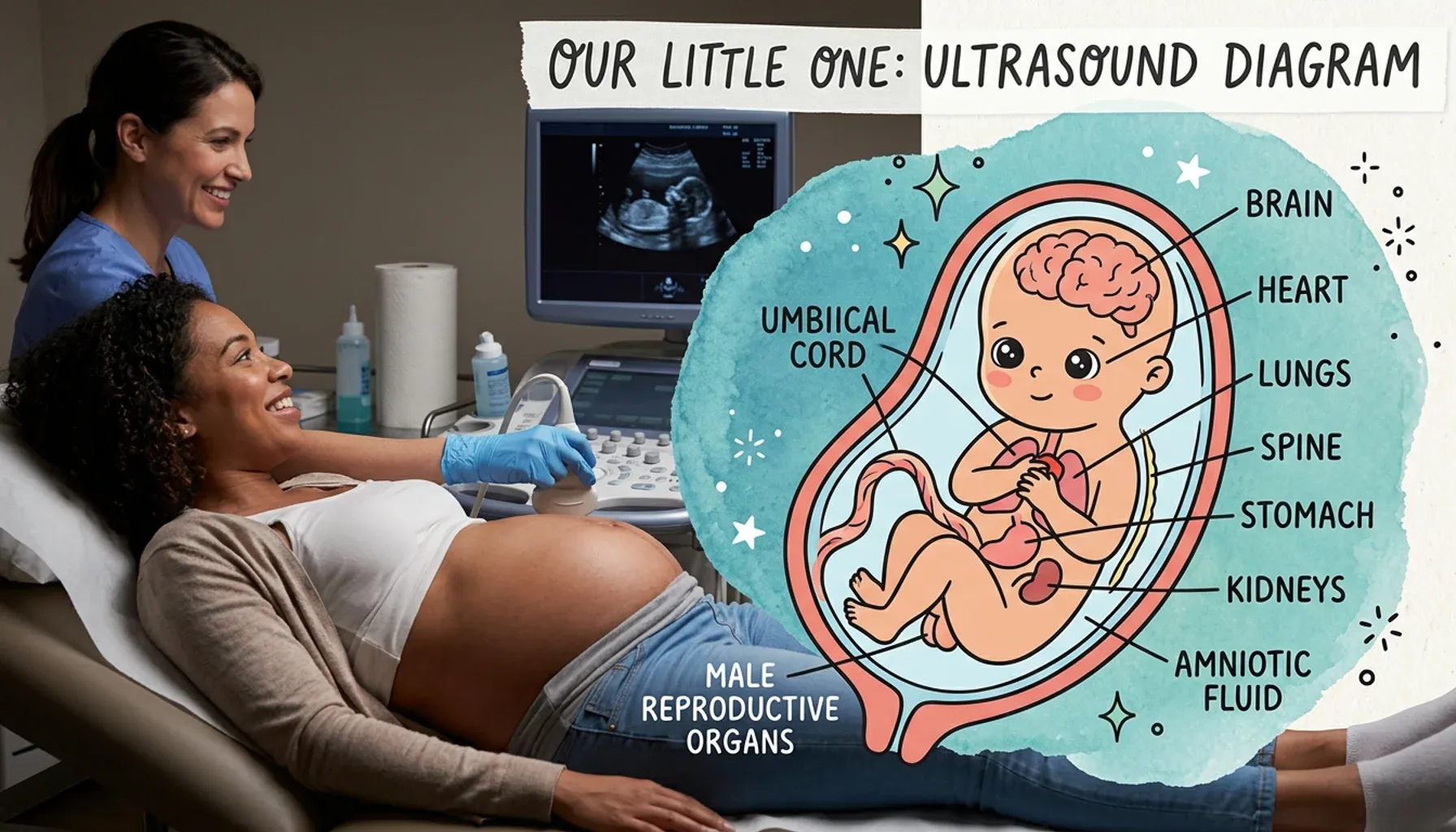
The baby's heart beats at a frequency of 120 to 160 beats per minute. This rate is less than at an earlier stage but still much higher than in an adult. The heart is still very small, so it needs to work hard to pump blood through the vessels.
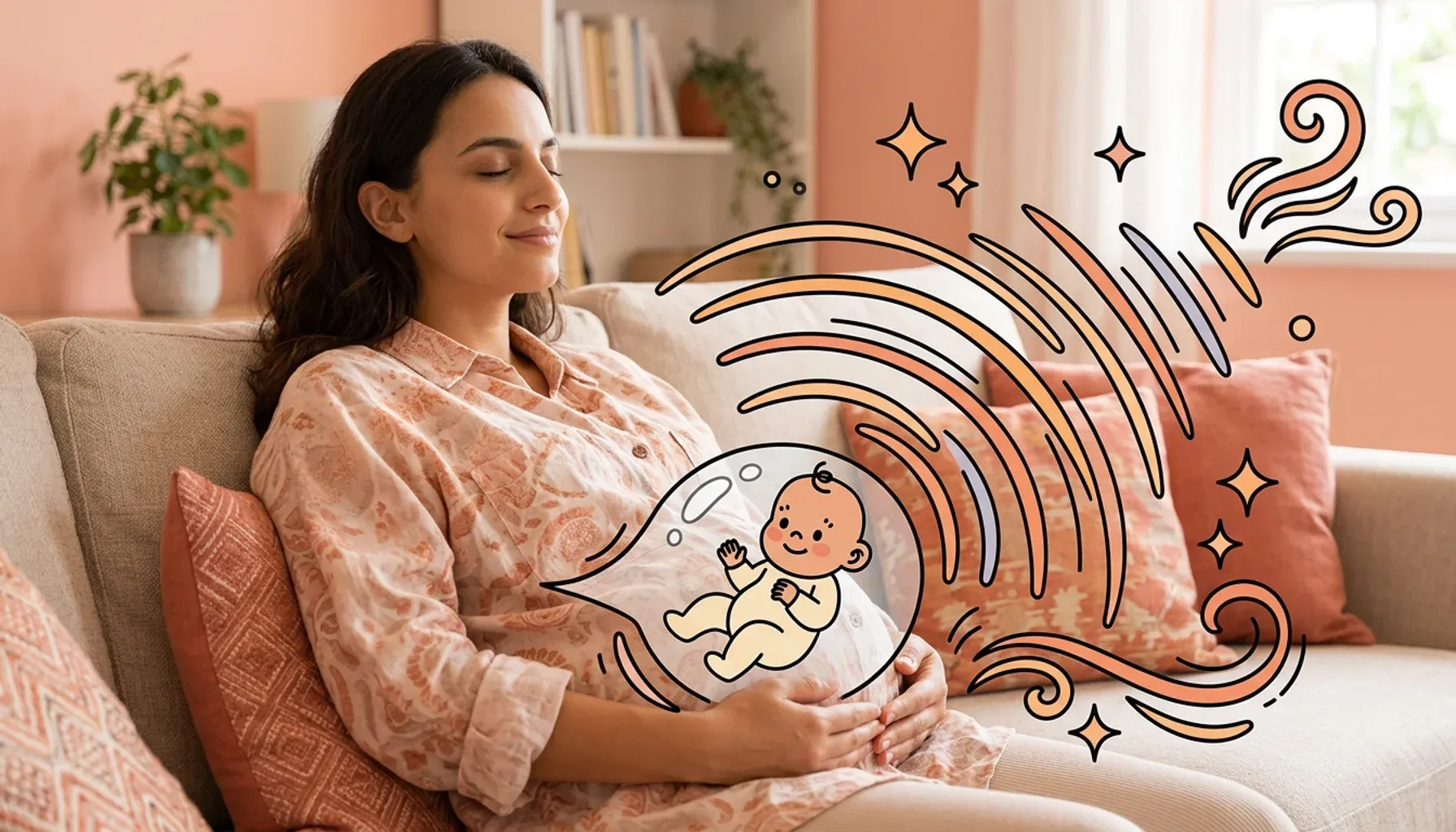
Your doctor can listen to the baby’s heart rate with a stethoscope and your partner can hear it by just placing their ear to your belly. It may not work the first time, but it should be possible in a quiet setting [4].
The baby has already formed the foundation of teeth and they are covered with enamel. About six to nine months after birth, they will erupt through the gums [5]. When that happens, it’s normal for your baby’s sleep patterns to change or regress because of the discomfort teething can cause.
If you are expecting twins
Twins’ hearts do not always beat in unison. Doctors note that twins do react to each other, like when one makes a sudden movement, the second one gets startled and their heart beats faster [6].
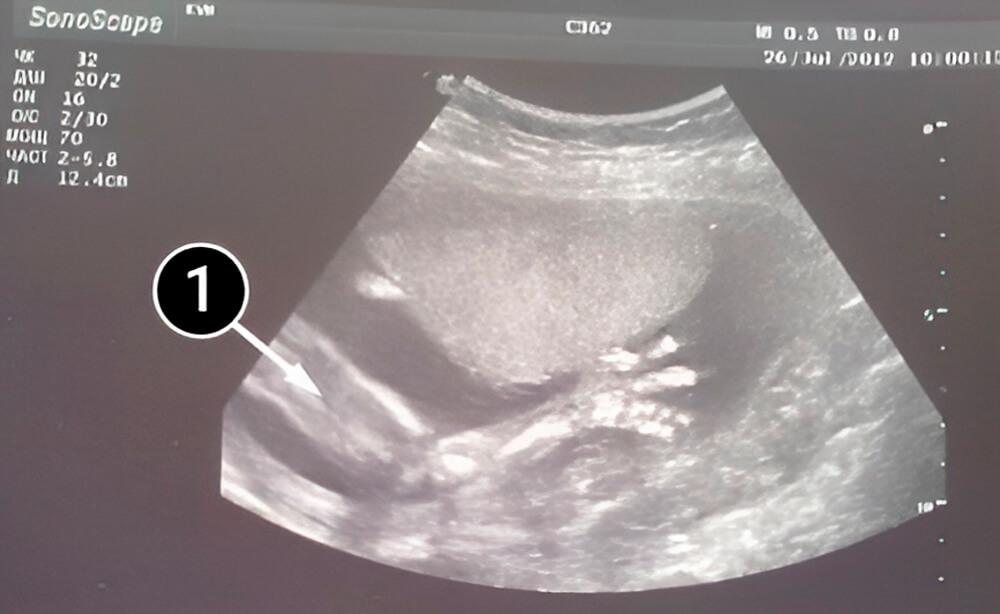
What can be seen on ultrasound
The picture shows the baby’s right hand. The elbow joint, forearm, and hand are also visible, with clearly marked finger bones.