EN
try amma today
Is it too late to go on a diet?
Pregnancy

Is it too late to go on a diet?

2 min readWeek 6
Key takeaways
2 min
  • Focus on nutrient-dense foods rich in folates and iron rather than restricting calories during the first trimester.
  • Choose lean proteins like red meat and seafood for better iron absorption compared to plant sources.
  • Eliminate refined carbs and sugar as they provide no developmental benefits for your baby.
  • Maintain a healthy diet of proteins and vegetables to support both maternal health and fetal development.
  • Consult your doctor before making significant dietary changes during pregnancy to ensure safety.

It's not too late to adopt healthy eating habits during pregnancy, but avoid traditional dieting. Focus on nutrient-dense foods rich in folates and iron while eliminating refined carbs and sugar for optimal maternal and fetal health.

amma app

Track your pregnancy in the app

Personalized content for your pregnancy week

Download App

Is it too late to go on a diet?

Being overweight creates additional risks for both the expectant mother and the baby. Doctors strongly recommend that you come to a normal body mass index (a BMI between 18 and 25 is considered normal) before you plan to conceive [1].

In real life, not everything goes according to plan. So you may find yourself asking should I go on a diet now or is that dangerous for baby?

Most researchers agree [1, 2, 3] that, during the first trimester, the developing baby does not need additional calories — baby needs the necessary vitamins and minerals. You will want to make sure you are eating foods rich in folates and iron [4].

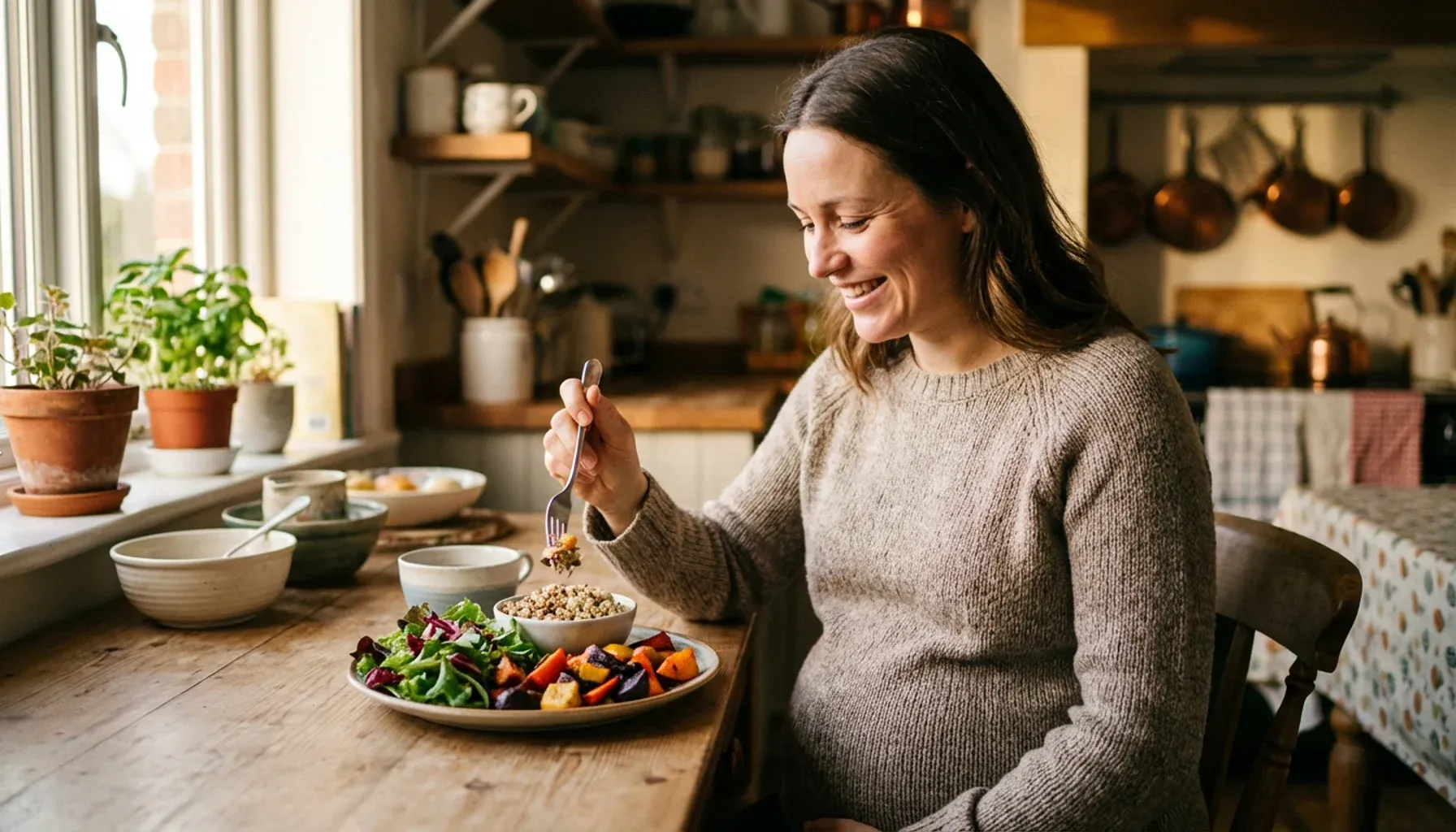
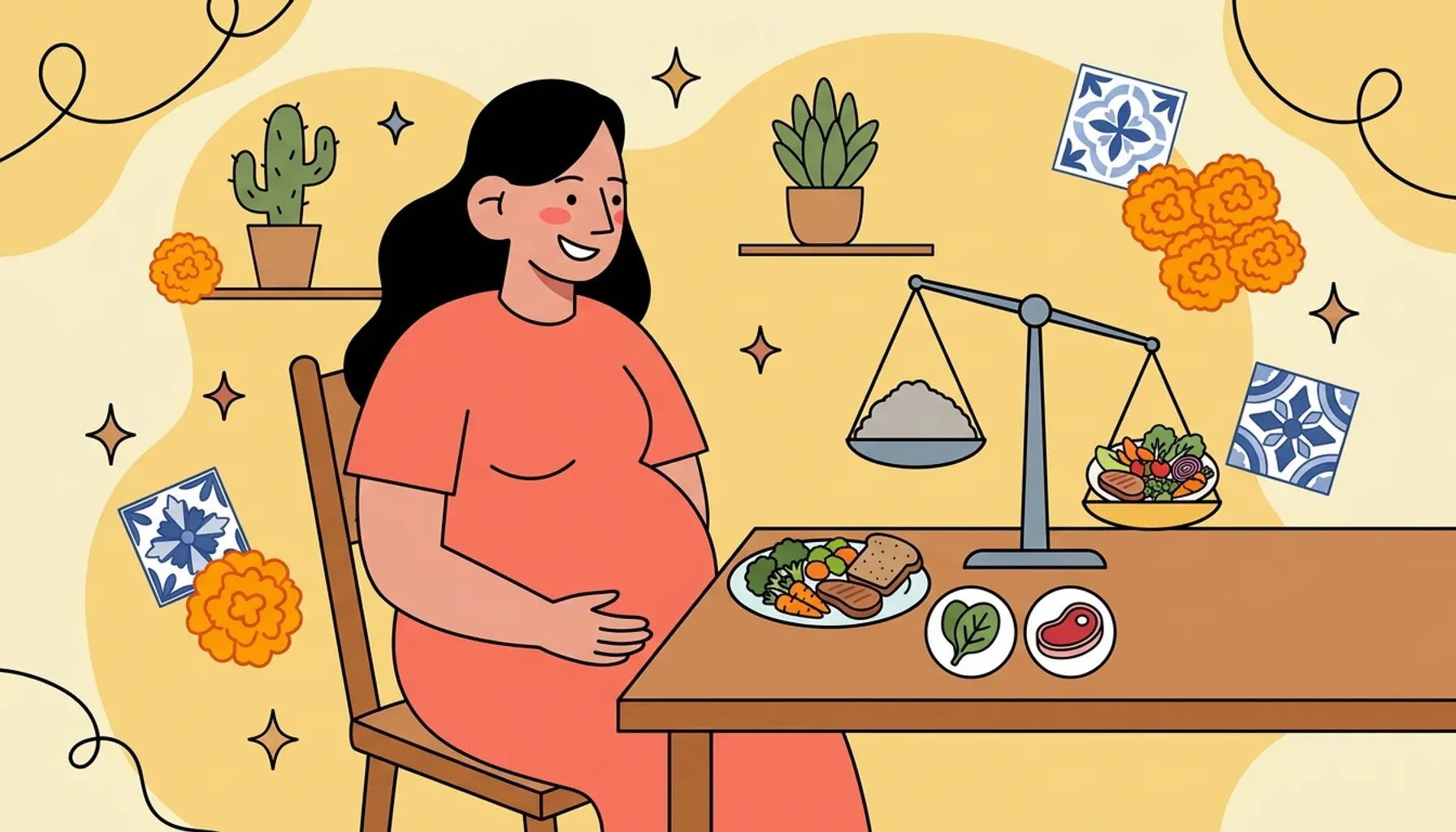
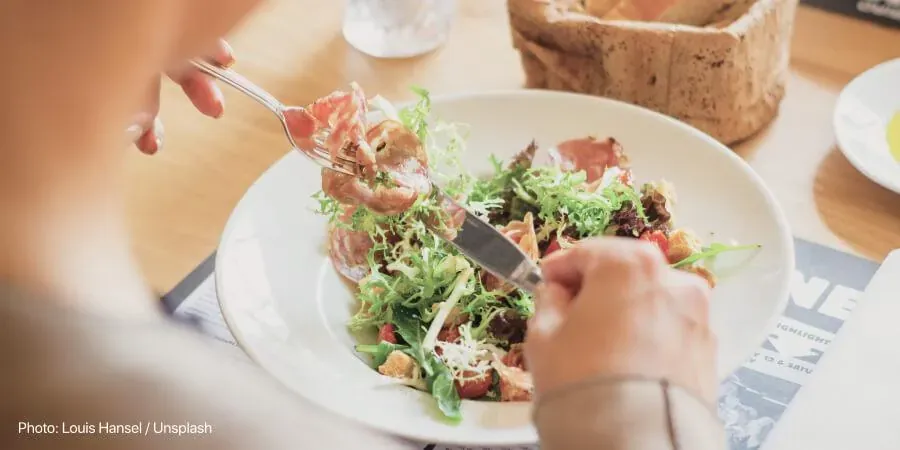
Iron contained in meat and seafood is more readily absorbed than from cereals, fruits, berries and vegetables. Increasing the amount of lean red meat you eat will provide you with a good portion of your daily iron requirement. Dark leafy greens, like spinach will also supply you with iron and folates.

In other words, a healthy diet of protein and vegetables will provide the child with everything necessary and also help you stay healthy. At the same time, refined carbs and sugar are not necessary for baby’s development. You don’t need to think of this as going on a diet — you are just choosing a variety of food that’s good for you and baby.
Frequently asked questions

Traditional dieting is not recommended during pregnancy. Instead, focus on eating nutrient-dense foods rich in folates and iron while avoiding refined carbs and sugar.

Eat lean proteins, dark leafy greens, and iron-rich foods like meat and seafood. Your baby doesn't need extra calories in the first trimester, just essential vitamins and minerals.

Yes, being overweight creates additional risks for both mother and baby. Doctors recommend achieving a normal BMI (18-25) before conception when possible.

Avoid refined carbohydrates and added sugars as they don't contribute to your baby's development. Focus on whole foods, proteins, and vegetables instead.

Medical Disclaimer

This article is for informational purposes only and is not a substitute for professional medical advice, diagnosis, or treatment. Always seek the advice of your physician or qualified health provider with any questions you may have regarding a medical condition.

Meet our medical experts

Medically reviewed content

Reviewed by healthcare professionals · Updated March 28, 2025

Track your pregnancy on the go

Rated 4.8417,594 reviews