
Helping your partner cope with changes
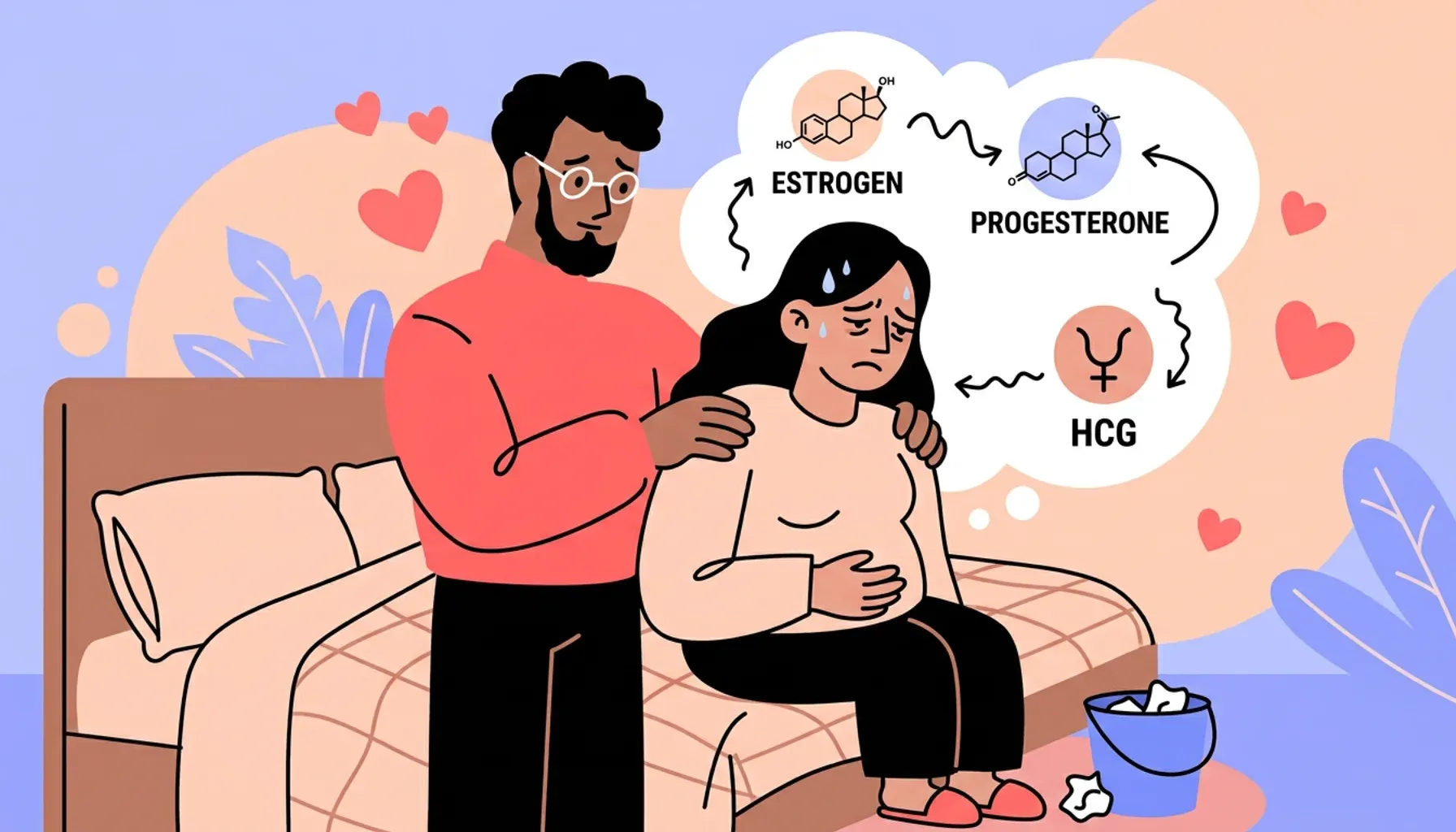
Your partner may not be showing yet, but right from the start, pregnancy will have a significant effect on her body. Her entire system is being “restructured” to provide the baby with everything they need to grow and develop. There are three main hormones that the body produces for this purpose.
Estrogen helps in the development of the baby’s internal organs and promotes the proper functioning of the placenta [1]. At the same time, estrogen affects serotonin and norepinephrine concentration; as their levels fluctuate, mood swings come into play [2].
Progesterone thickens the inner wall of the uterus and supplies it with blood so that the embryo can attach to it and subsequently receive nutrients from the placenta [3]. Progesterone also relaxes blood vessel walls and muscles, which can contribute to a pregnant woman feeling tired, drowsy, and dizzy [2].
Human chorionic gonadotropin (HCG) is secreted by the cells surrounding the growing embryo. It indicates the onset of pregnancy [4] and is believed to trigger toxicosis (“morning sickness”) [2].
As you can see, the side effects of this hormonal roller coaster ride are not particularly pleasant. And in the initial stages of pregnancy, your partner may not have the energy to do everyday things.
Taking on some of the household chores, shopping for groceries, cooking, or running errands are just some of the things you can do to support her during this time.