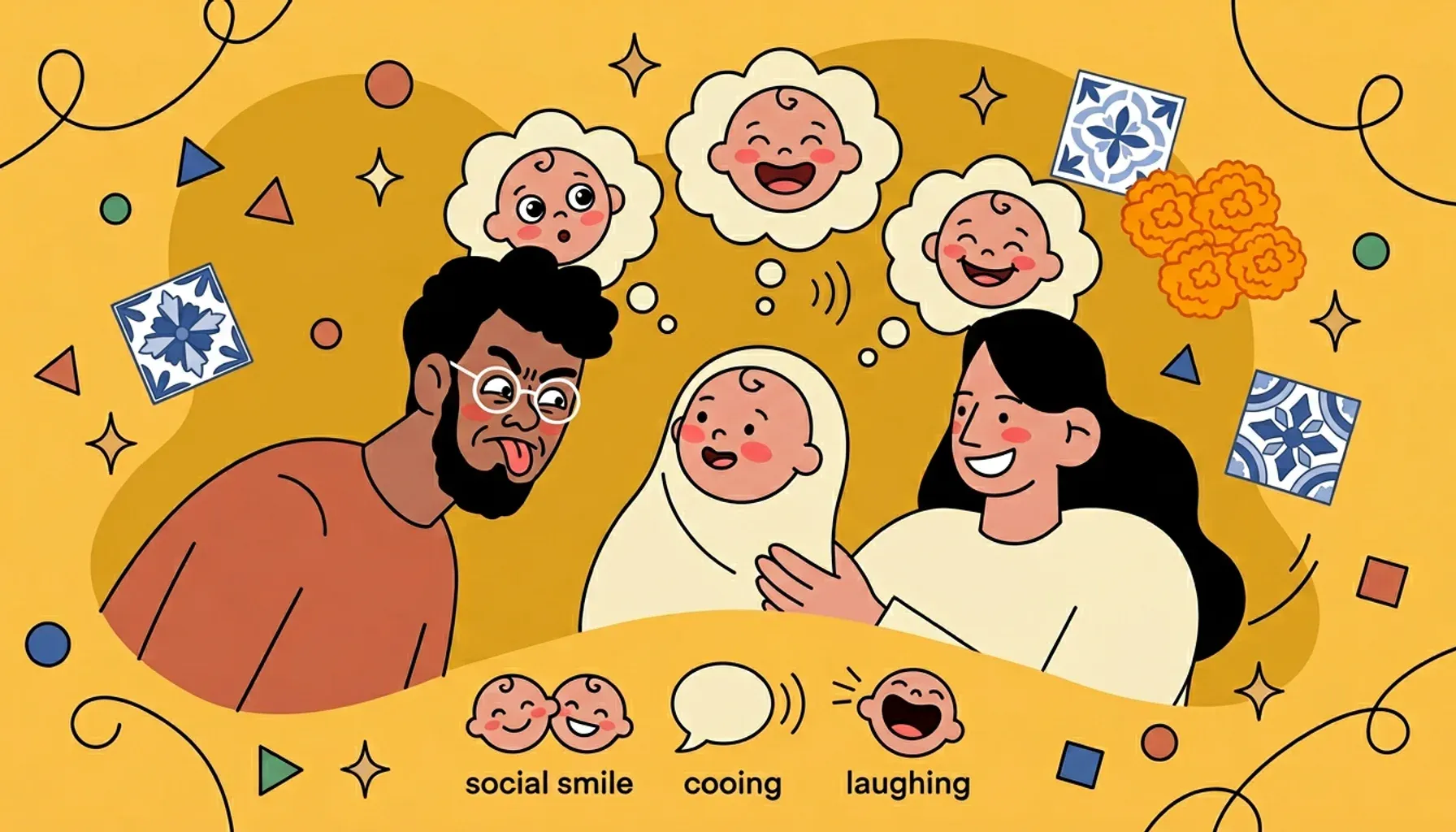

Emotional Development
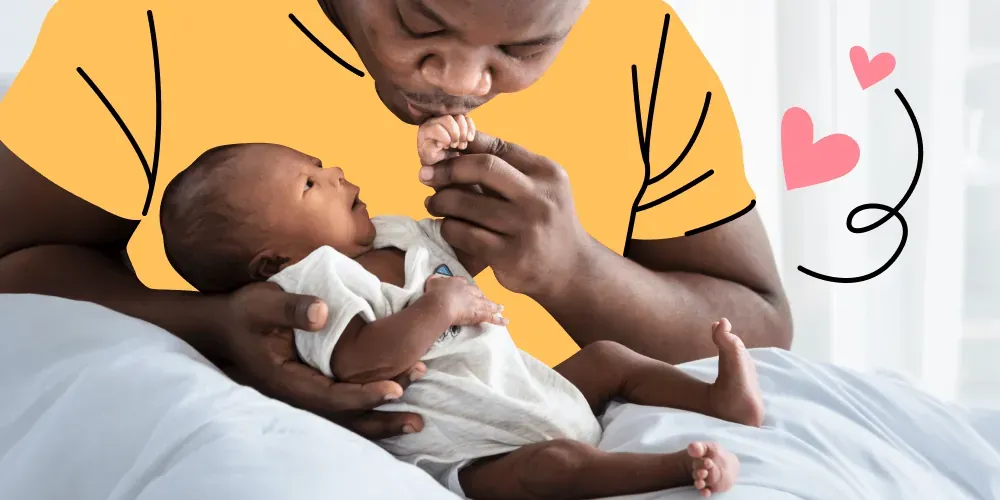
At this very important stage in your son’s life, he begins to react emotionally to the outside world, especially his most familiar objects — mama and dada.
He turns his head at the sound of footsteps or voices, follows your face or the toy you are holding with his eyes. He happily waves his hands, arches his back and starts smiling socially. And most importantly, he coos! Yes, he’s learning to make sounds other than crying [1].
Usually, babies start a whole new set of skills at once. During months two to six, you will see an amazing amount of development. As six months approaches, you will see your son’s emotional responses become more conscious and targeted: here he smiles, there he claps his hands, shouts or babbles [1].
Try to talk to your son as much as possible. At this age, babies do not understand words, but they already distinguish intonations. Experiments [2] have shown that infants almost do not react to neutral speech (for example, reading books without expression), but quickly and joyfully respond to affectionate and cheerful voices. Angry speech, on the contrary, slows down their reactions.
- Tronick, Edtward. The Neurobehavioral and Social-emotional Development of Infants and Children. Norton & company. 2007.
- Hemodynamic responses to emotional speech in two-month-old infants imaged using diffuse optical tomography. Shashank Shekhar, Ambika Maria, et al. Sci Rep., 2019.